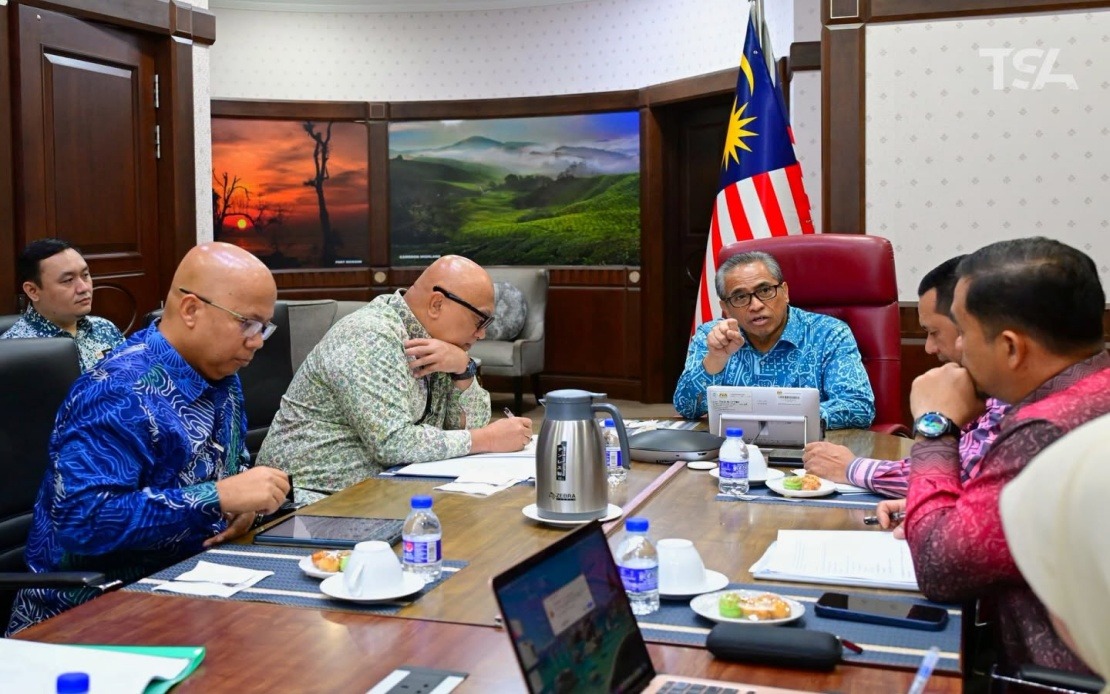
The government's top civil servant has stepped in to address deteriorating service conditions at Universiti Malaya Medical Centre, signalling heightened concern about the flagship teaching hospital's operational challenges. Chief Secretary to the Government Tan Sri Datuk Seri Shamsul Azri Abu Bakar issued directives for immediate remedial action following a high-level ministerial meeting convened to assess systemic problems plaguing the institution, which serves as both a major tertiary care facility and a training ground for medical professionals.
Shamsul Azri's intervention underscores the government's commitment to maintaining healthcare standards as part of its broader MADANI development agenda, which places public health protection at its core. By personally orchestrating the discussion and subsequently mandating swift implementation of agreed solutions, the Chief Secretary has elevated the matter from routine hospital administration to the level of national policy concern, reflecting the seriousness with which leadership views the deterioration in patient experience and service delivery.
The meeting brought together key stakeholders across government and academia, including the Secretary-General of the Ministry of Higher Education, the Secretary-General of the Ministry of Health, Universiti Malaya's Vice-Chancellor, and PPUM's senior administrative leadership. This multi-agency approach recognises that PPUM's challenges are not isolated operational problems but rather systemic issues touching on policy coordination, resource allocation, and institutional governance across overlapping jurisdictions. The diversity of attendees suggests the government perceives the situation as requiring integrated solutions rather than piecemeal fixes confined to hospital management.
Public grievances centred on several interconnected problems. Patients and their families have expressed frustration over extended waiting times, which continue to mount as demand for specialist services outpaces capacity. Clinical service delivery itself faces constraints, raising questions about whether the institution can adequately fulfil its dual mandate as both a teaching hospital and a public healthcare provider. These operational shortcomings appear rooted in structural staffing deficiencies, where the availability of specialist expertise falls short of requirements, creating bottlenecks throughout the facility.
As a teaching hospital, PPUM operates under different parameters than conventional general hospitals. Its services are deliberately calibrated to balance patient care with the imperative to train the next generation of Malaysian medical professionals. This dual responsibility means that resource constraints affect not only immediate healthcare delivery but also the pipeline for future medical specialists. When staffing becomes critically short, the institution struggles simultaneously to maintain clinical quality, manage patient flow, and provide adequate educational opportunities for trainees.
The waiting time problem reflects broader tensions within Malaysia's healthcare system. PPUM, located in Kuala Lumpur and affiliated with the country's premier medical university, attracts referrals from across the nation for complex cases and specialised treatments. This concentration of demand strains capacity even under normal circumstances. When combined with recruitment and retention challenges for specialist medical staff, the result is predictable: growing backlogs and patient dissatisfaction. For many Malaysians, especially those seeking advanced care, prolonged waiting represents not merely inconvenience but potential deterioration in health outcomes.
The emphasis on skilled manpower and specialist expertise as a policy focus demonstrates government recognition that PPUM's challenges cannot be solved through operational tinkering alone. Attracting and retaining medical specialists requires competitive remuneration, career development pathways, adequate working conditions, and research opportunities. These factors extend beyond hospital administration into broader healthcare workforce policy. The meeting's inclusion of education and health ministry representatives suggests action may encompass revised compensation structures, enhanced career incentives, or revised deployment strategies for specialists across institutions.
Shamsul Azri's public commitment to immediate implementation carries political weight. By anchoring the commitment to the MADANI Government's stated priorities and announcing the decision through direct communication, the Chief Secretary has created accountability mechanisms. Healthcare consumers, patient advocacy groups, and opposition politicians will monitor whether promised improvements materialise, establishing a clear benchmark against which government performance will be measured. This transparency, while commendable, also reflects confidence that the identified solutions are genuinely actionable within reasonable timeframes.
The intervention carries implications for university-affiliated hospitals across Southeast Asia and Malaysia's medical research ecosystem. PPUM's struggles, if not resolved, could affect the quality of clinical training, the competitiveness of Malaysian medical graduates in international markets, and the nation's capacity to conduct advanced medical research. Young doctors trained in understaffed, overstretched environments may seek opportunities abroad, perpetuating a specialist shortage cycle. Conversely, demonstrable improvements would strengthen PPUM's standing as a regional centre of medical excellence.
For Malaysian patients, the outcome of this intervention matters considerably. In a healthcare system where private options remain accessible primarily to the affluent, public institutional performance determines care quality for the majority. PPUM's status as a teaching hospital means that problems there ripple through training pipelines affecting rural and regional hospitals that depend on specialists trained there. Resolving PPUM's challenges thus has multiplier effects throughout the public healthcare network.
The government's directive framework now requires careful monitoring of implementation. Authorities must clarify timelines, resource allocations, and measurable targets for improvement. Whether the agreed measures prove sufficient or whether deeper structural reforms prove necessary will become evident as months pass. For now, the Chief Secretary's intervention represents official acknowledgement that the status quo is untenable and that public pressure has finally prompted decisive action at the highest levels of government.

