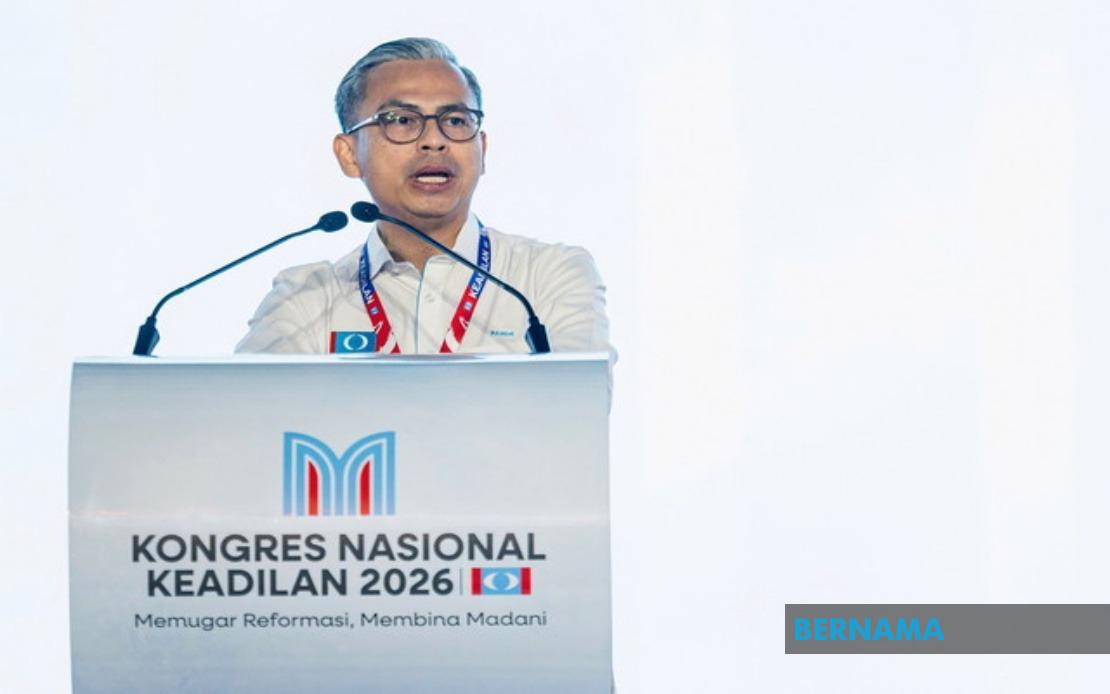
The federal government's machinery for explaining its achievements has failed to translate macro-level economic progress into outcomes that resonate with everyday Malaysians, according to PKR information chief Datuk Seri Fahmi Fadzil, who called for a fundamental rethink of communication strategy. Speaking at the 2026 PKR National Congress in Melaka on August 16, Fahmi highlighted a persistent tension between what the government has accomplished under Prime Minister Anwar Ibrahim and public perception of those achievements. The challenge, he suggested, lies not in the substance of policy but in how that substance is packaged and delivered to reach ordinary citizens where they live and work.
Fahmi framed the communication deficit as a disconnect between "pot economy" outcomes—the broad indicators of macroeconomic health—and the lived experience of Malaysians. While the government can point to measurable successes in its economic management, citizens have not universally felt the positive spillover effects in their household budgets, job prospects, or access to services. This perception gap represents a strategic vulnerability for the ruling coalition, one that extends beyond mere public relations into questions about whether policy design itself adequately addresses citizen needs. Acknowledging this publicly during a major party congress signals that PKR recognizes the urgency of recalibrating how it communicates with voters ahead of elections and in the ongoing effort to maintain public confidence in the current administration.
The Communications Minister outlined several tactical shifts to strengthen the government's information reach. Enhanced collaboration with grassroots party leaders, particularly division chiefs, would serve as a backbone for distributing government messages through networks that already possess trust and community credibility. This approach recognizes that top-down broadcasting through media channels alone has not sufficed to create the emotional and intellectual buy-in necessary for citizens to internalize policy achievements. By routing communication through existing organizational structures at the division level, PKR aims to tap into personal networks where people are more receptive to explanations and more likely to question and discuss issues in an informal setting.
Fahmi emphasized the expansion of smaller-scale engagement forums as a cornerstone of the revised strategy. Town halls, community dialogues, and localized briefings permit government officials and party representatives to discuss policy in a conversational rather than declaratory mode. These settings create room for questions, allow citizens to raise concerns specific to their circumstances, and enable government communicators to tailor explanations to local contexts. The deliberate move away from large rallies and mass media alone reflects a recognition that meaningful understanding requires interaction, and that citizens are more likely to internalize information when they have participated in its discussion rather than simply received it as broadcast content.
A critical secondary concern for the government is the proliferation of disinformation exploiting sensitive social divisions. Fahmi disclosed that the Malaysian Communications and Multimedia Commission had identified over 8,410 fake accounts instrumentalizing religion, race, and the royal institution—the so-called 3R issues—since the Johor state election. These accounts typically operate to inflame emotion and distract public attention from substantive policy debates by triggering reflexive defensive reactions among various communities. The government's approach involves requesting platform takedowns and enhanced monitoring, reflecting an understanding that false narratives can delegitimize genuine achievements if they dominate the information ecosystem or create sufficient noise to obscure factual communication.
Fahmi's characterization of the government's media engagement as neither censorious nor laissez-faire signals a calibrated middle position. The administration does not claim a right to control media output but reserves the ability to correct demonstrable falsehoods through respectful engagement with journalists and editors. This formulation attempts to distinguish between legitimate criticism or skepticism—which the government accepts as part of democratic discourse—and verifiable misinformation, which officials believe warrants correction. In the Malaysian context, where concerns about press freedom and government pressure on media persist, such statements carry particular weight and are likely to be parsed by media outlets, civil society organizations, and opposition figures for evidence of adherence to or departure from democratic norms.
The involvement of the PKR Wanita (women's) wing in information distribution underscores recognition that gender-specific communication channels and messengers may enhance receptiveness among certain demographics. Women often serve as primary household decision-makers and community connectors, and their participation in government communication networks potentially extends reach into social circles that might otherwise remain outside the government's messaging architecture. This gender-aware dimension of communication strategy reflects demographic and sociological realities about how information flows and trust develops within Malaysian communities.
The timing of these remarks at the PKR National Congress carries political significance. The congress serves as a moment for the party to take stock, set direction, and demonstrate responsiveness to internal and external pressures. By having the Communications Minister publicly acknowledge communication shortcomings while outlining concrete improvements, PKR signals to its own membership and the broader electorate that leadership is attentive to citizen feedback and willing to adapt. This posture of continuous improvement contrasts with a defensive stance and may help sustain the coalition's credibility even as it grapples with economic and social challenges.
For Malaysian readers and Southeast Asian observers, the broader lesson concerns how contemporary governments balance macroeconomic competence with the political necessity of communicating that competence effectively. In an era of social media fragmentation, competing narratives, and declining trust in traditional institutions, the translation of policy into public understanding has become as complex as policy formulation itself. Fahmi's remarks suggest that Anwar Ibrahim's government has internalized this reality and is moving to operationalize communication strategies that emphasize dialogue, local relevance, and emotional resonance alongside traditional media relations.
The coming months will test whether these refinements materially improve public perception of government achievements. Success depends not only on better messaging but on whether underlying policies genuinely deliver improvements in employment, wages, cost of living, and service quality that citizens can directly observe. Communication strategies can illuminate and interpret actual achievements, but they cannot indefinitely sustain public confidence in the absence of tangible benefits. Fahmi's emphasis on connecting government outcomes to everyday life implicitly acknowledges this reality, framing communication as a tool for helping citizens recognize improvements that should theoretically be occurring as macroeconomic conditions stabilize and policy initiatives mature.

