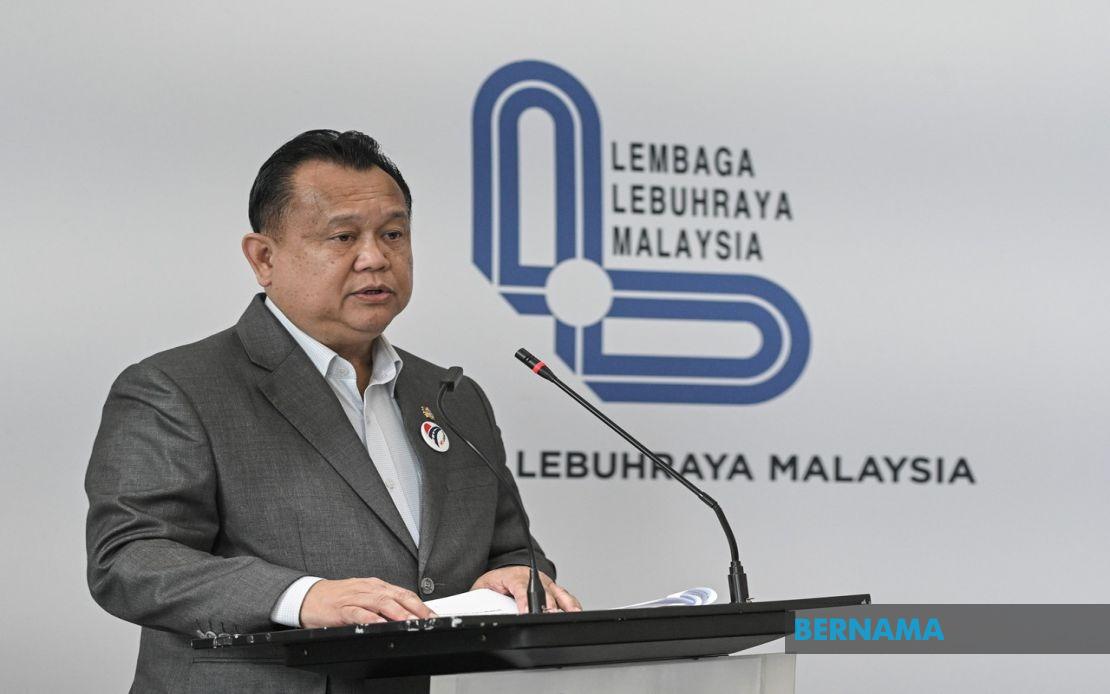
The Malaysian government has committed RM25.2 million towards enhancing safety at 32 accident-prone stretches of highway by installing solar-powered LED street lighting systems, marking a significant step in the country's road safety agenda. Works Minister Datuk Seri Alexander Nanta Linggi announced the initiative, which forms part of the MADANI Monitoring programme and represents the first phase of a broader government effort to tackle the persistent problem of highway accidents across the nation.
The project envisions the installation of 3,000 light poles across the designated high-risk locations, with works set to commence immediately following the handover of the Letter of Acceptance to the selected contractor. The entire initiative is expected to reach completion by the end of November this year, reflecting the government's commitment to delivering tangible safety improvements within a defined timeframe. This accelerated schedule underscores the urgency with which authorities view the problem of road accidents on Malaysia's highway network.
The allocation represents the first tranche of a larger commitment announced in October's 2026 Budget. While the original announcement referenced RM30 million for the complete programme, the current phase deploys RM25.2 million, with remaining funds to be distributed following periodic assessments of additional requirements and priorities. This phased approach allows the government flexibility in adapting to emerging safety needs while ensuring resources are deployed efficiently across the most critical areas.
The decision to employ solar-powered LED technology reflects modern infrastructure thinking, combining safety improvements with environmental sustainability. Solar LED systems eliminate ongoing electricity costs, reduce grid dependency, and provide reliable illumination even in remote locations where extending conventional power infrastructure would be prohibitively expensive. This technological choice is particularly relevant for Malaysian highways that traverse diverse terrain, including rural and mountainous regions where traditional street lighting has often been inadequate.
Road safety has emerged as a pressing national concern, with highways consistently recording high accident rates that claim lives and cause economic losses through medical costs, vehicle damage, and lost productivity. Poor visibility during night hours contributes significantly to accident severity and frequency, particularly on stretches where traffic volumes remain high but infrastructure development has lagged. The government's focus on illumination addresses a fundamental but frequently overlooked factor in accident prevention, complementing other safety initiatives such as road maintenance, speed enforcement, and driver education programmes.
The collaboration between the Works Ministry, Finance Ministry, and Malaysian Highway Authority demonstrates institutional coordination in tackling a multifaceted problem. Road safety requires integrated approaches spanning infrastructure development, regulatory enforcement, and resource allocation. By pooling expertise and funding across these entities, the government positions itself to implement solutions more comprehensively than any single organisation could achieve independently. This inter-ministerial cooperation model offers lessons for other infrastructure and public safety initiatives requiring coordinated national responses.
For highway users, improved lighting carries immediate practical benefits. Better visibility reduces the likelihood of accidents caused by obstacles, debris, or other vehicles remaining undetected until collision becomes inevitable. Enhanced illumination also creates psychological effects, with drivers exhibiting increased alertness in well-lit environments. These combined factors translate to demonstrable reductions in accident rates at locations where comprehensive lighting systems have been installed, providing empirical support for the government's investment strategy.
The identification of 32 specific high-risk locations reflects data-driven prioritisation, presumably based on accident statistics and incident reports from the Malaysian Highway Authority. Concentrating resources on the most dangerous stretches maximises the return on investment in terms of lives saved and injuries prevented. This targeted approach differs from blanket infrastructure development and demonstrates sophisticated understanding of resource allocation within budget constraints. As the programme expands beyond its initial phase, similar data analysis should guide the selection of subsequent locations for improvement.
For Malaysia's transportation sector and broader economy, the initiative carries indirect benefits extending beyond immediate safety gains. Reduced accident rates translate to fewer disruptions to traffic flow, lower insurance costs for regular highway users, and reduced burden on emergency services and hospitals. Businesses relying on road transport benefit from more reliable journey times and lower vehicle operating costs associated with accident avoidance. These efficiency gains, though difficult to quantify precisely, can contribute meaningfully to logistics competitiveness and economic productivity across the nation.
The investment also signals government commitment to modern infrastructure development standards. International best practices increasingly emphasise intelligent, sustainable street lighting as fundamental to urban and highway safety systems. By adopting solar LED technology, Malaysia positions itself alongside countries that prioritise contemporary solutions to traditional problems. This approach can enhance investor confidence in the nation's infrastructure sector and demonstrate commitment to delivering quality public works that meet international standards.
Looking forward, the successful execution of this initial phase will likely inform strategy for subsequent phases of the programme. Monitoring the impact of the 3,000 installed poles on accident rates, visibility conditions, and user satisfaction will generate valuable data for refining the approach. The government may identify additional high-risk locations requiring similar treatment, or discover opportunities to integrate the lighting infrastructure with other safety measures such as improved signage, road markings, or emergency response facilities.
The project's completion deadline of November 2024 will provide early indicators of implementation effectiveness and contractor performance. Timely delivery at the promised cost and quality standards will build momentum for the programme's expansion and demonstrate the government's capacity to execute major infrastructure initiatives efficiently. Conversely, delays or cost overruns could impact public confidence in similar future projects. The accountability framework surrounding this contract therefore extends beyond the immediate lighting installation to broader questions about government project management capability.