The Malaysian government has committed RM10 million in annual funding for the Special Fishermen Housing Project, a comprehensive initiative designed to enhance the socio-economic conditions and residential quality of the nation's fishing communities across all states. According to Muhammad Faiz Fadzil, chairman of the Fisheries Development Authority of Malaysia (LKIM), this substantial investment reflects the administration's commitment to supporting one of Malaysia's traditional economic sectors during a period of significant structural change.
The funding structure reveals a two-pronged approach to addressing housing deficiencies within the fishing community. Approximately RM6.8 million has been directed toward repairing the existing homes of 344 eligible fishermen nationwide, while the remainder, exceeding RM3.1 million, supports the construction of 36 new residential units in various locations. This dual strategy acknowledges both the immediate need to upgrade substandard housing stock and the longer-term requirement for expanding adequate accommodation for younger and emerging fishing families.
Progress on the repair component has advanced considerably, having achieved 80 per cent completion by the time of the announcement at Tumpat in Kelantan. Muhammad Faiz projected that all renovation work would reach full completion between August and September of the year, providing families with improved living facilities within a defined timeframe. The construction phase for new housing, however, faces more protracted timelines due to complications surrounding land ownership and inheritance disputes, issues that have historically plagued property development in rural Malaysian communities.
Financial allocations vary across regions to reflect construction cost differentials and local economic conditions. The government has established RM84,000 per unit as the standard allocation for new housing construction in Peninsular Malaysia, while raising this to RM95,000 per unit in the more geographically challenging and development-constrained states of Sabah and Sarawak. For repair work, individual fishermen can access up to RM20,000 per dwelling to address structural, sanitary, and safety improvements. Kelantan state alone received RM388,000 in dedicated PKPN funding, reflecting the region's significant fishing population and its importance to national maritime commerce.
Beyond housing intervention, government policy is evolving to address fundamental vulnerabilities within the conventional fishing sector. Resource depletion and escalating operational costs, particularly fuel expenses despite ongoing subsidies, have created a precarious economic situation for traditional fishermen who remain dependent on capture fishing. Muhammad Faiz acknowledged these mounting pressures, emphasising that maintaining current fishing practices without diversification exposes communities to unsustainable income volatility and long-term livelihood insecurity.
The government has consequently launched a strategic pivot toward aquaculture development as a complementary and eventually dominant source of income for fishing communities. This reorientation aligns with Malaysia's broader fisheries development targets, which aim for 40 per cent of national fish production to originate from aquaculture sectors by 2030. The shift represents a deliberate policy choice to transition from resource extraction to controlled production systems, a transition that requires significant investment in infrastructure, knowledge transfer, and market development.
To facilitate this transition, LKIM has allocated RM400,000 specifically to the Kelantan State Fishermen's Association (PENEKA) to establish tank-based prawn farming operations. This initiative demonstrates government willingness to provide both capital investment and organisational support for aquaculture ventures, recognising that individual fishermen often lack the initial resources and technical expertise required to shift production paradigms independently. The prawn farming project will serve as a demonstration model, offering Kelantan fishermen practical exposure to controlled aquaculture systems before scaling operations.
The aquaculture expansion strategy reflects growing recognition that Malaysia's marine resources, once seemingly boundless, face genuine sustainability challenges from overfishing, climate impacts, and ecosystem degradation. By directing fishing communities toward aquaculture, the government seeks to preserve livelihoods while reducing pressure on natural fish stocks and transitioning toward more predictable, controllable production systems. This approach positions Malaysian fishermen within regional aquaculture supply chains and allows them to participate in value-added production rather than remaining confined to catch-dependent commodity markets.
Implementation of these initiatives occurs against a backdrop of global seafood market dynamics and regional competition in aquaculture development. Thailand, Vietnam, and Indonesia have established substantial aquaculture sectors that compete directly with Malaysian wild-capture products in regional and international markets. By accelerating its own aquaculture transition, Malaysia aims to enhance competitiveness while ensuring its fishing communities remain economically viable as production patterns inevitably shift from capture to cultivation.
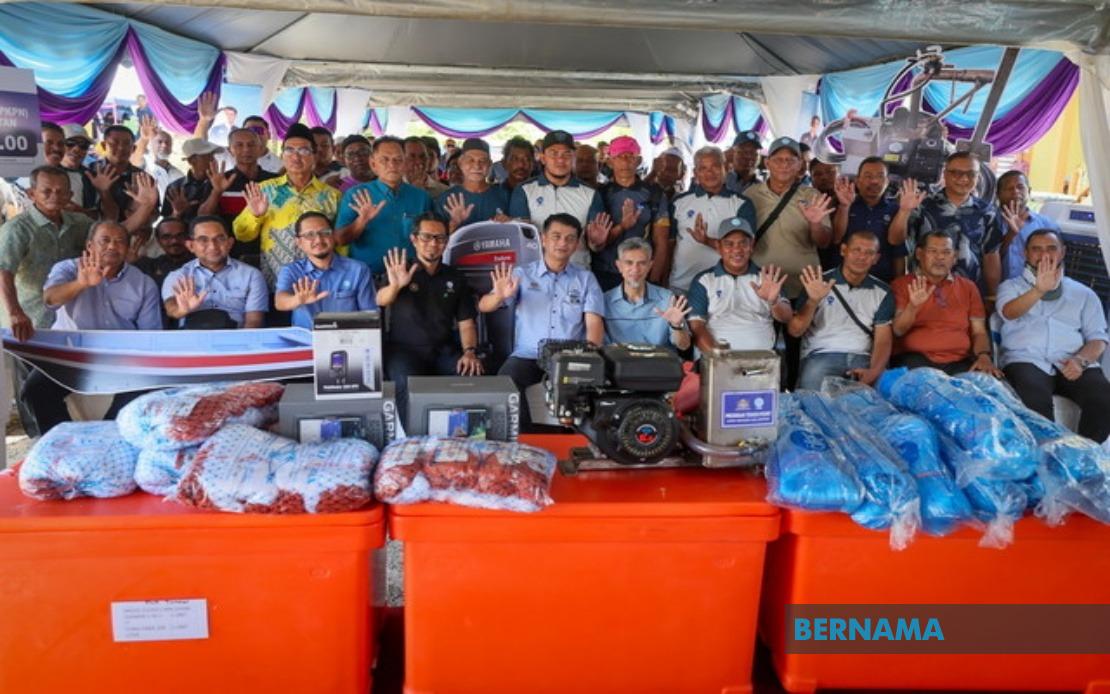
The housing programme and aquaculture promotion, announced during a LKIM engagement session with Kelantan fishermen at the Fish Inspection Complex in Pengkalan Kubor, represent integrated policy elements addressing both immediate livelihood concerns and long-term sectoral transformation. Government officials including Kelantan LKIM director Sobri Ibrahim participated in consultations, indicating sustained engagement with fishing communities and responsiveness to their specific regional circumstances and development priorities.
Plans to expand the tank-based prawn farming model beyond Kelantan signal government intention to establish aquaculture momentum across multiple states, building a diversified production base and creating replicable models that other regional fishing associations can adopt. This phased geographic expansion allows LKIM to refine operational procedures, identify technical challenges, and develop effective training mechanisms before demanding rapid scaling across the entire sector.

