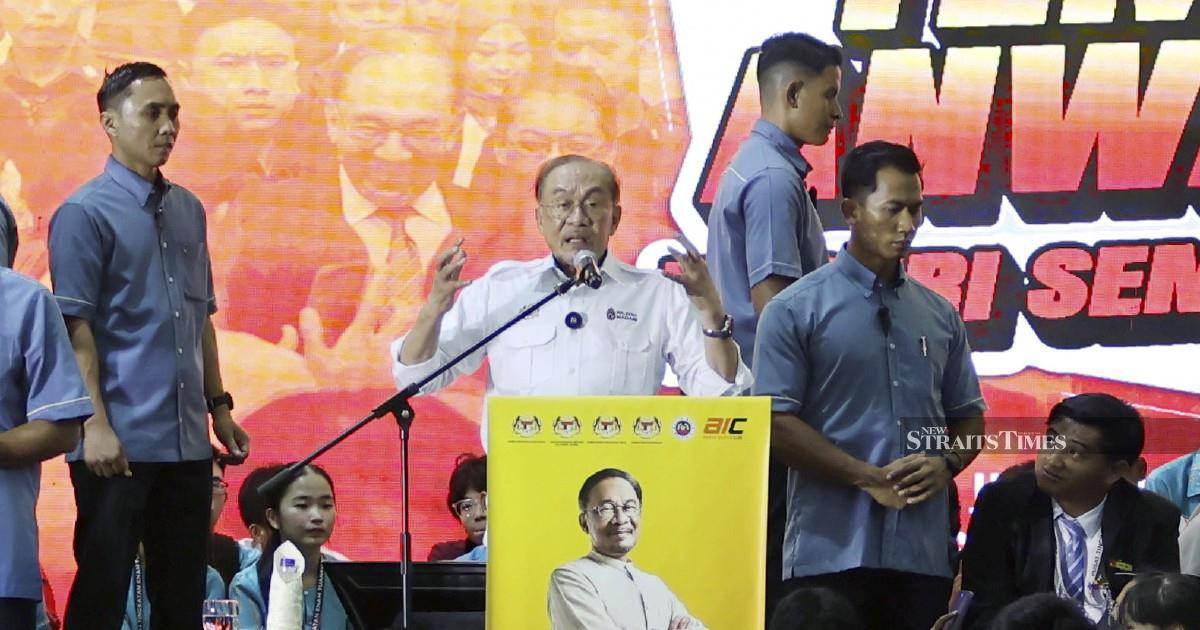
Prime Minister Datuk Seri Anwar Ibrahim has justified the government's capital injection into Tabung Haji, stating that the pilgrimage savings institution faced an existential financial crisis that necessitated immediate state intervention. Speaking in Seremban, Anwar explained that without government backing, the fund would have descended into insolvency as mounting losses continued to erode its financial position. The Prime Minister's comments represent an official acknowledgement of the severe structural problems that had accumulated within Malaysia's largest Islamic financial institution dedicated to facilitating Hajj pilgrimages.
The situation confronting Tabung Haji reflects deeper challenges within the organisation's investment strategy and operational model that have emerged over successive years. The fund, which manages billions of ringgit in savings from millions of Malaysian Muslims preparing for their religious obligations, had encountered significant difficulties in generating adequate returns on its asset portfolio. These underperformances, combined with administrative inefficiencies and exposure to problematic investments, created a cascading effect that depleted reserves and threatened the fund's capacity to honour withdrawal commitments to its members.
Anwar's acknowledgement signals a shift towards greater transparency regarding Tabung Haji's troubled financial trajectory, a matter that had generated considerable public concern and speculation among the fund's membership. The institution's deteriorating performance had become increasingly difficult to obscure as members faced delays in receiving their savings and questions mounted about the security of their deposits. The government's decision to provide financial support therefore carries significance beyond mere institutional rescue, touching on public confidence in Islamic financial instruments and the state's capacity to protect citizens' savings.
The financial liabilities accumulated by Tabung Haji had reached levels where normal business operations could no longer absorb ongoing losses without further depleting the fund's reserves. Poor investment decisions in previous years, including exposure to sectors that subsequently underperformed, contributed substantially to the accumulated deficit. Additionally, the fund's operational costs, relative to its asset base, had become unsustainable, creating a structural imbalance between revenue generation and administrative expenditure.
From a policy perspective, the government intervention raises questions about regulatory oversight and early warning mechanisms that should have flagged these problems before they reached crisis proportions. The fact that Tabung Haji required emergency capital injection suggests gaps existed in the supervisory framework that monitors Islamic financial institutions. These governance questions will likely influence future reforms in how such bodies are monitored and managed, particularly given the prominence of Tabung Haji within Malaysia's Islamic finance ecosystem.
For the millions of Malaysians with savings in Tabung Haji, the government's intervention provides reassurance that their accumulated funds will not be lost to institutional failure. However, members will be watching closely how the fund restructures its operations going forward. The bail-out creates an expectation that management changes and strategic reforms will follow, addressing the fundamental issues that precipitated the crisis. Without demonstrable operational improvements, public confidence may remain fragile despite the government's financial backstop.
The broader context for Tabung Haji's difficulties includes the challenging global investment environment of recent years, marked by volatile markets and low returns across multiple asset classes. Nevertheless, competitors within the Islamic financial sector have navigated these conditions without requiring government rescue, suggesting that Tabung Haji's problems extend beyond external macroeconomic factors to encompassing internal management and strategic decision-making. The fund's difficulties therefore reflect specific institutional failures rather than sector-wide systemic challenges.
Anwar's statement also implicitly acknowledges that allowing Tabung Haji to collapse would have triggered significant social and political consequences. The fund serves as a critical component of Malaysia's Islamic financial architecture and pilgrimage facilitation system. An institutional failure would have disrupted the Hajj journey for thousands of Malaysians and potentially damaged confidence in other Islamic financial institutions, creating broader ramifications for the Islamic finance sector's credibility.
The government's rescue operation positions Tabung Haji for a period of intensive restructuring and recovery. Management attention must now focus on stabilising the fund's asset base, improving investment returns, reducing operational costs, and rebuilding member confidence. The Prime Minister's public explanation of the intervention suggests the government intends to maintain scrutiny over the fund's subsequent performance, implying that future management will operate under enhanced oversight and accountability mechanisms.
Looking forward, Tabung Haji's recovery will depend on successful implementation of comprehensive reforms addressing both immediate financial challenges and longer-term strategic positioning. The fund must restore profitability while maintaining accessibility for Malaysia's Muslim population preparing for pilgrimage. The government's intervention, while necessary to prevent catastrophic collapse, creates a platform for fundamental reinvention rather than a return to pre-crisis operational normalcy. Success will be measured not merely by financial stabilisation but by renewed member confidence and sustainable business performance.

