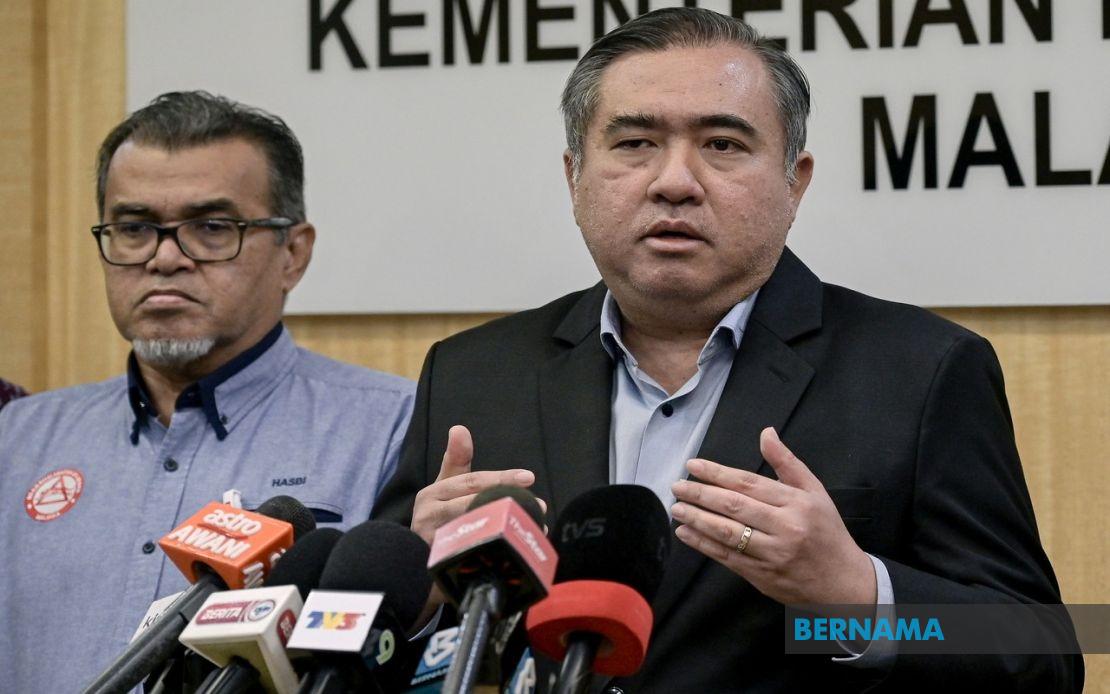
Transport Minister Anthony Loke has moved to clarify the government's regulatory stance on port operations and executive appointments, emphasizing that Malaysia's policy framework focuses exclusively on ownership structure rather than day-to-day management decisions. Speaking in Putrajaya on July 17, Loke drew a distinction between the government's role in overseeing strategic national assets and its non-involvement in internal corporate governance matters, a clarification that comes amid international media coverage of recent leadership changes at major port operators.
The minister's comments address questions surrounding the appointment of Sultan Ahmed Sulayem, former chairman and chief executive of DP World, to the position of executive chairman at MMC Ports Holdings Bhd, Malaysia's largest port operator group. This transition occurred following the immediate resignation of Azman Shah Mohd Yusof from his role as group chief executive officer. Rather than signalling government approval or disapproval of the appointment, Loke's statement reframes the government's relationship with port operators as one fundamentally concerned with preserving Malaysian financial control rather than micromanaging operational decisions.
Central to Loke's position is the government's established ownership requirement for companies holding port concessions and operating strategic national assets. This policy mandates that Malaysian entities must retain at minimum 51 per cent shareholding in such enterprises, a threshold designed to preserve national economic sovereignty over critical infrastructure. The minister emphasized that this ownership criterion represents the complete scope of government regulation in this domain, with no additional requirements imposed on the selection of executive personnel or management structures. This approach acknowledges the legitimate role of foreign expertise and investment while maintaining a safeguard against foreign control of strategically important ports.
The clarification carries particular significance for Malaysia's port sector, which operates within a competitive regional environment where efficiency and international expertise are increasingly valued. By explicitly stating that the government permits foreign nationals to serve in senior executive roles, Loke signals openness to global talent recruitment practices commonly followed by major port operators worldwide. He specifically referenced the Port of Tanjung Pelepas as an example of a Malaysian port already led by a foreign national chief executive officer, suggesting that such arrangements are neither unusual nor problematic from a government perspective provided ownership structures meet established requirements.
Loke's emphasis on the distinction between corporate governance matters and government oversight reflects a broader shift toward regulatory pragmatism in Malaysia's strategic infrastructure management. Rather than exercising influence over hiring decisions or operational strategy, the government has positioned itself as the custodian of ownership thresholds, recognizing that port operators require autonomy to recruit talent competitively and manage their businesses effectively. This separation of concerns allows port operators to pursue international best practices in management without seeking ministerial approval for every personnel decision, potentially enhancing operational efficiency and competitiveness.
However, the minister introduced an important caveat regarding changes in shareholding structure. While management appointments proceed without government notification requirements, any alterations to the ownership composition of port operators must be formally communicated to relevant authorities, including the Public-Private Partnership Unit (UKAS). This dual approach creates a system where ownership changes trigger regulatory review but personnel changes do not, acknowledging that shifts in financial control carry different implications than the rotation of executive staff. The government maintains visibility over who owns port assets while respecting corporate freedom in determining who manages them operationally.
Regarding the specific situation at MMC Ports Holdings Bhd, Loke stated that the transport ministry had not received formal notification of any shareholding changes from either the company or its concessionaire. This absence of notification suggests either that no material ownership restructuring has occurred alongside the leadership transition, or that such notification may still be pending. The distinction is meaningful because it indicates whether the government views the management changes as routine operational matters or as shifts with potential implications for the ownership structure that would trigger formal disclosure requirements.
The timing of Loke's comments reflects broader international scrutiny of port infrastructure governance in Southeast Asia, where questions about foreign investment and control of key assets have become increasingly sensitive geopolitical considerations. By preemptively clarifying Malaysia's regulatory position, the transport minister addresses potential concerns that foreign appointment of executives signals deeper ownership compromises. His articulation of the 51 per cent threshold as the government's primary control mechanism provides reassurance that Malaysian interests remain protected regardless of who occupies managerial positions.
For Malaysian businesses and port operators, Loke's statement offers clarity on the regulatory environment governing strategic asset management. Companies operating port facilities can pursue international recruitment strategies and welcome foreign executives without regulatory hurdles, provided they maintain compliance with ownership requirements. This flexibility potentially enhances Malaysia's competitive position in attracting global port management expertise, important given the region's increasing importance as a shipping hub and the professionalization of port operations globally.
The minister made these comments while addressing broader transport sector reforms, specifically amendments to the Road Transport Department Act that establish new compensation provisions for accident victims and enhance the demerit points system for traffic offences. These simultaneous announcements underscore the government's ongoing commitment to transport sector modernization across multiple dimensions, from infrastructure governance to road safety regulation.
International investors and foreign port operators monitoring Malaysian regulatory trends can draw assurance from Loke's clarification that the government maintains a clear, predictable ownership-focused regulatory framework rather than attempting to exert influence over management decisions. This transparency may facilitate increased foreign investment in Malaysian port infrastructure while maintaining the government's core objective of ensuring Malaysian ownership control over strategic assets. The approach balances economic pragmatism with safeguarding national economic interests, a balance increasingly important as Southeast Asian nations navigate between openness to global capital and protection of strategic control.

