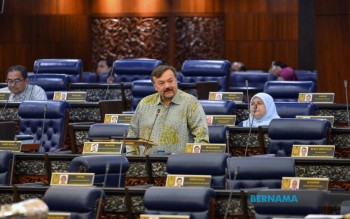
The Malaysian government has committed substantial resources to sustaining the micro-enterprise sector, having approved over RM500 million in financing in the space of just six weeks. Finance Minister II Datuk Seri Amir Hamzah Azizan disclosed during parliamentary proceedings that the disbursements, made between May 15 and June 26, 2026, directly assisted more than 30,000 small business operators struggling to maintain operations in an environment of elevated operational expenses.
This latest tranche represents a portion of an overarching RM5 billion Micro Financing Facility Programme designed to cushion micro enterprises as they navigate mounting cost pressures. The programme reflects government recognition that Malaysia's smallest business segment—often overlooked in traditional policy discussions—forms a critical backbone of local economies, particularly in lower-income communities where such ventures provide essential employment and income opportunities. By channeling funds through multiple established financial institutions and development organisations, authorities have sought to ensure broad geographic reach and accessibility for diverse entrepreneurial groups.
The financing pipeline encompasses a deliberate mix of institutions calibrated to serve different market segments. Distribution occurred via Amanah Ikhtiar Malaysia, which has historically focused on the underbanked; conventional channels including Bank Rakyat and Bank Simpanan Nasional; agricultural lender Agrobank; the business development arm TEKUN Nasional; and MARA, which serves Bumiputera entrepreneurs. This institutional diversity acknowledges that one-size-fits-all lending approaches rarely work in heterogeneous markets, and that entrepreneurs with varying credit histories, collateral positions, and sector focuses require customized access points.
Beyond direct lending, the government has layered additional support through the RM5 billion MADANI Government Assistance Guarantee Scheme, administered by Syarikat Jaminan Pembiayaan Perniagaan Bhd (SJPP). Guarantee schemes reduce perceived risk for lenders, thereby widening the pool of small businesses able to access conventional bank credit. Between May 15 and June 20, 2026, the SJPP approved RM219 million in financing guarantees benefiting more than 300 MSMEs, with particular concentration in agriculture, construction, logistics and tourism—sectors heavily affected by pandemic-related disruptions and now facing renewed volatility from global economic uncertainty.
The guarantee mechanism addresses a persistent bottleneck in Malaysian SME financing: many small operators possess viable business models and market potential but lack sufficient collateral or credit history to satisfy traditional banking criteria. By guaranteeing a portion of default risk, SJPP effectively bridges this gap, allowing lenders to expand their exposure to underserved segments while protecting depositors' funds. The scheme's sectoral focus reveals strategic priority-setting, targeting industries with both employment multiplier effects and export potential.
Amir Hamzah emphasised that SJPP has simultaneously engaged with financial institutions to facilitate debt restructuring and payment holidays for enterprises already under stress. This dual-track approach—simultaneously extending new credit while easing burdens on existing borrowers—demonstrates sophistication often absent from blunt stimulus measures. Restructuring and rescheduling options allow struggling operators to continue servicing debt without being forced into insolvency, preserving both the business asset and the jobs it supports.
Complementing these initiatives, Bank Negara Malaysia launched the RM5 billion SME Stabilisation Relief Facility in mid-May 2026, which has already approved nearly RM1 billion across more than 1,500 MSMEs. This central bank-backed facility signals confidence in the fundamental viability of the broader SME sector whilst addressing short-term liquidity challenges. The sequential implementation of multiple schemes suggests coordinated planning across the finance ministry and banking regulator, rather than ad-hoc responses to political pressure.
Capacity remains substantial for additional applications, with approximately RM4 billion in allocated funds still available. This buffer indicates that financing constraints are not the immediate bottleneck; rather, the constraint lies in awareness, application processes, or eligibility criteria that may still exclude deserving enterprises. The sufficiency of funds also provides confidence to small business operators that financing support is not temporary or means-tested to the point of exhaustion.
For Malaysian readers, these developments carry multiple implications. Small traders and hawker operators—cornerstones of Malaysia's informal economy and urban retail landscapes—now have formal channels to upgrade equipment, manage seasonal cash shortfalls, or navigate unexpected cost spikes. The geographic spread of lending institutions means that entrepreneurs in smaller towns and rural areas are not disadvantaged relative to their Klang Valley counterparts. Additionally, the emphasis on guarantee schemes over pure subsidies means that business discipline is maintained; lenders retain incentive to assess borrower viability, preventing capital misallocation.
Regionally, Malaysia's multi-layered support architecture contrasts with simpler models employed by neighbouring economies and provides a case study in balancing inclusivity with fiscal sustainability. By leveraging existing institutions rather than establishing new bureaucracies, the approach minimises implementation delays. However, the real test lies in uptake rates and ultimate business survival outcomes—metrics that will become apparent only in subsequent quarters as the full effects of elevated costs manifest.
The parliamentary response to the Kalabakan MP's question underscores that MSME resilience remains a priority across Malaysia's political spectrum, at least in formal discourse. Whether these funding commitments prove sufficient to offset structural headwinds facing small businesses—including wage pressures, supply chain fragility, and shifting consumer preferences toward e-commerce—will determine the durability of livelihoods dependent on traditional micro-enterprise models.

