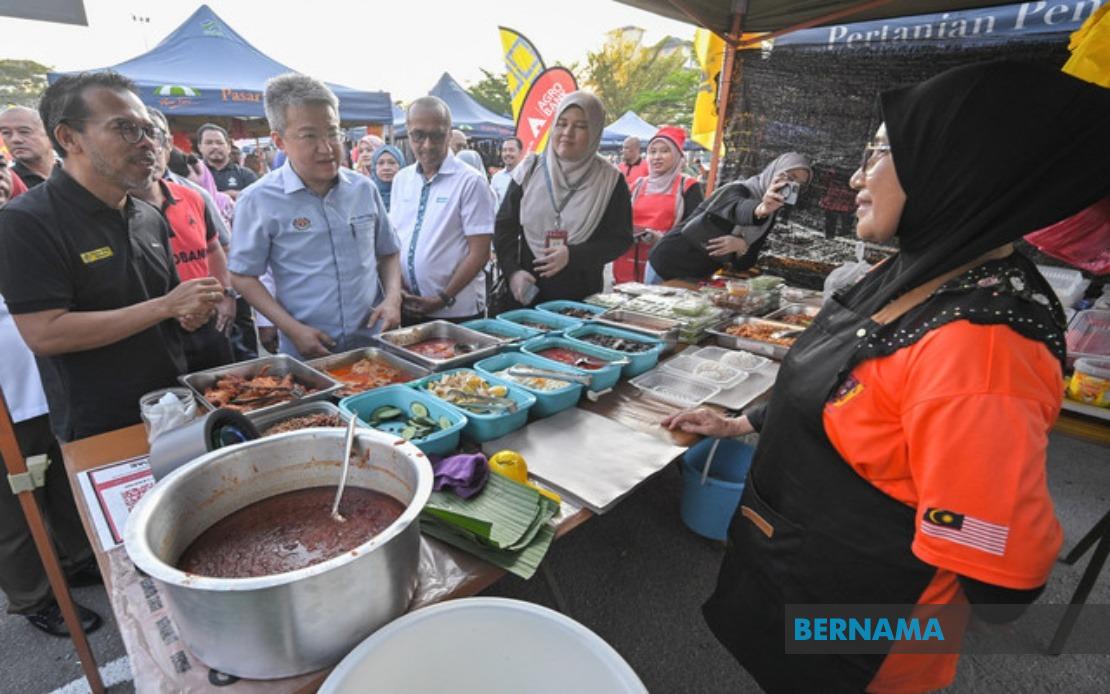
The Malaysian government is making a substantial push to democratise access to credit for the nation's vast informal economy, committing RM9.8 billion in microfinancing capacity through six major institutions. Deputy Finance Minister Liew Chin Tong unveiled this expanded framework during a community outreach event at Dataran Puchong Permai Farmers' Market, signalling Putrajaya's determination to prevent small traders and hawkers from being marginalised in the broader financial system.
The scale of this allocation reflects growing recognition that Malaysia's informal sector—encompassing countless street vendors, market stall operators, and micro-entrepreneurs—remains chronically underserved by conventional banking channels. Small traders frequently struggle to meet stringent collateral requirements and documentation standards demanded by mainstream lenders, creating a financing gap that has long hindered business expansion and formality among this demographic. By deploying RM9.8 billion specifically channelled through institutions better positioned to serve grassroots borrowers, the government acknowledges that inclusive growth requires tailored financial infrastructure.
The initiative draws upon expertise from six key agencies operating at different points of the microfinance ecosystem. Bank Simpanan Nasional, Agrobank, and Bank Rakyat each bring distinct capabilities refined through years of lending to underserved segments. Supporting institutions including TEKUN Nasional, Amanah Ikhtiar Malaysia, the Companies Commission of Malaysia, and Majlis Amanah Rakyat provide complementary advisory services, business registration facilitation, and direct application processing. This consortium approach eliminates traditional bottlenecks by bringing credit officers directly to traders rather than requiring applicants to navigate intimidating bank branches or navigate complex bureaucracy independently.
Liew emphasised that the government's vision extends beyond merely expanding loan volume; the objective centres on simplifying the entire access pathway. Many hawkers lack formal business registration, tax identification numbers, or audited financial statements—prerequisites that would automatically disqualify them from standard bank lending. By positioning advisory agencies at community markets, officials can assist traders in completing registration simultaneously with loan application, substantially reducing friction in the approval process. The Puchong initiative has already validated this approach, with twelve traders securing approvals within a single event—seven through Amanah Ikhtiar Malaysia, three through Bank Simpanan Nasional, and two through Agrobank.
The programme reflects a deliberate strategy of taking financial services to traders rather than expecting entrepreneurs to journey to institutional headquarters. This "Mikro Kredit Turun Padang" initiative has cycled through multiple locations including Taman Melawati, Kelana Jaya, and Bandar Tasik Permaisuri farmers' markets, establishing a mobile model that can be replicated across urban and suburban settings. By embedding credit provision within familiar community spaces, the government removes psychological and logistical barriers that have historically discouraged informal traders from formal borrowing.
For Malaysian hawkers and small entrepreneurs, this represents a meaningful shift in how government treats microfinance. Rather than treating street traders as incidental to the broader economy, policymakers are acknowledging their role as significant contributors to employment, urban vitality, and household income generation across Malaysian society. A street-market ecosystem employs hundreds of thousands of Malaysians and provides affordable goods and services to millions of consumers; financial inclusion for this segment has multiplier effects throughout local economies.
The deputy finance minister also highlighted the government's commitment to capturing grassroots feedback and channelling it through institutional decision-making frameworks. By gathering direct input from traders during these community events, the Ministry of Finance signals intent to inform budget allocations and policy refinements based on real-world challenges rather than assumptions made in federal offices. Liew indicated that compelling feedback from these outreach programmes would be escalated to the Prime Minister for consideration during future budget cycles, embedding small-trader priorities into Malaysia's macroeconomic planning.
This microfinance expansion arrives during a period when Malaysian small traders face intensifying pressures. Operating costs including rental, utilities, and labour continue rising while consumer spending remains subdued in many segments. For vendors operating on thin margins, accessing capital to purchase inventory in bulk, upgrade equipment, or invest in basic technology can determine whether businesses survive or collapse. By lowering cost and complexity barriers to borrowing, the government provides traders with tools to navigate economic headwinds more effectively.
The initiative also carries regional significance. Many Southeast Asian governments struggle with similar challenges of financial inclusion for informal sectors, and Malaysia's integrated approach—combining multiple lenders, on-site advisory services, and streamlined registration—offers a replicable model. As other ASEAN nations grapple with inclusive growth imperatives, the Malaysian experience may provide valuable lessons in how to design microfinance systems that genuinely serve grassroots entrepreneurs rather than merely claiming to serve them.
Successfully executing this RM9.8 billion commitment will require sustained coordination among participating institutions and transparent tracking of outcomes. The true measure of success will not simply be funds disbursed but rather the proportion of borrowers who successfully repay loans, graduate to larger credit facilities, formalise their businesses, and ultimately contribute more substantially to tax revenue and employment generation. As the programme expands to additional markets and locations, monitoring mechanisms must ensure that credit reaches truly marginalised traders rather than concentrating among those already positioned closest to financial systems.