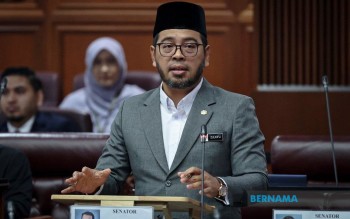
The government's intervention in Tabung Haji's financial crisis represents a strategic bailout exceeding RM10 billion, motivated by the need to restore the institution's viability rather than to seize its assets or liquidate holdings to external parties, Parliament was informed today. Minister in the Prime Minister's Department (Religious Affairs) Dr Zulkifli Hasan presented this clarification during a special sitting of the Dewan Rakyat, responding to widespread speculation and misinformation surrounding the rescue operation and its implications for the Islamic pilgrimage fund's future.
The rescue became necessary following a critical deterioration in Tabung Haji's financial position by the final quarter of 2018, when the institution's deficit expanded beyond RM10 billion as liabilities substantially outpaced assets. This unsustainable gap left the organisation technically insolvent and unable to meet its obligations to depositors without immediate government intervention. The window for action proved remarkably tight, with decision-makers facing a deadline of merely three months to implement a comprehensive solution that would prevent complete institutional collapse.
Dr Zulkifli emphasised that the underlying cause of this financial emergency stemmed from internal mismanagement and embezzlement, rather than structural market failures or economic downturns beyond institutional control. These findings emerged from investigations by the Royal Commission of Inquiry established to examine the circumstances that precipitated the crisis. The scale of financial irregularities uncovered during these inquiries justified the government's unprecedented financial commitment to restore confidence in an institution that serves millions of Muslim Malaysians preparing for the hajj pilgrimage.
A particularly contentious issue addressed by the minister involved false claims circulated by what he termed "irresponsible parties" alleging that Tabung Haji's assets had been sold to non-Muslims or Chinese business interests. Such accusations, he clarified, were entirely without foundation and appeared designed to inflame communal tensions and manipulate public opinion during a period of institutional vulnerability. These unfounded narratives represented a dangerous distortion of the government's rescue efforts and warranted unambiguous public correction.
The minister clarified the actual asset ownership structure to dispel confusion and misinformation. Tabung Haji's assets are held through Urusharta Jamaah, a wholly-owned subsidiary company of the Minister of Finance Incorporated, ensuring they remain under government stewardship rather than private or foreign control. This arrangement maintains public sector oversight while allowing for professional management of substantial financial holdings accumulated through decades of deposits from Muslim pilgrims across Malaysia.
The decision to deploy public funds represented a critical juncture for policymakers balancing institutional rescue against fiscal responsibilities. The Pakatan Harapan Government, confronted with Tabung Haji's insolvency, recognised that allowing the institution to fail would have devastated millions of Malaysian Muslim depositors who rely on the fund for hajj financing and long-term savings. The restructuring plan implemented through the bailout specifically targeted restoration of solvency and sustainability rather than opportunistic asset acquisition or privatisation.
For Malaysian and Southeast Asian readers, this situation underscores the vulnerability of large financial institutions to internal fraud and mismanagement, regardless of their social and religious significance. Tabung Haji's near-collapse demonstrates how accumulated irregularities can rapidly escalate into systemic crises requiring massive state intervention. The institution's prominence means its stabilisation carries implications beyond immediate depositors, affecting the broader Islamic finance sector's credibility across the region.
The government's transparent articulation of its bailout rationale aims to rebuild public confidence in both Tabung Haji and the institutions managing its recovery. By clarifying that the rescue prioritises restoration over asset seizure, authorities attempt to reassure depositors that their funds remain protected and properly managed. This messaging becomes particularly important given the fund's cultural and spiritual significance to millions of Malaysian Muslims planning life-changing pilgrimages.
The Royal Commission of Inquiry's investigation into Tabung Haji's collapse represents a methodical effort to identify systemic vulnerabilities and prevent similar crises in other large Malaysian financial institutions. The detailed examination of mismanagement and embezzlement mechanisms provides valuable lessons for regulators overseeing pension funds, cooperative societies, and other institutions holding substantial public deposits. These findings may inform enhanced governance standards and oversight mechanisms across the financial sector.
Moving forward, the government's commitment to long-term sustainability suggests that the RM10 billion bailout represents investment in institutional reform rather than a temporary financial patch. Successfully restoring Tabung Haji to operational health requires not merely injecting capital but fundamentally addressing governance weaknesses, internal controls, and management practices that enabled the embezzlement and mismanagement. The institution's recovery trajectory will reveal whether the restructuring plan addresses these deeper institutional challenges.
The bailout controversy also highlights the persistent challenge of combating misinformation during periods of institutional crisis. The false claims about asset sales to non-Muslim parties reveal how vulnerable societies become to divisive narratives when legitimate concerns about financial mismanagement intersect with communal sensitivities. Public officials must remain vigilant in rapidly debunking such claims while providing clear, factual information about institutional decisions and their rationales.
Ultimately, Tabung Haji's rescue demonstrates that even significant government financial commitments may become necessary to protect systemic financial stability and preserve public confidence in institutional structures serving millions of citizens. The government's decision to stabilise rather than liquidate the institution reflects recognition that some institutions possess social and cultural dimensions transcending purely commercial calculations. Whether this bailout successfully restores long-term viability while preventing future crises will determine whether the RM10 billion investment yields sustainable institutional reform.

