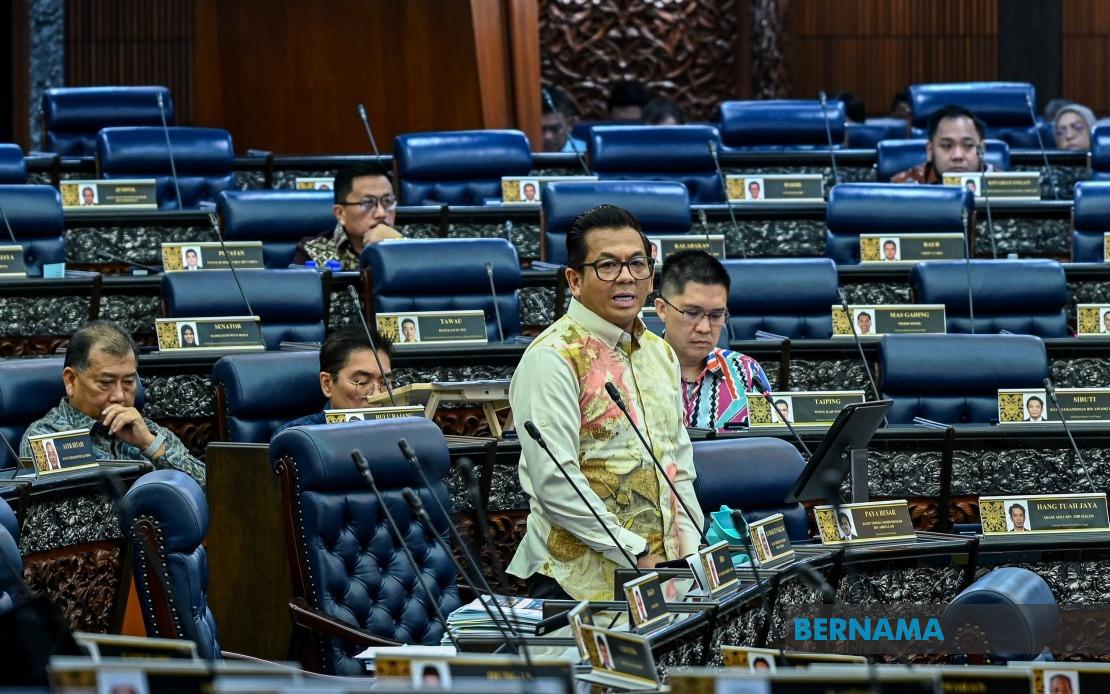
The Malaysian government is deploying a comprehensive data-driven approach to confront the widening gap in living costs between urban centres and rural regions, relying on sophisticated expenditure analysis to craft more effective policy responses. Deputy Economy Minister Datuk Mohd Shahar Abdullah outlined this strategy during parliamentary proceedings, emphasising how the Basic Living Expenditure framework—known locally as PAKW—serves as the analytical backbone for understanding and addressing these regional disparities in household finances.
The PAKW system, developed by the Department of Statistics Malaysia, represents a significant evolution in how policymakers approach cost-of-living challenges. Rather than applying uniform solutions nationwide, the framework recognises that household spending patterns vary dramatically depending on location, reflecting differences in affordability, necessity, and consumer choice across the country. This granular understanding has become essential as Malaysia grapples with persistent inflationary pressures that disproportionately affect lower-income households, particularly in less developed regions.
Mohd Shahar highlighted the concrete disparities that justify targeted intervention. Kuala Lumpur residents face a basic living expenditure of RM5,639 monthly, a figure substantially higher than the RM4,254 required in Kelantan or the RM4,511 in Sabah. These variations, which exceed 25 percent between the highest and lowest figures cited, underscore why a one-size-fits-all approach to wage setting, subsidy provision, or cost-of-living assistance would inevitably leave some communities undersupported while potentially creating distortions elsewhere. The disparities reflect not merely different price levels but fundamentally different consumption patterns shaped by local economic structures and available services.
The government has made the PAKW calculator publicly accessible through the myPAKW.dosm.gov.my portal, democratising access to this analytical tool. This move reflects a broader shift toward transparency in economic data, allowing individual Malaysians to benchmark their own household spending against regional and national averages. Such transparency empowers citizens to understand their financial positions relative to government-defined adequacy thresholds and can inform individual budgeting decisions while simultaneously providing valuable feedback to policymakers about actual spending patterns on the ground.
The introduction of PAKW follows a 2023–2025 economist field study specifically commissioned to develop solutions for inflation and rising prices, with particular attention to urban-rural disparities. This research initiative signals official recognition that Malaysia's cost-of-living challenges cannot be adequately addressed through generic macroeconomic tools alone. The focus on empirical research reflects international best practice, where countries increasingly ground social and economic policy in granular household-level data rather than broad aggregates that mask critical variations.
Beyond data collection, the government has anchored its response strategy in human capital development and income enhancement programmes embedded within the Five-Year Malaysia Plans. Rather than relying primarily on price controls or subsidies, which can create market distortions and fiscal strain, the approach emphasises raising both the income floor and ceiling for Malaysian workers. Training programmes designed to enhance employability and productivity form a core component of this strategy, aiming to equip workers—particularly in lower-income brackets—with skills enabling access to better-paying employment opportunities.
The evolution of Malaysia's Poverty Line Income serves as a key performance metric for this approach. The PLI surged to RM2,705 in 2024, representing a dramatic increase from RM980 in 2016—a nearly threefold jump over eight years. This sharp upward revision reflects both genuine improvements in income adequacy definitions and the acknowledged impact of inflation on the purchasing power required to meet basic needs. The regular recalibration of the PLI within successive Five-Year Plan cycles demonstrates official commitment to maintaining relevance in poverty thresholds rather than allowing them to become outdated measures disconnected from lived reality.
The strategic integration of PAKW data into policy formulation addresses a longstanding challenge in Malaysian governance: the tension between centralised national policy and the reality of regional economic diversity. Urban areas, with developed infrastructure and diverse employment opportunities, generate different cost pressures and income possibilities compared to rural regions where agricultural or resource-based economies dominate. By acknowledging these differences explicitly through data-backed analysis, policymakers can avoid the political pitfall of being perceived as neglecting particular regions while also improving the cost-effectiveness of government spending.
This approach carries significant implications for Southeast Asia more broadly. As regional economies develop unevenly, with some areas experiencing rapid urbanisation while others remain primarily rural, similar urban-rural divides emerge across the region. Malaysia's experience with PAKW and its commitment to tailored interventions offers a template that other ASEAN nations grappling with similar challenges might examine. The emphasis on transparency, regional analysis, and income-based rather than purely subsidy-based solutions reflects evolving sophistication in development economics practice.
Looking forward, the sustainability of Malaysia's approach depends on continued investment in data collection, analysis, and research capacity. The PAKW framework will require regular updates to remain meaningful as economic structures shift, new industries emerge, and price levels evolve. Additionally, the effectiveness of the underlying income-enhancement strategy—the training programmes and wage-lifting initiatives—will ultimately determine whether PAKW-informed policies translate into genuinely improved living standards for ordinary Malaysians. The framework itself provides the diagnosis; effective implementation of targeted interventions represents the actual cure for Malaysia's persistent urban-rural cost-of-living disparities.

