The Malaysian government has reaffirmed its commitment to sustaining comprehensive social assistance programmes despite unprecedented pressure on its finances from spiralling petroleum costs. Deputy Finance Minister Liew Chin Tong made the declaration in Parliament on July 15, confirming that existing aid schemes will remain intact even as the nation absorbs an estimated RM40 billion in fuel subsidies during 2024, largely attributed to escalating geopolitical tensions in West Asia.
This assurance addresses growing public concern about potential rollbacks in safety-net spending as budget pressures mount. The geopolitical crisis in the region, which peaked in March and April this year, sent global oil prices soaring—reaching as high as RM5 per litre in the spot market. Yet Malaysian consumers have been largely shielded from these shocks, continuing to purchase fuel at stable, affordable rates. The government's pledge to maintain assistance reflects a deliberate policy choice to prioritise household welfare even amid significant fiscal strain.
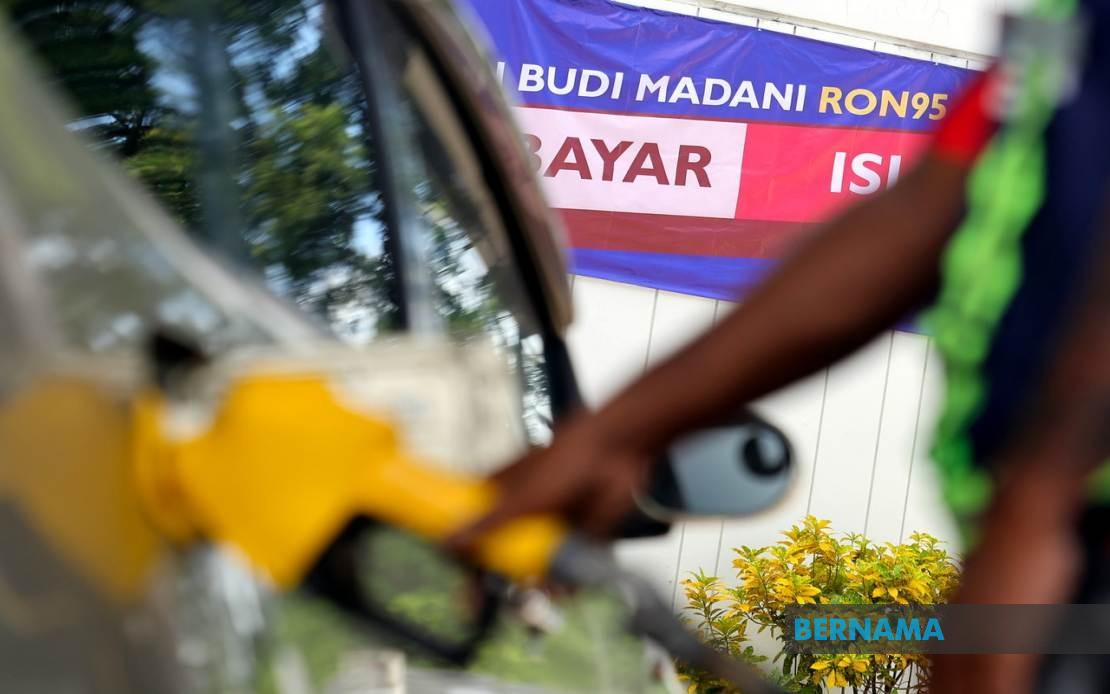
The cornerstone of the government's price stabilisation strategy remains the BUDI MADANI RON95 initiative, which launched in September of the previous year. Under this framework, petrol prices are fixed at RM1.99 per litre while supply remains protected through quota mechanisms. This dual approach—combining price certainty with guaranteed availability—has proven instrumental in insulating ordinary Malaysians from the volatile international energy market. Liew emphasised that the programme's success lies not merely in keeping prices low but in ensuring that citizens maintain reliable access to fuel despite global uncertainties.
The Deputy Finance Minister's parliamentary remarks came in response to a question from Mohd Sany Hamzan, representing Hulu Langat, regarding potential cutbacks to other welfare initiatives. Among the schemes Hamzan queried were Sumbangan Tunai Rahmah (STR) and Sumbangan Asas Rahmah (SARA), both direct cash assistance programmes targeting lower-income households, as well as school-based support. The question reflected legitimate apprehension about how the government might manage its competing fiscal obligations given the extraordinary subsidy burden.
Liew's response signalled a clear policy direction: the government would not sacrifice welfare spending to accommodate petroleum subsidies. Instead, both categories of expenditure would continue in parallel. This represents a significant commitment, as it indicates the authorities view social protection as non-negotiable even under constrained budgetary conditions. The stance underscores a political priority placed on maintaining purchasing power and living standards among vulnerable populations at a time when global inflationary pressures threaten household finances across the region.
Understanding the scale of the petroleum subsidy challenge illuminates the magnitude of this commitment. A RM40 billion annual outlay represents a considerable proportion of government revenue and competes directly with infrastructure investment, healthcare, and education spending. In regional context, such levels of fuel subsidy are comparatively generous; many neighbouring economies have progressively liberalised energy prices or implemented targeted subsidy schemes. Malaysia's approach of maintaining blanket price caps reflects a particular policy philosophy that privileges broad-based consumer protection over fiscal efficiency.
The geopolitical dimension warrants particular attention for Malaysian observers. The West Asian tensions driving oil prices have not abated significantly since April, and further escalation could push prices even higher. Should global benchmarks reach RM6 or RM7 per litre, the government's subsidy obligation could expand further. This creates a potential long-term sustainability concern that the government has not directly addressed. The BUDI95 mechanism provides an administrative buffer, but fundamentally it transfers market risk from consumers to the state budget.
Liew's framing of the BUDI95 programme as conferring a distinctive advantage to Malaysia merits scrutiny. He noted that Malaysian roads remain congested with traffic because fuel supply is guaranteed—an implicit contrast to potential shortages elsewhere. This perspective emphasises security of supply as a benefit beyond price control alone. In a region where energy security increasingly dominates strategic planning, Malaysia's ability to ensure continuous fuel availability does constitute a competitive advantage, particularly for commercial transport and logistics sectors that depend on fuel availability.
The interplay between petroleum subsidies and social transfers reflects deeper questions about fiscal sustainability and economic prioritisation. By choosing to maintain both simultaneously, the government is essentially betting on either stronger revenue growth through economic expansion, or eventual normalisation of global oil prices. Neither outcome is assured. An alternative approach—gradually liberalising fuel prices while expanding targeted cash transfers—would ostensibly reduce administrative burden and improve economic efficiency. However, such moves often prove politically difficult and carry short-term distributional costs that governments prefer to avoid.
For Malaysian households, the immediate implication is continued affordability of essential commodities. Fuel costs directly influence transport fares, food prices, and overall cost of living. Maintaining stable petrol prices thus creates broader economic stability that extends far beyond the petrol pump. The STR and SARA programmes further strengthen this safety net by providing direct cash support to lower-income recipients. Together, these policies cushion Malaysians against external shocks in ways that benefit the entire economy through sustained consumption and reduced poverty risks.
The government's stance also reflects regional economic positioning. As Southeast Asian economies compete for investment and skilled talent, social stability matters. Countries perceived as protecting living standards amid global turbulence may retain workforce loyalty and consumer confidence more effectively than those implementing sharp austerity measures. This soft-power dimension, though less frequently articulated in fiscal policy discussions, likely influenced the government's commitment to sustaining assistance.
Looking forward, the sustainability question remains pressing. The petroleum subsidy budget cannot expand indefinitely without structural fiscal adjustment. Whether through eventual price liberalisation, revenue enhancement, or recalibration of other expenditures, some form of adjustment will eventually become necessary. However, Deputy Minister Liew's parliamentary assurance provides clear signalling that such adjustments will not happen immediately or without careful consideration of their impact on ordinary Malaysians. For now, the government has chosen to maintain the existing configuration of protections.

