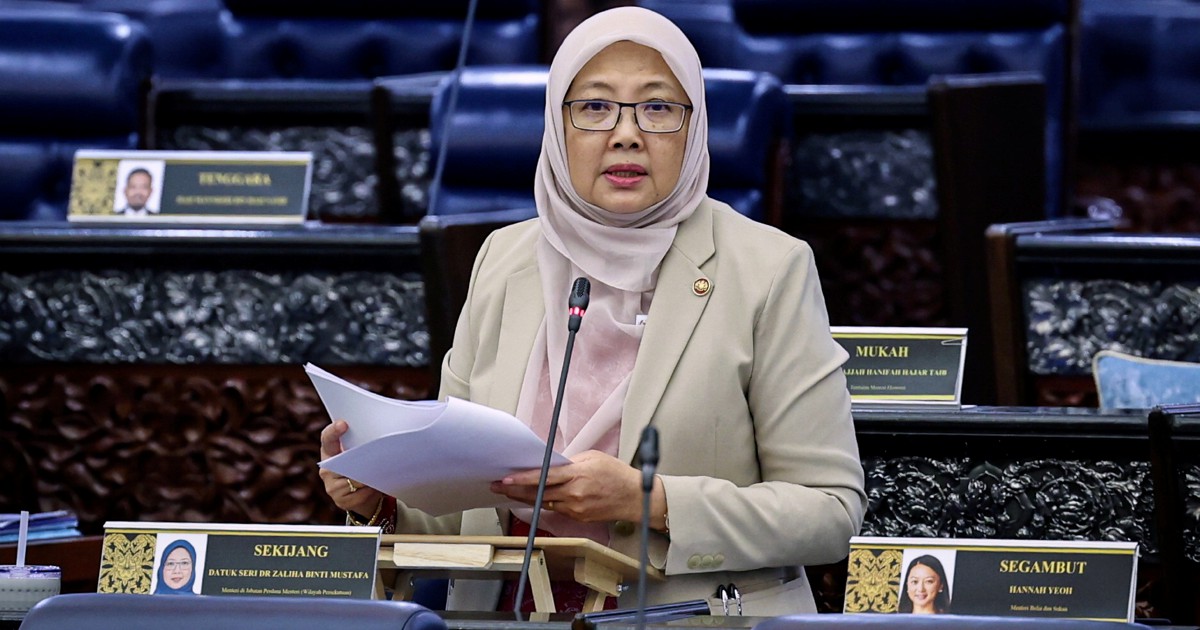
Datuk Dr Zaliha Mustafa, chairman of the Government Backbenchers Club, has strongly rebuked Perikatan Nasional MPs for departing the Dewan Rakyat during today's special parliamentary session examining the findings of the Royal Commission of Inquiry into Lembaga Tabung Haji. The theatrical exit from the chamber represents a significant moment of parliamentary discord, raising questions about the commitment of opposition legislators to engaging with matters of public accountability and institutional governance.
The RCI report into Tabung Haji, Malaysia's religious pilgrimage savings institution serving millions of Muslim citizens, addresses concerns about the fund's financial management and operational practices. The special sitting was convened specifically to allow lawmakers to scrutinize the inquiry's conclusions and recommendations, a process central to parliamentary oversight and democratic accountability. The decision by PN representatives to absent themselves from these discussions stands in contrast to their stated positioning as custodians of public interest and institutional integrity.
Dr Zaliha's criticism underscores broader tensions within Malaysian parliamentary politics between the ruling coalition and opposition benches. The Perikatan Nasional bloc, comprising primarily UMNO, PAS, and Bersatu members, has positioned itself as an alternative government-in-waiting. Their departure during the Tabung Haji debate invites scrutiny regarding whether they view parliamentary processes as venues for substantive policy engagement or primarily as stages for political theatre and factional maneuvering.
Tabung Haji holds particular significance in Malaysian society, managing deposits and savings for tens of thousands of pilgrims preparing for the Hajj pilgrimage and other religious obligations. The institution serves not merely a financial function but carries profound cultural and spiritual weight for Muslim families nationwide. When governance concerns emerge surrounding such an institution, parliamentary examination becomes an obligation extending beyond ordinary legislative business to matters touching the faith and financial security of vulnerable populations.
The inquiry's establishment itself reflected growing public concern about Tabung Haji's performance and management. Over preceding years, questions had surfaced regarding investment practices, returns to members, and the institution's operational transparency. The RCI process represented an opportunity for comprehensive investigation into these matters, with parliamentary debate on its findings constituting a natural continuation of democratic scrutiny. Opposition participation in such proceedings conventionally reflects the principle that governance accountability transcends partisan divides.
Dr Zaliha's intervention as BBC chairman carries procedural weight, as the backbenchers' club represents a cross-section of government coalition lawmakers and maintains institutional influence within parliamentary proceedings. Her public rebuke signals that government benches view the PN walkout not merely as tactical maneuver but as a departure from parliamentary norms and expectations regarding legislators' duties to constituents and institutions. This framing elevates the incident beyond routine political bickering toward questions of institutional respect and democratic maturity.
The timing and nature of the walkout merit consideration within Malaysia's contemporary political landscape. The country has experienced significant governance transitions in recent years, with multiple coalition realignments and shifting parliamentary alignments. In this context, parliamentary proceedings become even more crucial as forums where competing political visions can be examined and debated through established procedures rather than through extra-parliamentary contestation. Opposition engagement in substantive parliamentary business, even on inquiries initiated by the government, demonstrates commitment to institutional processes.
For Malaysian citizens, particularly the Tabung Haji membership, the PN absence during the RCI report debate raises concerns about whether their political representatives prioritize institutional accountability or simply leverage parliamentary sessions for partisan advantage. The inquiry findings presumably contain recommendations for reform and remediation of any identified deficiencies. Parliamentary examination allows lawmakers to raise questions, seek clarifications, and contribute amendments or alternative perspectives on implementation. The PN departure forfeits this opportunity for legislative input, potentially marginalizing their constituents' interests in Tabung Haji governance outcomes.
Regionally, Malaysian parliamentary practices carry significance as the country positions itself as a mature democracy with functioning institutions. Episodes of walkouts and boycotts by substantial opposition blocs present to international observers an appearance of weak institutional consensus or fragile parliamentary conventions. Southeast Asian democracies navigate complex relationships between executive dominance and parliamentary oversight; Malaysian parliamentary performance carries subtle influence on regional perceptions of democratic practice and institutional stability.
The incident also reflects evolving disagreements between government and opposition regarding the RCI process itself. Opposition parties may harbor substantive disagreements with the inquiry's scope, composition, findings, or recommendations. However, such disagreements are conventionally addressed through parliamentary debate, amendment proposals, and public advocacy rather than through absence. The walkout strategy suggests either a judgment that parliamentary engagement would prove futile or a preference for contesting the RCI report's legitimacy through absence rather than through reasoned argument.
Looking forward, the episode may influence procedural expectations for future parliamentary proceedings on significant institutional matters. Dr Zaliha's public criticism establishes that government benches view opposition participation in such debates as a legitimate expectation. This positioning could establish precedent for future inquiries and special sittings, shaping norms around parliamentary engagement with high-stakes governance issues. Whether opposition parties respond by reconsidering their parliamentary strategy remains uncertain.
The Tabung Haji situation ultimately exemplifies how parliamentary conduct intersects with public institutional trust. Citizens relying on Tabung Haji's services benefit when their elected representatives of all political persuasions engage seriously with findings affecting the institution's future governance. The PN walkout, regardless of the rationales underpinning it, represents a missed opportunity for such engagement and invites public question about opposition legislators' commitment to Tabung Haji members' interests.

