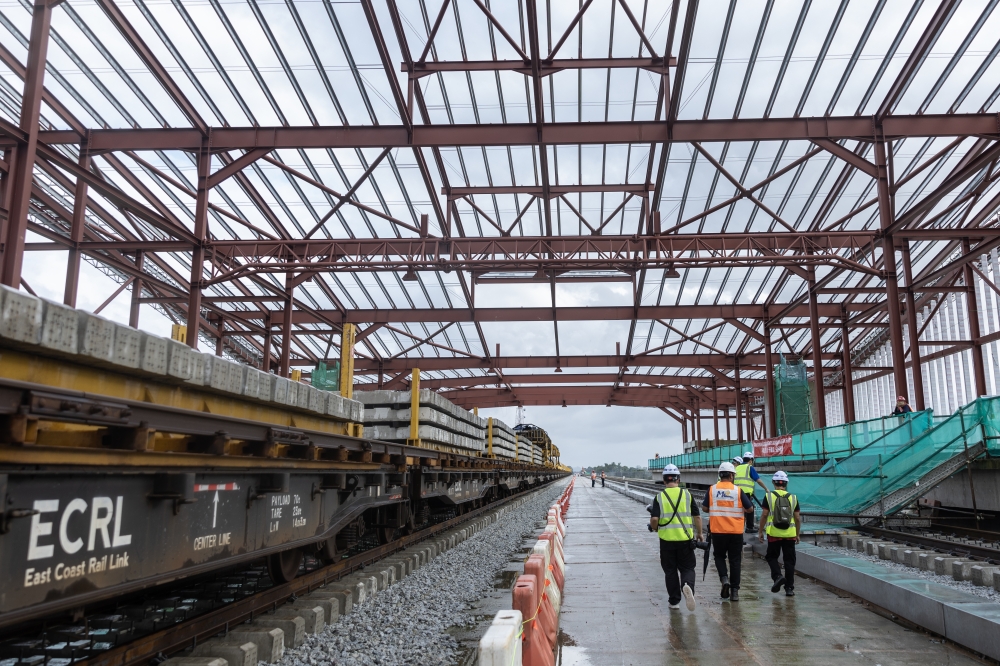
The federal government has approved a substantial package of 46 development projects worth RM207 million for Pasir Puteh in Terengganu, marking a significant investment push aimed at transforming the constituency into an economic hub as the East Coast Rail Link approaches full operational status. The initiative reflects Putrajaya's strategy to harness major infrastructure investments for broader regional development, with planners viewing the ECRL as a catalyst for growth across Terengganu's key districts.
Pasir Puteh's selection for this concentrated investment programme underscores the government's recognition that major transport infrastructure requires complementary local development to unlock its full economic potential. The projects span multiple sectors including transportation, commerce, healthcare, and social amenities, addressing both immediate community needs and longer-term positioning for increased connectivity. Officials have identified the constituency as strategically positioned to serve as a distribution and logistics hub once the ECRL becomes fully operational, making supporting infrastructure and services essential prerequisites.
The East Coast Rail Link represents one of Southeast Asia's most ambitious railway projects, designed to reduce transport time between Kuala Lumpur and the east coast significantly. Upon completion, the ECRL will fundamentally alter logistics and supply chain dynamics across the region, making constituencies along its route potentially valuable locations for warehousing, manufacturing, and commercial activities. Pasir Puteh's proximity to key stations means businesses relocating or expanding operations will require accompanying local infrastructure—reliable power supply, improved road networks, commercial facilities, and skilled workforce development centres.
Among the sanctioned initiatives are projects targeting transportation improvements within and connecting to the wider district. Enhanced road networks will facilitate movement between Pasir Puteh and ECRL stations, while upgrades to local facilities aim to reduce friction in goods movement and passenger flow. These investments acknowledge that rail connectivity alone proves insufficient without supporting ground infrastructure that enables efficient transfer between different transport modes and reduces bottlenecks at critical points.
The healthcare and education components of the programme address longstanding gaps in public service provision while simultaneously positioning the constituency to attract and retain skilled workers essential for higher-value economic activities. Modern medical facilities and quality educational institutions serve dual purposes: meeting constituent needs while creating environments that employers seek when deciding investment locations. This recognition that infrastructure extends beyond roads and bridges to encompass human capital development reflects contemporary approaches to regional economic planning.
Commercial and market-focused projects form another significant strand of the RM207 million commitment. These initiatives aim to strengthen local trading capacity and enable businesses to access the expanded markets and supply networks that the ECRL will facilitate. Support for small and medium enterprises in establishing themselves in modern commercial spaces, combined with training programmes that enhance business competitiveness, should help Pasir Puteh's entrepreneurs participate in these emerging opportunities rather than remaining passive observers of growth occurring elsewhere.
The timing of this investment package suggests federal planners expect the ECRL to reach operational maturity within the project implementation timeframe, meaning infrastructure and services will be ready when demand materializes. However, success depends on execution quality and coordination between multiple agencies overseeing different project components. Delays in any major category could undermine the synergistic effects officials envision, making efficient delivery as critical as the funding allocation itself.
For Malaysian stakeholders, this initiative provides a test case for how major infrastructure can be leveraged to distribute benefits beyond the immediate construction phase and across broader geographic areas. If Pasir Puteh successfully transforms into a logistics and commerce centre, the model could inform approaches to other constituencies positioned along the ECRL or along other major transport corridors being developed. Conversely, shortcomings in execution or underutilization of new facilities would provide important lessons about coordinating national infrastructure investment with local development needs.
Regional implications extend across East Coast states and beyond. Competing constituencies and districts will observe whether this investment package delivers tangible improvements in employment, business activity, and quality of life, potentially influencing how they advocate for development support or approach their own economic planning. The ECRL's broader economic impact across Terengganu, Pahang, and their roles in Malaysia's supply chains partly depends on whether nodes like Pasir Puteh develop the complementary infrastructure and services necessary to function as effective distribution and service centres.
The government's commitment also reflects political considerations beyond technical economics. Terengganu remains contested political territory, and visible development investment contributes to broader narratives about government performance and responsiveness to regional needs. Whether voters perceive the RM207 million package as meeting their expectations will depend on tangible outcomes: are new facilities actually accessible and of good quality, do employment opportunities materialize, and do local communities benefit from improved services or economic participation?
Looking ahead, the success of this initiative hinges on sustained coordination between federal and state authorities, timely completion of individual projects, and genuine engagement with local stakeholders about priorities and implementation challenges. The RM207 million commitment represents substantial investment, but only if effectively deployed will it fulfill its intended purpose of positioning Pasir Puteh to thrive as the ECRL transforms the east coast's economic geography and Malaysia's internal trade patterns.

