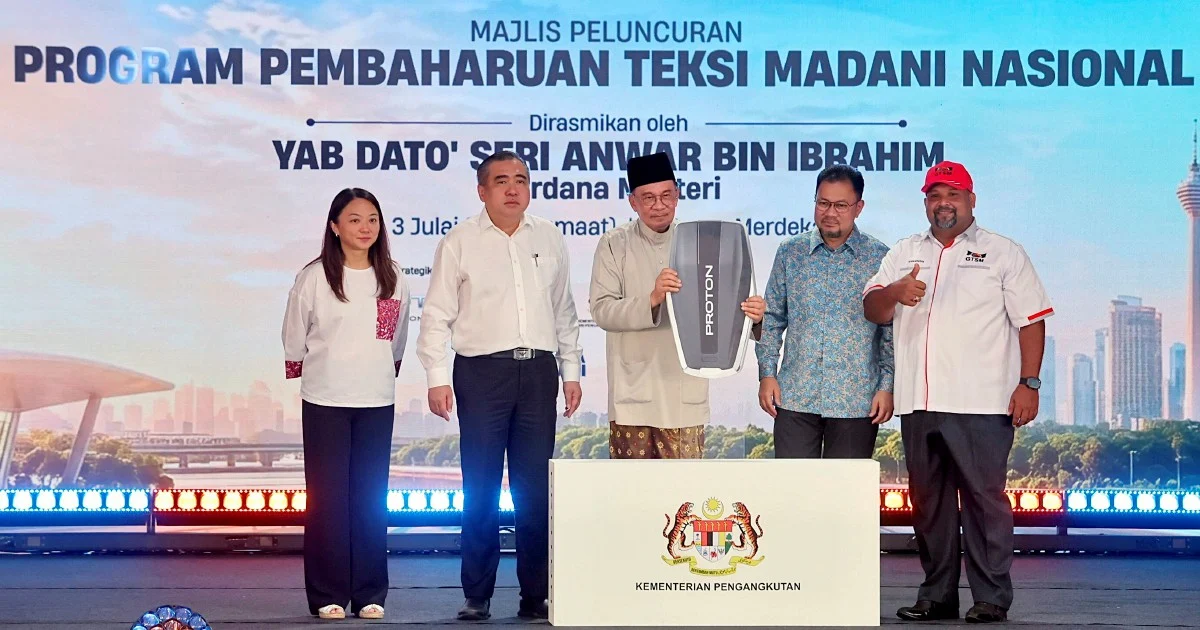
The Malaysian government has unveiled a fresh RM10 million commitment aimed at revitalising the nation's taxi fleet through a matching grant initiative, according to Prime Minister Datuk Seri Anwar Ibrahim. The financial injection represents a significant step in the administration's broader effort to modernise ground transportation infrastructure and support the livelihoods of taxi operators who have faced mounting pressures from ride-hailing competition and rising operational costs.
The matching grant programme functions as a co-investment mechanism, where government funds are paired with contributions from participating taxi operators to facilitate the purchase of newer, more reliable vehicles. This approach distributes the financial burden between public coffers and private stakeholders, ensuring that taxi drivers retain meaningful ownership stakes in their business assets whilst benefiting from state assistance. The structure encourages responsible procurement decisions and long-term planning by operators, who must commit their own capital to qualify for the matching funds.
Older taxi fleets across Malaysia have become increasingly problematic from both environmental and safety perspectives. Many vehicles currently operating on Malaysian roads exceed a decade in service, contributing disproportionately to urban air pollution and fuel consumption inefficiency. Beyond environmental concerns, aged taxis often require more frequent repairs and maintenance, driving up operator costs and reducing service reliability. A modernised fleet would directly improve passenger comfort and safety whilst reducing the carbon footprint associated with taxi operations across major urban centres like Kuala Lumpur, Penang, and Johor Bahru.
The taxi industry in Malaysia has undergone considerable strain since the emergence of digital ride-hailing platforms. Traditional taxi operators have struggled to compete against better-capitalised competitors offering mobile app convenience and often lower fares. This competitive pressure has eroded profit margins for many taxi drivers, making capital investments in new vehicles increasingly difficult without government support. The matching grant scheme acknowledges this structural challenge and provides a targeted intervention designed to level the playing field whilst preserving employment in a sector that remains essential for urban mobility, particularly for less digitally savvy commuters and passengers in suburban areas.
The RM10 million allocation should be contextualised within Malaysia's broader economic objectives. Boosting taxi fleet modernisation has cascading benefits for the economy. It stimulates demand within the domestic automotive industry, supporting Malaysian automotive manufacturers and assembly plants. It creates opportunities for maintenance and service providers, as newer vehicles introduce updated technology and specialised servicing requirements. Additionally, improved taxi service quality enhances the broader transportation ecosystem, making public mobility options more attractive and potentially reducing private vehicle dependence in congested urban areas.
Implementing such a scheme requires careful coordination between multiple stakeholders. The government must establish transparent criteria for vehicle selection, ensuring that replacements meet safety and emissions standards. Regulatory bodies need to oversee the application and approval process to prevent misuse of funds and ensure equitable distribution across the country. Taxi driver associations and unions typically play crucial roles in communicating programme details to their members, though uptake ultimately depends on whether individual operators perceive genuine financial benefit after factoring in vehicle financing costs, insurance, and operational expenses.
From a regional perspective, Malaysia's approach mirrors strategies adopted by other Southeast Asian governments grappling with aging transport infrastructure. Thailand, Indonesia, and the Philippines have similarly implemented vehicle replacement initiatives targeting taxis and commercial fleets. These programmes reflect recognition across the region that informal and semi-formal transport sectors require targeted policy support rather than market-led approaches alone, given the socioeconomic importance of taxi work for hundreds of thousands of workers and their families.
The scheme's success will likely depend on implementation details not yet fully disclosed. Critical questions include: what percentage of vehicle costs will the matching grant cover; what vehicle specifications qualify; what timeline applies for replacements; and whether the funds will be distributed through open application or allocated to specific groups. Operators in rural areas and smaller towns may face particular challenges accessing the programme if application processes prove bureaucratically complex or if selection prioritises major urban markets.
Looking ahead, this allocation signals government intent to modernise Malaysia's transport infrastructure incrementally. However, the RM10 million cap limits direct beneficiaries—depending on vehicle costs and matching ratios, perhaps only several hundred operators nationwide will gain access. Advocates have long argued that more substantial, sustained investment is necessary to fundamentally transform the sector. Future tranches of funding or alternative mechanisms such as low-interest government loans might complement the matching grant approach, creating a comprehensive modernisation strategy rather than a one-off intervention.
The announcement arrives as the government continues balancing fiscal pressures with developmental commitments. Transport modernisation competes for budgetary allocation with healthcare, education, and social welfare spending. Yet investments in transport infrastructure produce measurable returns through improved economic productivity, enhanced urban livability, and environmental benefits that extend across society. The RM10 million commitment, whilst modest in absolute terms, demonstrates that this sector remains within policymakers' purview despite competing priorities.

