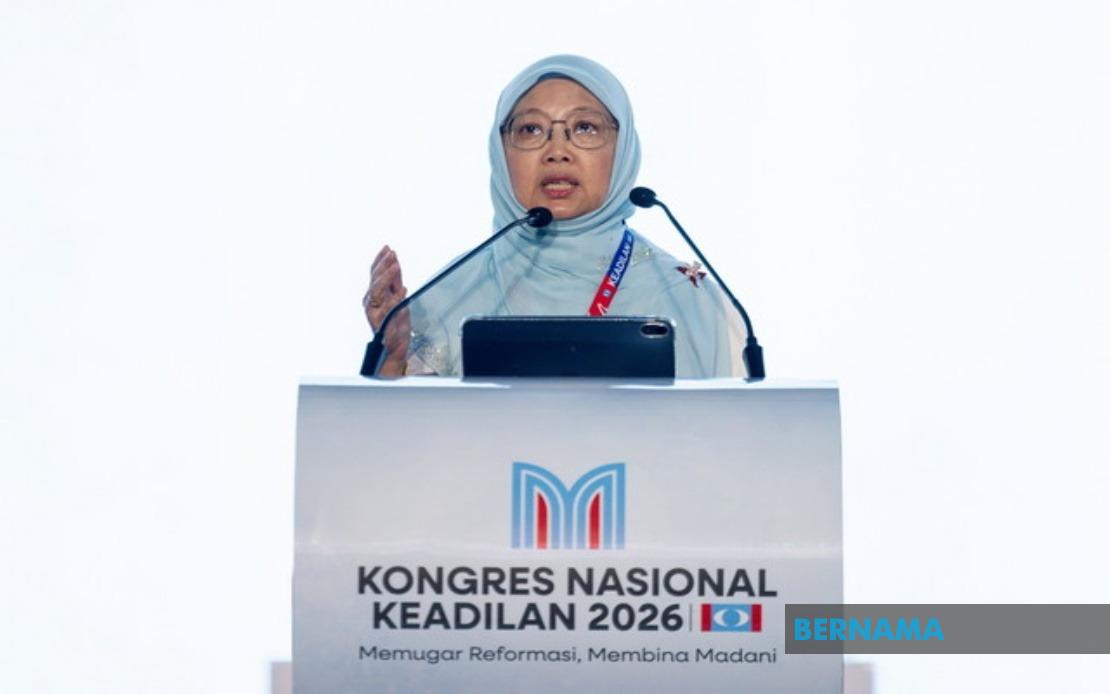
Datuk Seri Dr Zaliha Mustafa, deputy president of Parti Keadilan Rakyat, has reframed the meaning of political victory in Malaysia, arguing that assuming government office marks not the culmination but the beginning of the party's reform agenda. Speaking at PKR's 2026 National Congress in Melaka, Zaliha emphasised that the party's quarter-century struggle cannot be reduced to a mere quest for administrative control but must be understood as a comprehensive project to restructure how the nation functions at every level.
The distinction Zaliha draws carries significant weight for Malaysian politics. The reformasi movement, which has evolved through multiple electoral cycles and coalition shifts, has traditionally been examined through the lens of electoral performance and seat acquisition. However, her intervention suggests a deliberate pivot towards accountability and substantive delivery. The framing resets expectations for PKR's base and the broader coalition, particularly as the party navigates the complexities of governing within existing institutional frameworks and bureaucratic structures that have accumulated practices over decades.
Zaliha articulated four pillars for translating reform promises into tangible governance outcomes: strengthening public institutions and administrative systems, combating entrenched corruption and the abuse of power, ensuring equitable justice across all socioeconomic strata, and cultivating internal discipline within the party itself. This last element—the willingness to critique and correct shortcomings among PKR's own members and allies—represents an implicit acknowledgment that reformist movements often face credibility tests when their members encounter the temptations and pressures of office. The emphasis on self-correction suggests an awareness that public trust hinges not merely on policy announcements but on observable integrity in implementation.
The question of pace versus urgency animated much of Zaliha's address. She cautioned against the assumption that reform demands wholesale transformation overnight, yet simultaneously warned against construing gradualism as an excuse for inaction or dilution of purpose. Drawing on the historical example of Khalifah Umar Abdul Aziz—referenced earlier by PKR president Datuk Seri Anwar Ibrahim—Zaliha suggested that strategic phasing, negotiation, and preparation strengthen rather than weaken reform efforts. This framing provides intellectual cover for policy decisions that take longer than activists demand, while insisting on directional clarity and measurable progress. For Malaysian audiences accustomed to promises delayed and commitments sidelined, the balance between patience and persistence will prove decisive in whether the government sustains political capital.
Zaliha identified a critical gap between policy implementation and public understanding. Governments, she argued, frequently err in assuming that passage of legislation or launch of programmes automatically translates into citizen awareness and approval. This observation points to a sophisticated grasp of modern governance challenges: the technical achievement of policy change means little if populations remain unconvinced of its relevance or benefit. The implication for Malaysia, where urban and rural populations consume information through vastly different channels and with varying degrees of trust in institutional sources, is that the coalition must invest substantially in strategic communication rather than treating messaging as secondary to administration.
The social media dimension of Zaliha's remarks carries particular resonance in Southeast Asia's digitally native political environment. Malaysia has experienced repeated episodes in which opposition movements have dominated online discourse, shaping narratives faster than government machinery can respond. Zaliha's insistence that PKR cannot cede this communicative space to critics reflects a maturing understanding that electoral victory and institutional control matter little if the opposition successfully frames government policies as threatening or ineffective. The language she employs—about mastering narrative and speaking in terms accessible to ordinary citizens—suggests recognition that highly technocratic or formal communication alienates populations the reformasi movement claims to represent.
The concept of "winning feelings" alongside winning votes represents a more psychologically sophisticated approach to political legitimacy than traditional policy discourse typically acknowledges. Zaliha's assertion that numerical and policy victories do not guarantee popular acceptance if the emotional or experiential dimension is neglected speaks to deeper anxieties about whether the current coalition can maintain cohesion and public support as the initial enthusiasm of assumption of office inevitably wanes. For readers across Malaysia's diverse communities, this implies that the government's success will ultimately be judged not by structural metrics alone but by whether citizens perceive their daily lives and circumstances as concretely improving.
Within the broader Southeast Asian context, Malaysia's reformasi debate offers a case study in how long-established opposition movements navigate the transition to governance. Thailand, Indonesia, and the Philippines have all experienced parallel tensions between reform rhetoric and governing realities. Zaliha's emphasis on institutional strengthening and corruption combat aligns with governance challenges common across the region, where weak institutions and extractive power structures have historically undermined developmental outcomes. The difference with Malaysia may lie in whether the coalition can sustain institutional change despite entrenched resistance and competing pressures.
The timing of Zaliha's remarks—delivered at a party congress rather than a parliamentary forum—suggests internal consolidation efforts. PKR members require reassurance that the party leadership maintains ideological commitment to transformation rather than having become comfortable with the perquisites of office. The emphasis on party communication and internal discipline functions partly as a reminder to grassroots members that they remain custodians of the reformasi legacy. This dynamic becomes particularly important should the coalition face electoral challenges or coalition tensions force compromises that reformist activists view as betrayals.
Zaliha's formulation ultimately redefines what constitutes success for PKR and its allies. Rather than permitting the government to declare victory simply by having won elections or passed initial legislation, her framework insists that true reform must be visible, felt, and sustained across time. This raises the bar for assessment but also provides a more meaningful metric for evaluating whether the reformasi movement has genuinely transformed Malaysian governance or simply rotated which group occupies executive positions. For citizens and observers throughout Malaysia and the region watching how power operates in practice, this distinction will become increasingly consequential as the coalition deepens its tenure.

