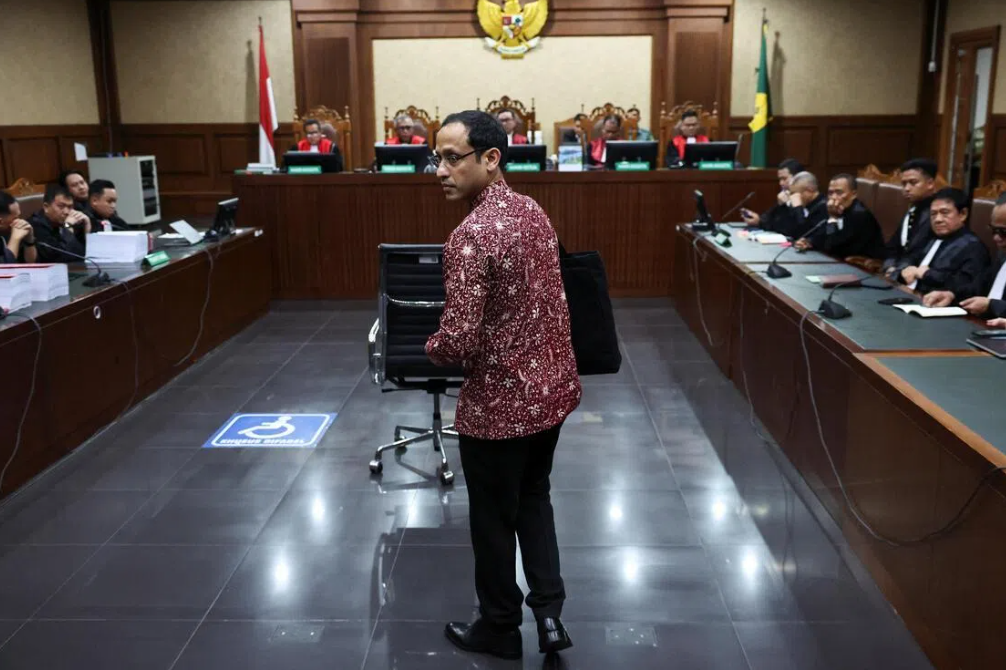
Nadiem Makarim's conviction on Tuesday marks a stunning fall from grace for one of Southeast Asia's most celebrated technology entrepreneurs. The Jakarta Corruption Court handed down a 10-year prison sentence to the 41-year-old former education minister, concluding what has become arguably Indonesia's most watched corruption trial in recent memory. The verdict arrives as a watershed moment not only for Makarim personally but for broader questions about how Indonesia treats high-profile professionals who transition from the private sector into public service.
Beyond the headline sentence, the court imposed a 1 billion rupiah fine and ordered Makarim to repay 809.6 billion rupiah in state funds as restitution. Should he fail to satisfy the restitution demand, an additional five-year prison term would automatically apply, effectively doubling his sentence. These financial penalties underscore the court's assessment that the misconduct extended beyond mere administrative lapses into deliberate enrichment schemes, though Makarim's legal team contested this characterisation throughout the trial.
The corruption charges stemmed from a scheme to procure approximately 1.1 million Chromebook laptops between 2020 and 2022, when Indonesia's education system was disrupted by Covid-19 lockdowns and schools pivoted to remote learning. Prosecutors alleged that the programme resulted in approximately 2.18 trillion rupiah in state losses and that Makarim personally benefited by around 809 billion rupiah through financial transactions involving PT Aplikasi Karya Anak Bangsa, Gojek's parent company. Chief Judge Purwanto declared that the court had established Makarim's guilt because his policy decisions contained "an abuse of authority intended to unlawfully benefit certain parties."
The judicial panel found that Makarim had "consciously and intentionally directed the Chromebook procurement policy" and that his motivations centred on strengthening Gojek's strategic relationship with Google, the technology firm supplying the devices. The judges characterised this motivation as "highly reprehensible" given his oath as a government minister to serve the public interest. Prosecutors had originally sought an 18-year sentence and far larger restitution, suggesting the court's decision represented a partial vindication of Makarim's claims, though hardly a complete exoneration.
Makarim's trajectory before the scandal reads as a quintessential startup success story. After founding Gojek in 2010, he transformed it into a super app delivering courier services, motorcycle rides, food orders, and digital payments through its GoPay platform. By 2019, when Gojek became Indonesia's first unicorn startup, the venture was valued at approximately US$10 billion, making Makarim a symbol of Indonesia's emerging tech sector and a model for the country's younger generation of entrepreneurs. His credentials appeared impeccable: Harvard-educated, tech-savvy, and committed to innovation.
When former president Joko Widodo recruited Makarim as education minister in 2019, the appointment was widely celebrated as a sign that Indonesia was professionalising government and welcoming private-sector expertise into the cabinet. Yet the very digitalisation initiatives that defined his ministerial tenure—intended to modernise Indonesia's education infrastructure—ultimately became the foundation for corruption allegations filed against him in January 2026. The reversal illustrates the precarious position of high-profile corporate leaders entering politics, particularly when their business interests intersect with government contracts.
The defence maintained throughout the trial that the Chromebook programme was executed in good faith during an unprecedented crisis. Makarim's legal team argued that approximately 97 per cent of the 1.1 million devices reached 77,000 schools by 2023, delivering genuine benefits to millions of students unable to attend classrooms. They contended that he received no personal financial benefit from the procurement and that the programme represented a rational response to an emergency. The Attorney-General's Office had presented evidence that ministry studies conducted in 2018, before Makarim's appointment, concluded that Chromebooks would be ineffective in remote and rural areas lacking reliable internet infrastructure—yet the prosecution nonetheless proceeded with corruption charges.
Problematically for Makarim's defence, prosecutors cited an August 2019 group chat they claimed demonstrated that discussions about a Chromebook-focused digitalisation plan predated his formal cabinet appointment. This suggested premeditation rather than emergency improvisation. Additionally, the prosecution argued that Google's simultaneous investment in Gojek demonstrated a quid pro quo arrangement, though Google itself was never indicted and Makarim's team rejected such allegations as speculative.
The trial transcended typical corruption proceedings through its extraordinary public visibility. Dozens of Gojek motorcycle drivers attended hearings to demonstrate solidarity, while livestreamed court sessions spawned social media calls for organised watch parties. The case attracted amicus curiae briefs from supporters, an unusual phenomenon in Indonesian corruption trials. Makarim himself strategically cultivated his public image, arriving at court in a Gojek driver jacket before changing into formal attire—a symbolic gesture aimed at reminding observers of his working-class roots and his company's social mission.
Family background likely influenced public sentiment regarding his case. Makarim descended from Indonesia's political and intellectual elite: his father, Nono Anwar Makarim, is a prominent lawyer, while his maternal grandfather participated in Indonesia's independence struggle. This heritage positioned him as an insider within Indonesia's establishment, yet simultaneously exposed him to heightened scrutiny regarding conflicts of interest and the appearance of privilege.
As the trial progressed toward its conclusion, Makarim reframed the case as a referendum on Indonesia's willingness to recruit talented professionals from outside the political establishment. In his June 23 defence plea, he asked the court whether his conviction would discourage other capable Indonesians from considering public service. "Youth across all of Indonesia, and the diaspora in every corner of the world, await your answer," he addressed the judges. "Is this country still safe for us to serve?" This appeal deliberately positioned his individual fate within a larger conversation about institutional reform and generational engagement with governance.
The conviction carries profound implications for Indonesia's broader development trajectory. If accomplished technologists conclude that public service invites legal jeopardy and reputational destruction, the government may struggle to attract innovative talent capable of modernising struggling sectors like education and healthcare. Conversely, the court's willingness to prosecute a corporate titan sends a message that no one—regardless of wealth, credentials, or social standing—operates above the law. The tension between these competing imperatives will likely define Indonesian governance for years to come, with Makarim's case serving as the cautionary tale that either deters or inspires future outsider-insiders entering government.
On the eve of sentencing, Makarim posted to a LinkedIn account managed by his legal team, expressing continued faith in the judicial process despite months of proceedings. "After five months on trial, I still believe in justice," he wrote, a statement that reads as both genuine conviction and strategic messaging designed to preserve his legacy should appeals prove unsuccessful. His case now enters the appellate system, where questions about the evidentiary basis for corruption allegations and the appropriateness of the sentence will face renewed scrutiny.

