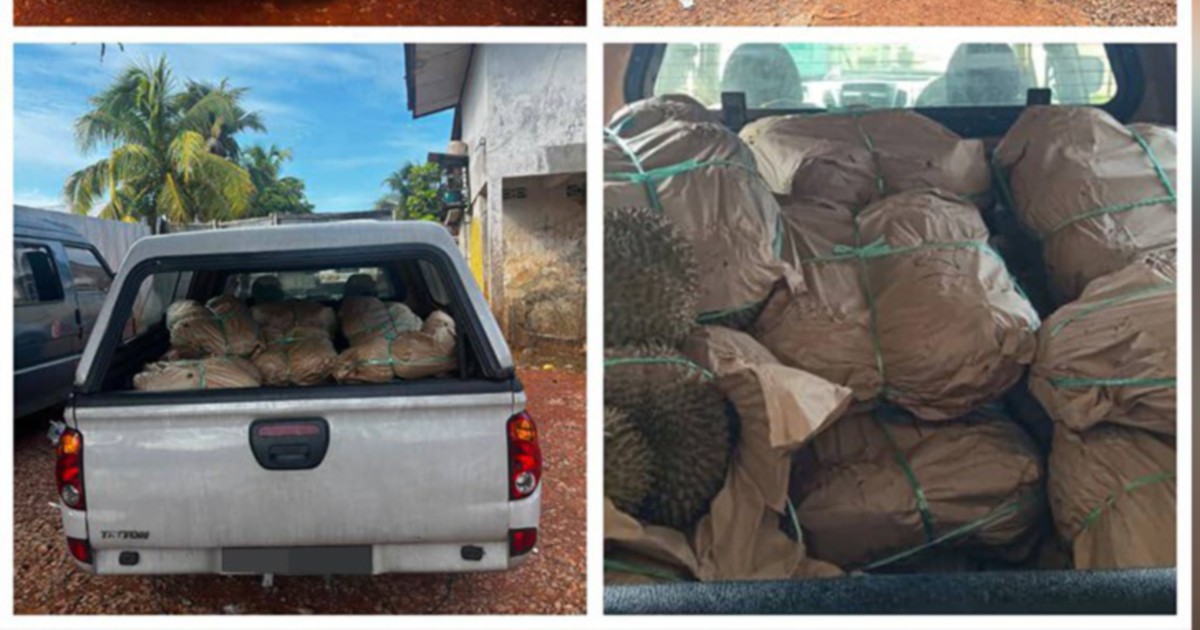
The General Operations Force (GOF) has intensified its grip on illegal cross-border trade operations in the northern corridor, making a significant seizure at the Abe Li Posmen illegal jetty in Rantau Panjang. In an operation yesterday, the paramilitary unit arrested a 20-year-old driver and impounded a four-wheel-drive vehicle carrying 350 kilogrammes of durians, with the entire confiscated consignment and vehicle valued in excess of RM50,000. The bust underscores persistent challenges authorities face in containing smuggling networks that exploit permeable maritime boundaries and the lucrative cross-border fruit trade.
The arrest at the unregistered jetty represents part of a broader enforcement sweep targeting illicit activities in the Kelantan coastal zone, an area historically vulnerable to contraband movements due to its complex waterway geography and multiple access points. The vehicle's interception suggests sophisticated logistical coordination, indicating that smuggling operations have evolved beyond ad-hoc trafficking to involve dedicated transport infrastructure and supply chain management. The location itself—an informal maritime facility—has long served as a transshipment point for goods circumventing official customs channels and tariff obligations.
Durian smuggling warrants particular scrutiny within Malaysia's agricultural trade ecosystem. The "king of fruits" commands premium pricing in export markets, particularly in China, Thailand, and Singapore, creating powerful economic incentives for trafficking. Quality durians sourced from Malaysia's renowned growing regions, especially in the east coast, fetch substantially higher international wholesale values than domestic market rates. This arbitrage opportunity has transformed the fruit into a strategic commodity within organised smuggling networks, rivalling conventional contraband in profitability while remaining less visible to casual observers than narcotics or weapons trafficking.
The GOF's operational tempo along maritime borders reflects government recognition that water-based smuggling represents a critical vulnerability in national security and revenue protection. Unlike conventional land borders requiring substantial physical fortification, maritime boundaries encompassing 420,000 square kilometres of territorial waters and an extended maritime zone present constant surveillance and interdiction challenges. Kelantan's northeastern coastline faces particular exposure, positioned proximate to Thai territorial waters and featuring numerous inlets conducive to clandestine operations. The illegal jetty infrastructure that facilitated yesterday's apprehension represents an ecosystem of informal maritime infrastructure deliberately maintained beyond regulatory oversight.
The driver's age—20 years old—may indicate either recruitment of youth into lower-echelon operational roles or the employment structure favoured by trafficking networks seeking expendable personnel for high-risk activities. Younger operatives typically assume frontline duties involving direct vehicle operation and goods handling, insulating senior network architects from law enforcement exposure. This stratification has become standard practice among sophisticated smuggling operations seeking to distribute legal liability and operational risk across multiple personalities while protecting core decision-making layers.
The four-wheel-drive seizure merits examination within Malaysia's vehicle theft and re-export problem. Cross-border car smuggling networks frequently repurpose vehicles for general contraband operations, rotating vehicles across multiple jurisdictions to obscure ownership trails and evade repeat detection patterns. The confiscated vehicle's value, exceeding RM30,000, suggests a relatively recent model or quality specification, indicating organised networks maintain access to premium transport assets. Such resources typically derive from coordinated procurement channels rather than random acquisition, pointing toward operational sophistication beyond improvised trafficking.
Kelantan's position within regional smuggling geography reflects broader Southeast Asian trade imbalances and regulatory heterogeneity. The state occupies a strategic node connecting Malaysia, Thailand, and Singapore within an informal economic corridor where price differentials, tariff structures, and regulatory enforcement variations create arbitrage opportunities. Agricultural products face particularly acute vulnerability due to perishability constraints and the absence of global commodity pricing transparency comparable to manufactured goods. Fruits moving across borders experience significant price elasticity based on destination market conditions, seasonal availability, and proximity to consumer centres—factors that transform durian cultivation into an incentive structure favouring cross-border commerce evasion.
The seizure's significance extends beyond immediate criminal liability into broader revenue collection and market regulation implications. Customs duties foregone through smuggling operations represent fiscal leakage affecting Malaysia's agricultural revenue streams while disadvantaging legitimate traders operating under full regulatory compliance. When unofficial networks undercut licensed exporters through tariff avoidance, competitive distortions accumulate across the agricultural sector, diminishing incentives for formal market participation and investment in legitimate export infrastructure. The RM50,000 valuation suggests meaningful revenue impact multiplied across undetected smuggling incidents.
GOF enforcement patterns indicate sustained commitment to maritime border security despite resource constraints inherent in policing extensive water boundaries. Yesterday's apprehension exemplifies graduated operational effectiveness emerging from enhanced intelligence sharing between maritime agencies, improved coordination across multiple enforcement jurisdictions, and refined targeting methodologies. The specificity of the operation—targeting a particular jetty location with identifiable contraband—suggests intelligence-led enforcement rather than random interception, indicating developing capability in predictive border security management.
Proceedings against the arrested driver will likely progress through established legal frameworks addressing smuggling violations, customs evasion, and unlicensed maritime operations. Malaysian law prescribes substantial penalties for transnational smuggling, with sentences potentially encompassing imprisonment combined with substantial financial sanctions. However, prosecutorial challenges persist regarding upstream network architect identification and asset tracing, as frontline operatives typically possess limited intelligence regarding organisational structure, funding sources, and distribution networks. Successful dismantling of smuggling operations requires vertical penetration beyond field-level arrests, necessitating enhanced investigative techniques and cross-jurisdictional intelligence cooperation.

