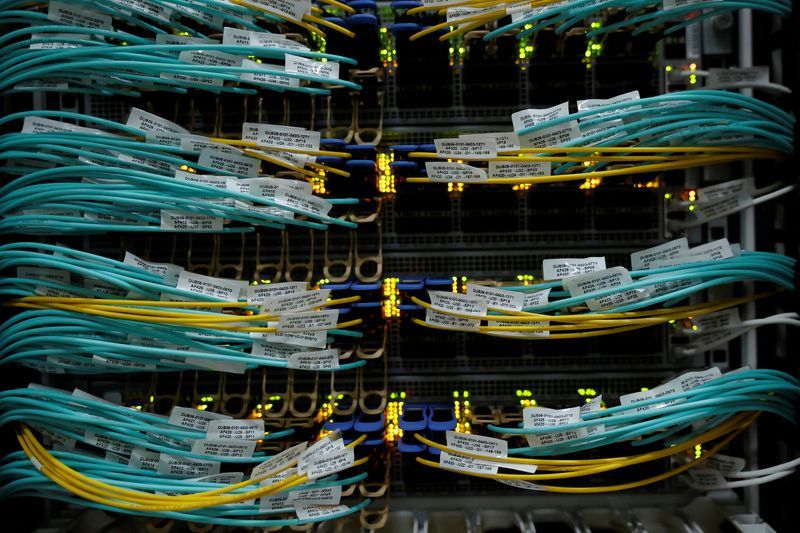
Policymakers across the globe are taking increasingly aggressive action to curb the expansion of data centres, reflecting deepening anxieties about the infrastructure demands of artificial intelligence. What began as isolated regulatory concerns has evolved into a coordinated pushback from multiple jurisdictions, each grappling with the environmental and social costs of housing the computing power required by the AI industry. The movement represents a significant challenge to technology companies seeking to expand their data centre footprints, and it signals that communities are no longer willing to absorb unchecked infrastructure growth without scrutiny.
The United States has emerged as a focal point for this regulatory shift. New York became the first state to implement a comprehensive moratorium, with Governor Kathy Hochul ordering a one-year freeze on new data centre construction for facilities consuming 50 megawatts or more of electricity. The decision reflects the state's determination to establish environmental safeguards before permitting further expansion. During this moratorium period, New York's Department of Environmental Conservation will refrain from issuing discretionary permits while state officials develop robust assessment standards to evaluate the environmental consequences of such facilities. This deliberate pause suggests policymakers recognise they lack adequate frameworks to measure and mitigate the full impact of data centre proliferation.
Maine presented a near-miss for similar restrictions. Governor Janet Mills initially rejected bipartisan legislation that would have enacted an 18-month moratorium on data centres exceeding 20 megawatts of power consumption. Had it passed, Maine would have become the first state to impose such a ban through legislative action. Mills articulated conditional support for the moratorium concept but objected to the bill's structure, specifically its failure to exempt a particular development proposal in the Town of Jay. This nuanced position highlights how political compromise and local economic interests can complicate broader regulatory objectives, even when environmental concerns command bipartisan agreement.
At the municipal level, California's Monterey Park has set an unprecedented precedent. In June 2026, residents voted by ballot measure to permanently prohibit data centres within the city limits, making it the first American municipality to achieve such an outright ban through democratic referendum. The decision followed years of regulatory struggle, including a temporary moratorium imposed in 2019 and subsequent restrictions extending through 2030 enacted in April 2025. The permanent ban reflects accumulated public frustration over proposed facilities and their perceived threat to local quality of life, demonstrating that grassroots opposition can ultimately overcome corporate development pressure.
Europe has similarly embraced restrictive approaches. The Netherlands implemented a 2022 hyperscale ban that confines large data centre facilities to just two designated locations nationally, substantially limiting where companies can build new infrastructure. Despite this constraint, technology companies continue seeking workarounds, as evidenced by Microsoft's January 2026 approval for a project designed as three separate towers, each individually falling below the regulatory size threshold. This circumvention strategy illustrates the ongoing tension between regulators attempting to control expansion and corporations finding technical loopholes within existing restrictions.
Ireland's experience provides instructive lessons about the lifecycle of data centre regulation. Beginning in 2021, the nation's grid operator effectively prevented new data centre connections around Dublin, warning that existing facilities were already straining electrical infrastructure. This freeze remained in place until December 2025, when authorities lifted the restriction but implemented new requirements mandating that any future connections must include on-site power generation capacity. This graduated approach—from prohibition to conditional approval with self-sufficiency mandates—suggests evolving regulatory thinking that seeks balance between permitting development and protecting grid stability.
The core concerns driving these restrictions merit examination. Electricity consumption represents the most immediate pressure point, with data centres requiring enormous and continuous power supplies. Water usage constitutes another critical consideration, as cooling systems demand substantial water resources that may be scarce in many regions. Land scarcity drives competition between data centre development and other productive uses, particularly in densely populated areas. Beyond these physical resource constraints, communities express legitimate concerns about local environmental degradation, noise pollution, and the concentration of economic benefits accruing primarily to corporate operators rather than residents.
For Southeast Asian policymakers observing these global trends, the implications warrant serious attention. The region has emerged as an attractive location for data centre investment due to lower construction costs, favourable regulatory environments, and geographic proximity to major Asian markets. However, countries such as Malaysia, Singapore, and Indonesia lack the comprehensive regulatory frameworks that Western nations are now hastily constructing. Rather than following the pattern of permissive development followed by restrictive reaction, Southeast Asian governments have an opportunity to establish precautionary standards from the outset, embedding environmental assessment and community consultation into approval processes before major projects commence.
The financial and operational burden on local communities often receives insufficient weight in development calculations. Data centres generate relatively few local jobs despite their scale, and property tax contributions may not adequately compensate communities for infrastructure strain, energy security risks, and environmental costs. As technology companies continue seeking locations for expansion, jurisdictions should insist on more equitable burden-sharing arrangements, including genuine community benefit agreements and robust environmental mitigation requirements.
International coordination may become increasingly valuable as more jurisdictions adopt restrictions. Without coordinated approaches, companies can simply shift planned facilities to the most permissive regulatory environments, exporting environmental and social costs rather than addressing underlying sustainability questions. Regional frameworks, perhaps coordinated through ASEAN mechanisms, could help establish minimum environmental standards that prevent a race to the bottom in regulatory ambition across Southeast Asia.

