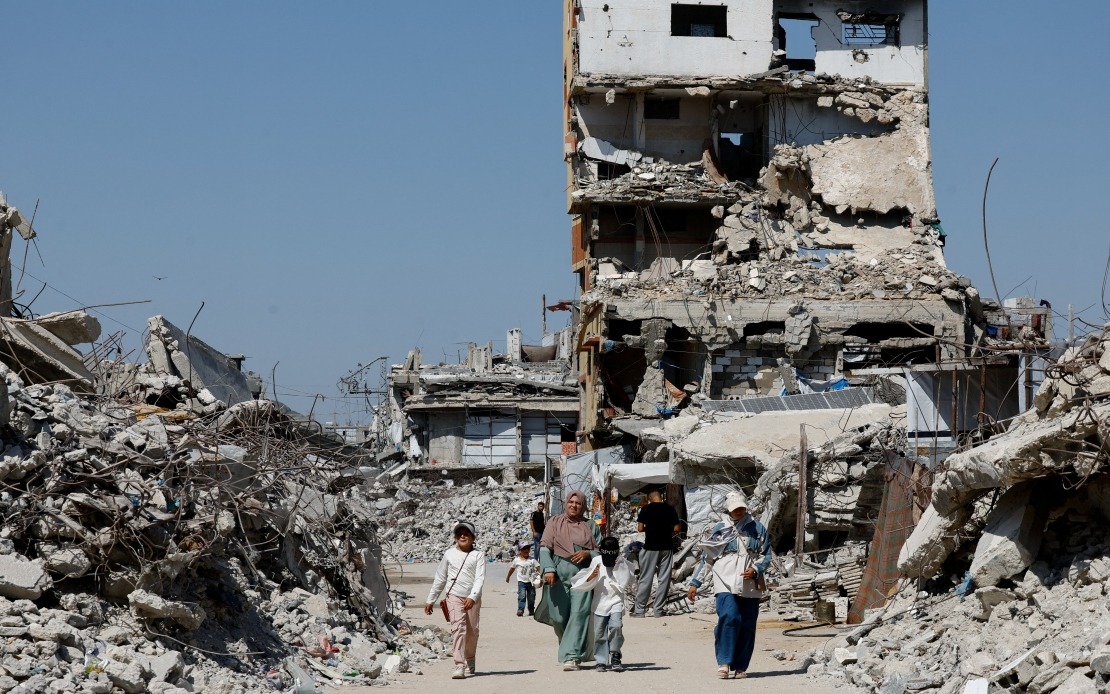
The humanitarian toll in Gaza continues to mount as the Palestinian Health Ministry documented another 10 deaths and 25 injuries over a single 24-hour period, pushing the overall casualty count from the conflict that erupted in October 2023 past the 73,400 mark. According to Thursday's health briefing, Gaza's medical facilities received the bodies and received patients suffering from injuries during the latest reporting cycle, contributing to cumulative figures that now total 73,417 deaths and 174,360 wounded across the blockaded territory.
The context surrounding these latest casualties remains unclear, as the Health Ministry did not elaborate on the specific circumstances of the deaths and injuries. However, the ongoing nature of the violence reflects broader conditions on the ground where military operations have persisted despite international humanitarian concerns and diplomatic efforts aimed at reducing civilian harm. The continuation of hostilities underscores the fragile security situation that has defined the enclave for nearly a year.
A particularly troubling aspect of the current situation involves the accessibility challenges facing emergency responders. According to Health Ministry statements, numerous casualties remain trapped beneath building debris and scattered across roads throughout Gaza, while ambulance crews and civil defence teams struggle to reach affected areas to provide assistance or recover the deceased. This inability to access victims compounds the humanitarian crisis and prevents accurate real-time accounting of total casualties.
Additional figures from the Health Ministry indicate that breaches of the ceasefire arrangement that was intended to establish a halt to hostilities have resulted in 1,283 deaths and 4,248 injuries. These statistics specifically track casualties attributed to violations of the truce, suggesting a distinction between deaths occurring during active military operations before the ceasefire and those occurring in subsequent periods when reduced violence was theoretically in effect.
Beyond immediate loss of life, the conflict has inflicted catastrophic damage to Gaza's civilian infrastructure. Approximately 90 percent of the enclave's civilian infrastructure has been damaged or destroyed, a staggering figure that reflects the intensity and scope of military operations. The United Nations has calculated that reconstruction efforts would require approximately US$70 billion, a sum that underscores the scale of physical devastation affecting homes, hospitals, schools, water systems, and other essential services that civilian populations depend upon.
For Malaysian readers and Southeast Asian observers, the Gaza situation carries significant geopolitical implications. The conflict has become a focal point for discussions about international humanitarian law, civilian protection standards, and the effectiveness of global mechanisms designed to prevent and respond to mass casualty incidents. Malaysia, as a Muslim-majority nation with strong ties to Palestinian causes, has consistently advocated for accountability and the protection of civilian populations in international forums.
The blockade status of Gaza compounds the humanitarian emergency. As a territory under comprehensive restrictions on movement and access, Gaza's population faces compounded challenges in obtaining food, medical supplies, fuel, and other necessities. The combination of ongoing violence, infrastructure destruction, and access restrictions creates a complex humanitarian emergency that extends beyond immediate combat casualties to encompass broader public health, food security, and livelihood concerns affecting the entire civilian population.
The repeated documentation of casualty figures by the Health Ministry serves as an ongoing record of the human cost of the conflict. Daily casualty reports have become routine aspects of news from Gaza, yet each statistic represents individual losses and family tragedies occurring within a confined territory of approximately 2.3 million people. The casualty rates reflect an environment where civilian populations face persistent danger despite international calls for de-escalation.
International humanitarian organisations have attempted to provide medical care and relief assistance despite the challenging operating environment. However, the scale of need far exceeds available resources, and ongoing violence continues to damage and sometimes destroy medical facilities themselves, undermining efforts to provide adequate healthcare to the injured and displaced populations. This creates a vicious cycle where the capacity to treat casualties diminishes even as the numbers requiring treatment increase.
The broader regional implications of the Gaza crisis include potential impacts on stability throughout the Middle East and reverberations felt across Muslim-majority nations and international relations more broadly. For Malaysia and other countries in Southeast Asia, the situation raises questions about humanitarian responsibility, international law enforcement, and the mechanisms available to the global community for addressing protracted conflicts affecting civilian populations.
Moving forward, humanitarian agencies and policymakers continue grappling with how to address both immediate emergency needs and longer-term reconstruction and reconciliation. The destruction of infrastructure, displacement of populations, and accumulation of trauma represent challenges that will extend far beyond the cessation of active fighting. International attention remains focused on efforts to reduce civilian casualties and establish conditions allowing humanitarian access to affected populations.

