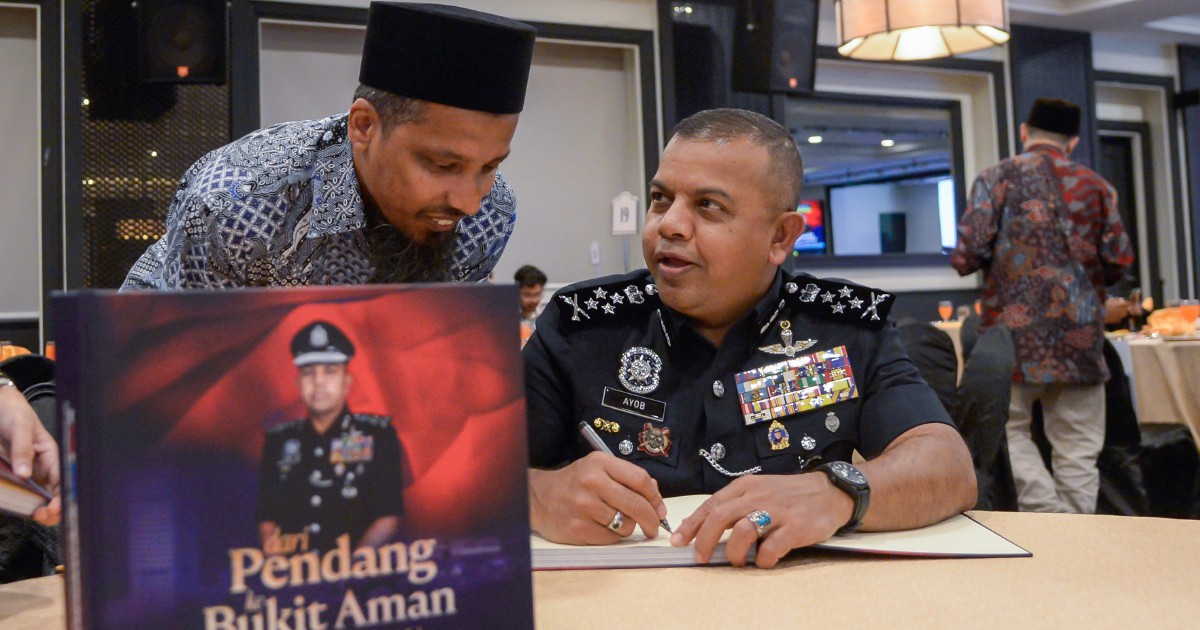
The investigation into the 'Gang Nicky' criminal network remains etched in the memory of Tan Sri Ayob Khan Mydin Pitchay, the former deputy Inspector-General of Police, as among the most consequential cases pursued by Bukit Aman throughout his distinguished career in law enforcement. The remark underscores the profound operational and strategic impact that the case exerted on Malaysia's premier police headquarters during the period in which it was actively investigated.
Criminal syndicates operating under coded identities have long posed substantial challenges to Malaysian law enforcement agencies, requiring coordinated multi-departmental responses and sustained investigative effort. The Gang Nicky probe exemplified these complexities, drawing on significant police resources and institutional expertise to dismantle an organised criminal structure. Such operations typically span months or years and involve intricate surveillance work, financial tracking, and coordination with various enforcement divisions.
For a case to achieve the status of 'one of the biggest' at Bukit Aman—the nerve centre of the Royal Malaysian Police in Kuala Lumpur—it must have demonstrated either exceptional scale, organisational sophistication, or widespread social impact. The characterisation by Ayob Khan suggests that the Gang Nicky network possessed qualities that distinguished it from routine criminal investigations, potentially involving interstate or cross-border dimensions that amplified its operational significance.
The former deputy IGP's reflection on this case carries particular weight given his position within the police hierarchy. As a senior officer who would have overseen major investigations and strategic policing decisions, Ayob Khan's assessment reflects an informed perspective on the relative importance and difficulty of major cases handled by the force. His willingness to discuss the investigation publicly, albeit in measured terms, indicates that the case has been substantially resolved and lacks ongoing operational sensitivities.
Malaysian readers familiar with high-profile crime cases will recognise that syndicates designated with such identifiers typically engage in activities spanning multiple jurisdictions or involving networks of significant organisational complexity. The nomenclature itself—assigning a code name rather than referring to individuals—suggests a level of criminal sophistication that warranted serious institutional attention from police authorities.
The legacy of major investigations extends beyond the immediate outcomes of arrests and prosecutions. Cases that occupy prominent positions in institutional memory often influence policing strategies, investigative methodologies, and inter-agency cooperation frameworks for years afterward. When senior officers identify a case as particularly significant, they are implicitly acknowledging lessons learned and procedural innovations that enhanced subsequent enforcement efforts.
From a Southeast Asian perspective, the existence of such major criminal investigations reflects broader regional challenges with organised crime networks that frequently transcend national borders. Malaysia's strategic location and economic development make it vulnerable to operations by syndicates targeting financial systems, trafficking networks, and other organised criminal enterprises. Successful prosecution of significant cases strengthens the nation's capacity to disrupt these activities.
The intersection between public acknowledgment of past investigations and ongoing law enforcement capacity-building represents an important dimension of police institutional development. By reflecting on consequential past cases, senior officers can communicate the seriousness with which law enforcement treats organised crime while simultaneously reinforcing public confidence in police capability to address major criminal threats.
Ayob Khan's career trajectory and subsequent reflections position him as a credible voice on matters of police operations and major investigations. His assessment that Gang Nicky represented one of Bukit Aman's most substantial cases during his tenure lends weight to the conclusion that the investigation consumed considerable institutional resources and attention, addressing a criminal network that posed measurable threats to public order or economic security.
The timing of such reflections often coincides with retirement from active service, when former senior officers can speak more openly about cases that shaped their careers without compromising operational security or ongoing prosecutions. Ayob Khan's commentary therefore provides valuable historical perspective on Malaysian police work during a specific era of institutional development.
Criminal investigations of this magnitude invariably influence how police departments allocate resources, design training programmes, and coordinate between divisions. The technical and human intelligence required to dismantle networks like Gang Nicky builds institutional capacity that extends to subsequent investigations, creating professional continuity and enhanced operational effectiveness across generations of police officers.

