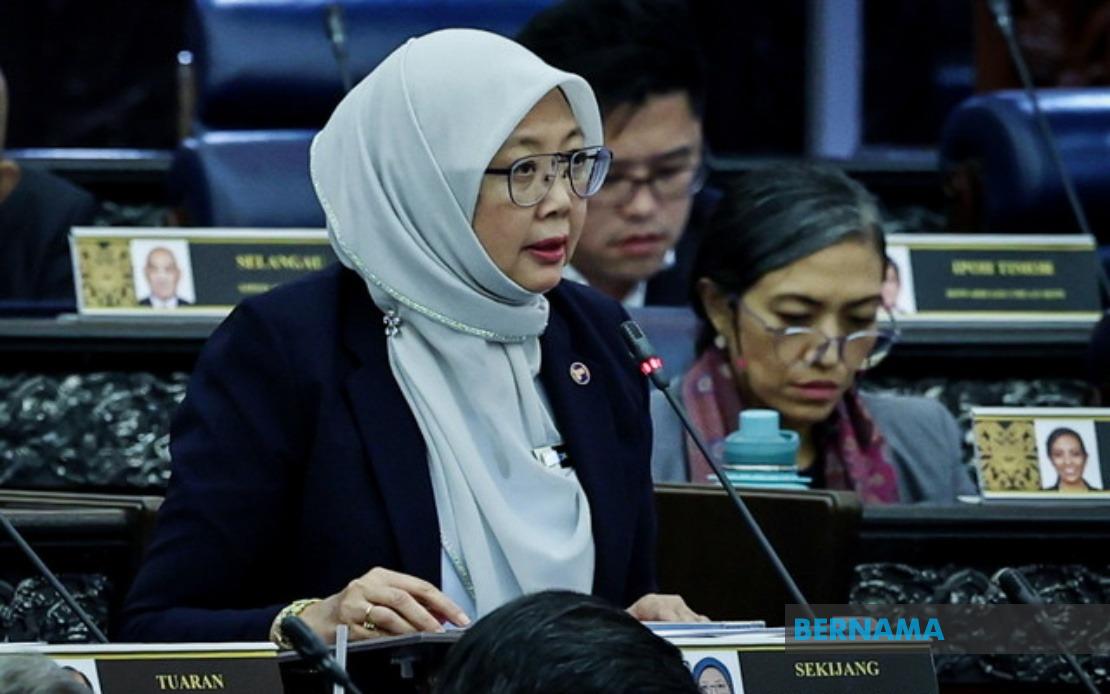
Datuk Seri Dr Zaliha Mustafa, chairman of the Government Backbenchers Club and Member of Parliament for Sekijang, has called for comprehensive public reporting on Tabung Haji's implementation of Royal Commission of Inquiry reforms and its financial recovery strategy. The disclosure would serve to rebuild confidence among depositors who have entrusted their haj savings to the institution, a critical responsibility within Malaysia's Muslim community.
During a special parliamentary sitting dedicated to discussing the RCI findings, Dr Zaliha emphasized that transparency regarding the progress on all 25 recommendations should be presented to Parliament and made available to the public. This disclosure should include clear timelines for recommendations still being developed, she argued, allowing Malaysians to understand exactly which improvements have been completed, which remain underway, and what still needs to be done. The call reflects growing sentiment that institutional accountability requires more than internal monitoring—it demands public visibility into reform efforts.
Beyond the implementation status, Dr Zaliha advocated for a separate public report detailing the institution's loss recovery initiatives. Tabung Haji's financial crisis, which emerged into public consciousness in recent years, represents one of Malaysia's significant institutional failures. The affected depositors are predominantly ordinary Malaysian Muslims saving for one of Islam's Five Pillars, making the institution's mismanagement not merely a financial matter but a breach of sacred trust. A comprehensive recovery report would demonstrate tangible steps being taken to compensate affected parties and prevent future losses.
The parliament member focused her contribution on three critical governance areas: Tabung Haji's financial condition and dividend distributions to depositors, the quality and oversight of its investment portfolio, and the accountability mechanisms governing institutional leadership. These three pillars form the foundation upon which public confidence must be rebuilt. Without clarity on each, even successful implementation of formal recommendations may fail to restore the trust that has been damaged.
Dr Zaliha drew particular attention to a striking finding within the RCI report: that political considerations related to general election timing constituted a significant factor in precipitating the financial crisis. This revelation underscores a fundamental problem in Malaysian institutional governance—the intersection of political expediency and fiduciary responsibility. When electoral calculations influence investment decisions or financial management at institutions responsible for public savings, the consequences can be catastrophic for ordinary citizens.
Critiquing arguments frequently made about preserving Muslim unity, Dr Zaliha posed a pointed question: what value does unity hold if the trust reposed by the Muslim community in its institutions is betrayed through mismanagement? This rhetorical challenge gets at the heart of the Tabung Haji crisis—that organizational loyalty and political solidarity cannot substitute for proper governance and transparent accountability. Unity built on defending problematic decisions serves neither the institution nor the community it purports to represent.
The parliament member specifically questioned the former chairman's role, Datuk Seri Abdul Azeez Abdul Rahim, highlighting potential conflicts of interest that arose from his simultaneous positions as board chairman and participant in numerous subsidiary companies and related ventures. Although formally designated as non-executive chairman, Zaliha indicated he maintained substantial involvement in major investment negotiations. This concentration of influence across multiple related entities warrants examination, particularly given the catastrophic investment decisions that contributed to the institution's collapse.
Dr Zaliha further requested government clarification regarding allegations that cash held in accounts connected to the former chairman had accumulated to RM170 million at certain points. Such specificity suggests significant documentation exists around these financial flows, raising questions about oversight mechanisms that allowed such concentrations to occur unchecked. Understanding how these funds accumulated, what they were intended for, and whether they were subsequently recovered represents essential information for public accountability.
The RCI itself was established in 2021 and formally constituted on January 20, 2022, before presenting its findings to the Yang di-Pertuan Agong on August 30, 2022. The 211-page report, which remained confidential for months, was only recently released publicly. It documented extensive management and operational deficiencies spanning the 2014-2020 period and proposed 25 concrete recommendations for institutional reform and strengthening.
As of July 30 this year, Tabung Haji reported implementing 75 percent of the RCI's recommendations, a completion rate that appears substantial on its surface. However, the specific content and significance of recommendations varies considerably—completing three-quarters of recommendations does not necessarily mean the most critical reforms are among those implemented. Dr Zaliha's call for detailed status reporting would illuminate whether the institution has prioritized the most consequential changes or concentrated on less demanding compliance items.
For Malaysian depositors and the broader Muslim community, the distinction between formal compliance and genuine reform carries enormous weight. Tabung Haji remains a foundational institution for millions of Malaysians planning their Islamic pilgrimage. Rebuilding public confidence requires not merely completing a checklist of recommendations but demonstrating systemic change in governance culture, investment philosophy, and leadership accountability. Public transparency serves as both a pressure mechanism for continued reform and evidence that authorities take depositor interests seriously.
The governance challenges exposed at Tabung Haji extend beyond a single institution. They illuminate systemic vulnerabilities in how Malaysian statutory bodies manage public resources and political pressures. The intersection of electoral cycles and institutional decision-making remains an unresolved tension in Malaysian governance. Dr Zaliha's parliamentary intervention reflects emerging consensus that genuine institutional recovery requires not merely technical fixes but fundamental changes in transparency, accountability, and separation between political and fiduciary interests.

