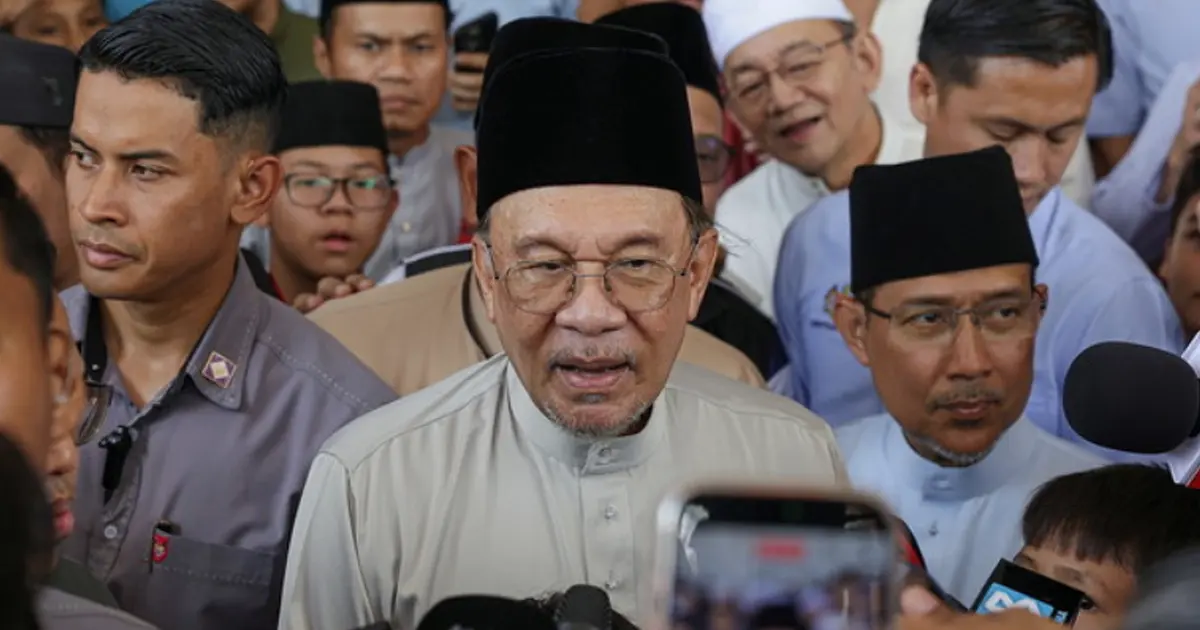
Prime Minister Anwar Ibrahim has declared that the complete Royal Commission of Inquiry (RCI) report examining Tabung Haji has been released to the public in its unaltered form, with no editorial modifications or suppression of findings. The assurance came as the government faced mounting scrutiny over the handling of the investigation into Malaysia's pilgrim savings fund, one of the nation's largest financial institutions managing the savings of Muslim Malaysians preparing for the hajj pilgrimage.
The release of the full RCI report represents a significant moment in the government's commitment to transparency regarding the troubled institution, which has faced mounting financial pressures and governance challenges in recent years. Tabung Haji, formally known as the Pilgrimage Fund Board, manages deposits from millions of Malaysians and sits at the intersection of religious observance, public finance, and national welfare. The institution's difficulties have drawn sustained public concern, making the availability of the complete investigative findings crucial for public understanding and institutional accountability.
Anwar's confirmation that no censorship occurred addresses implicit concerns that sensitive findings might have been withheld or that politically sensitive conclusions could have been suppressed before publication. Such assurances carry particular weight in Malaysia's political context, where questions about government transparency and institutional independence have periodically generated public debate. The prime minister's explicit statement aims to reinforce public confidence that the investigation was conducted rigorously and that its conclusions are presented without political filtering.
The RCI's investigation into Tabung Haji likely examined governance structures, financial management practices, and decision-making processes that led to the institution's current predicament. These inquiries typically scrutinize the roles of senior management, board oversight mechanisms, and regulatory supervision by relevant authorities. For a fund entrusted with the savings of ordinary Malaysians pursuing one of Islam's five pillars, governance failures carry both financial and spiritual dimensions that resonate across the Muslim Malaysian population.
The publication of the unedited report provides policymakers, financial regulators, and the public with a complete diagnostic framework for understanding what went wrong within the institution. Such comprehensive disclosure enables stakeholders to assess whether existing regulatory frameworks adequately protect depositor interests and whether institutional reforms are sufficiently ambitious to prevent recurrence of identified problems. The findings likely offer guidance on structural changes, oversight mechanisms, and accountability measures necessary to restore public confidence in the fund's management.
For Malaysian citizens with savings in Tabung Haji, the availability of the full report offers transparency about the institution managing their pilgrim funds. Many Malaysians view their contributions as religious obligations and personal investments simultaneously, creating heightened expectations for prudent financial stewardship. Public access to complete investigative findings allows depositors to form informed judgments about the institution's trajectory and the adequacy of proposed remedial measures.
The government's decision to release the report without modifications also signals a departure from historical patterns where sensitive institutional investigations occasionally faced delayed or partial disclosure. This approach aligns with broader governance reforms emphasizing institutional accountability and public access to official information. Within the Southeast Asian context, where questions about government transparency and institutional independence remain pertinent, Malaysia's handling of this high-profile investigation carries regional significance.
The full publication creates obligations for relevant government agencies and the Tabung Haji administration to respond substantively to the RCI's findings and recommendations. The report presumably offers a detailed roadmap for institutional remediation, and public availability of these prescriptions enables civil society organizations, financial analysts, and parliamentary oversight bodies to monitor implementation progress. This mechanism of public accountability supplements traditional governmental and parliamentary scrutiny.
The timing of the release also reflects political considerations within Malaysia's governing coalition. Demonstrating transparency on a matter affecting millions of citizens potentially strengthens public confidence in institutional governance more broadly. For Anwar's administration, which has positioned itself as committed to institutional reform and anti-corruption efforts, releasing an unedited RCI report represents alignment between stated principles and demonstrated practice.
Moving forward, the real test of governmental commitment extends beyond publication to implementation of the report's recommendations. Tabung Haji requires structural reforms that may necessitate legislative changes, regulatory adjustments, and management transformation. The availability of the complete investigative report establishes a public benchmark against which stakeholders can measure whether proposed reforms adequately address the issues identified by the commission. For Malaysian depositors and the broader public, the unedited publication represents an important step toward institutional accountability, though sustained monitoring of remedial implementation remains essential.

