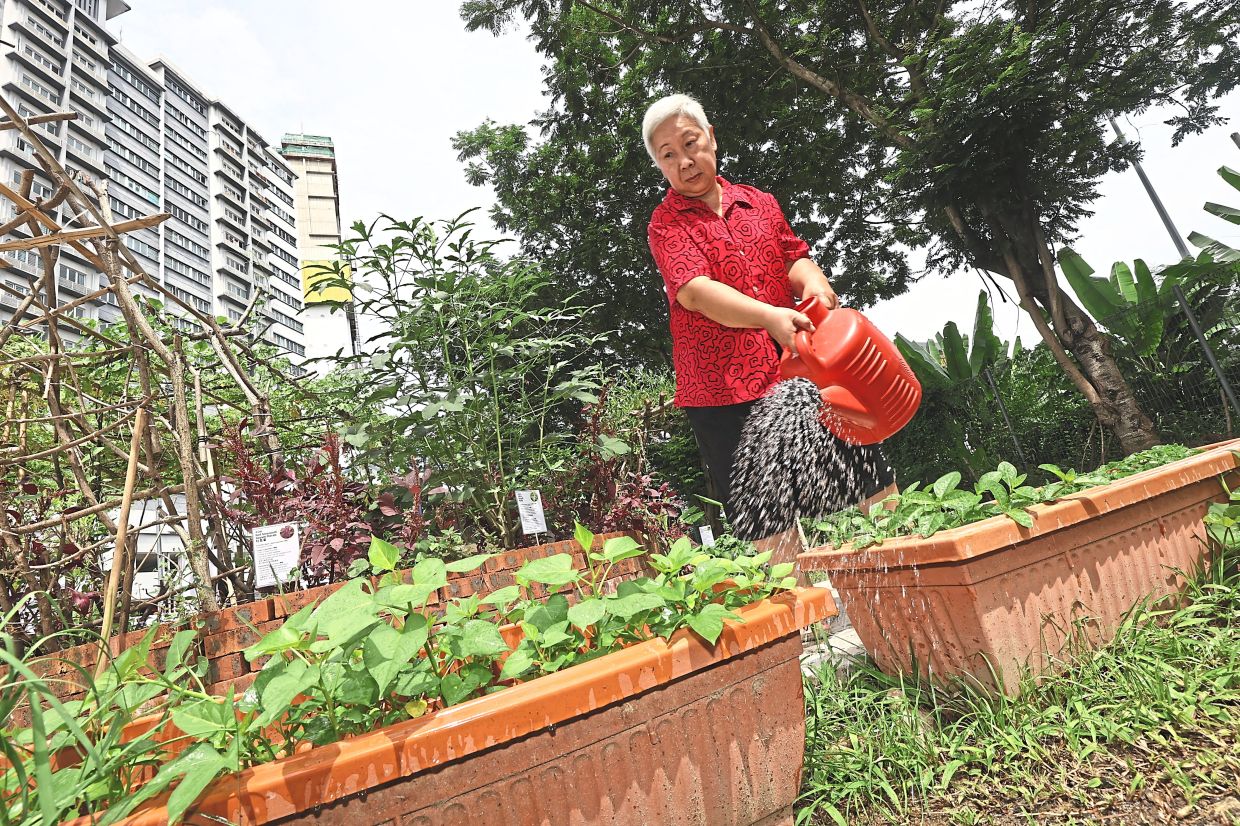
Behind 1Razak Mansion in central Kuala Lumpur, what was once a neglected patch of overgrown land has undergone a remarkable metamorphosis. The abandoned field, choked with trees and weeds and situated inconveniently near the building's refuse area, has blossomed into a productive garden brimming with herbs, vegetables, flowering plants and fruit-bearing species. The completion of this transformation, orchestrated by social enterprise PWD Smart FarmAbility working closely with the residential management and property owners, marks a significant shift in how urban communities can reclaim and repurpose underutilised spaces for collective benefit.
The project's timing and focus reflect a pressing demographic reality in Malaysia's residential communities. At 1Razak Mansion, approximately 80 per cent of residents are senior citizens, a composition increasingly common in urban residential complexes. Minister Hannah Yeoh, speaking in her capacity as Minister in the Prime Minister's Department (Federal Territories), highlighted during the garden's official launch that while physical wellness programmes such as tai chi classes are available, mental health support remains equally vital for older populations. This observation underscores a growing recognition that comprehensive senior care encompasses far more than exercise schedules—it requires sustained engagement with purpose-driven activities that stimulate both mind and spirit.
For resident Alice Fernandez, aged 64, the food forest addresses multiple dimensions of wellbeing simultaneously. Beyond the obvious advantage of accessing fresh produce without incurring additional expense, she recognises how the space combats isolation and inactivity—challenges that disproportionately affect older residents confined to apartment living. The garden transforms what was previously a barren zone into a destination worth visiting, a place where daily routines can be anchored to meaningful activity. Fernandez now incorporates visits to the food forest into her morning regimen, moving naturally from her jog into the garden space where she volunteers her time maintaining plants. This integration of the garden into residents' daily lives demonstrates how thoughtfully designed community infrastructure can seamlessly enhance quality of life without imposing additional burden or complexity.
The transformation itself was enabled by dedicated logistical support from community members working behind the scenes. Thieeben Sivabalasingam, aged 38, coordinated the practical dimensions of construction, managing material transportation and coordinating deliveries throughout the project's timeline. His account reveals the iterative nature of community projects—returning weekly to discover new arrangements and developments, witnessing incremental progress accumulating into an integrated whole. Standing in the completed garden with his three-year-old son Aiden, Sivabalasingam articulates a broader vision of how such initiatives serve multi-generational purposes. Beyond nutritional sustenance, he identifies the psychological value of purposeful daily activity, particularly the importance of residents having concrete reasons to anticipate each new day with engagement and enthusiasm.
This intergenerational dimension extends beyond family visitors. Jenny Wong, aged 70, and her husband KC Wong, aged 76, travelled from the adjacent Razak City Residences to observe the project's culmination, recognising its potential as both hobby cultivation and environmental contribution. Their visit reflects how successful community initiatives generate interest and inspiration within broader residential networks. Importantly, KC Wong expressed aspiration that comparable projects might materialise in their own community, acknowledging that retirement provides both the temporal availability and motivation to participate in such endeavours. This aspiration suggests that one garden's success can catalyse broader urban planning conversations about how residential developments might proactively allocate space for productive community gardens rather than treating such improvements as afterthoughts.
The food forest's immediate practical benefits—affordable fresh produce and green space access—represent only the initial phase of a more ambitious vision. Founder Dr Billy Tang Chee Seng, aged 60, envisions the garden as a foundational platform for multifaceted learning initiatives. Planned developments include construction of a central kitchen hub where residents will learn preparation methods for harvested ingredients, connecting agricultural production directly to culinary practice. This expansion transforms the project from passive consumption of resources into active skill-building, offering practical knowledge while creating additional reasons for community interaction. The inclusion of microscopes for children and educational programming around soil science and microorganisms demonstrates how the garden can serve as a laboratory for understanding sustainable food systems, potentially inspiring younger generation interest in environmental stewardship.
For Malaysian urban planners and property developers, the 1Razak Mansion model offers tangible evidence that modest land investments can yield substantial social returns. The project required no substantial financial outlay—merely coordination of willing community members, social enterprise expertise, and management corporation support. This low-cost, high-impact approach contrasts sharply with conventional amenity provision and demonstrates how strategic space allocation addresses documented public health concerns. Seniors living in urban apartments frequently experience depression, isolation, and diminished purposefulness; simple interventions providing meaningful daily engagement address root causes rather than merely treating symptoms through pharmaceutical or clinical approaches.
The social enterprise framework deserves particular attention for Malaysian readers. PWD Smart FarmAbility's involvement represents a hybrid approach combining commercial sustainability with community service—the enterprise model ensures longevity beyond initial enthusiasm or funding cycles, while the social mission prioritises resident welfare over profit maximisation. This structure proves especially valuable in Malaysia's context, where government resources for senior care remain constrained and private commercial approaches often exclude lower-income populations. Social enterprises can potentially fill this gap, developing scalable models that simultaneously improve lives and generate sustainable income.
The garden's emergence also reflects broader urban ecological trends. Malaysian cities increasingly recognise biodiversity loss and food security vulnerabilities as interconnected challenges. Community gardens simultaneously address multiple objectives: increasing local food production, restoring urban green space, providing habitat corridors for pollinators and insects, and reducing pressure on waste management systems. In Kuala Lumpur's context, where rapid urbanisation has consumed green spaces and heightened residents' disconnection from food sources, such projects reconnect urban populations with ecological realities and natural systems.
Looking forward, the 1Razak Mansion Food Forest's trajectory will largely depend on continued community engagement and management. Successful community projects typically exhibit strong resident participation combined with clear governance structures and maintenance protocols. The enthusiasm expressed during the launch—from both direct residents and neighbouring communities—suggests favourable conditions for sustained operation. However, realising Dr Tang's ambitious expansion plans around educational programming and kitchen facilities will require ongoing coordination, funding, and volunteer commitment.
For Malaysian municipalities and housing developers, this project illuminates possibilities for transforming regulatory thinking around residential space allocation. Current planning guidelines typically mandate parking, recreation facilities, and commercial spaces, yet rarely prioritise productive community gardens. Revising development standards to require or incentivise food forest integration could systematically enhance quality of life across residential developments while supporting environmental sustainability goals. The 1Razak Mansion example proves that such integration requires minimal space—merely reclaiming an underutilised corner—while generating disproportionate benefits for vulnerable populations.
The garden's success ultimately reflects a fundamental truth about human flourishing: people thrive when connected to meaningful community, purposeful activity, and natural environments. In an era of increasing senior population growth and urbanisation pressures, the Malaysian development sector would be wise to examine and replicate such models. The transformation of 1Razak Mansion's abandoned field demonstrates that progress in urban living standards need not require massive capital investment or complex infrastructure—sometimes, transformative change emerges from recognising existing resources, mobilising community capacity, and reimagining how shared spaces can serve collective wellbeing.

