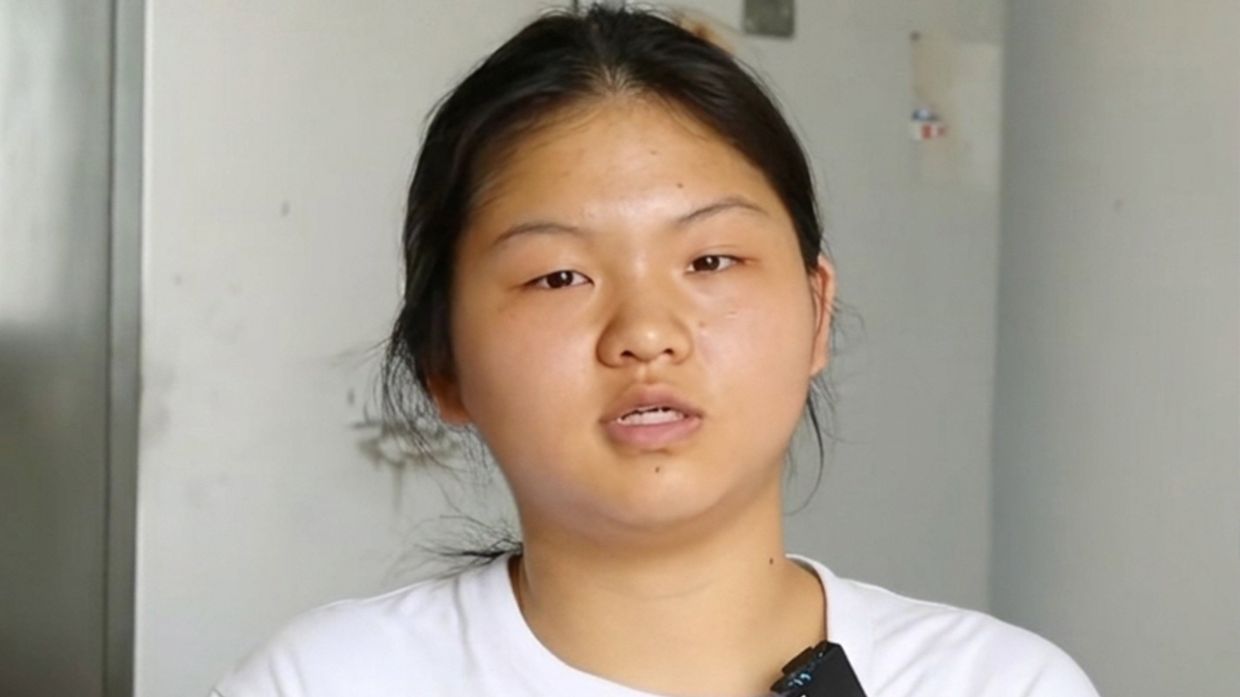
An 18-year-old girl in China has emerged as an unlikely symbol of resilience and compassion after experiencing devastating personal loss precisely when her life was supposed to be entering a hopeful new phase. Zeng Zixuan, who scored 564 out of 750 on this year's gaokao university entrance examination, found herself navigating not only the pressures of beginning university life but also coming to terms with becoming an orphan when her grandmother passed away in early July. What sets her apart, however, is her response to the outpouring of community support—declining further donations and redirecting them toward others whose circumstances may be even more precarious.
Zeng's trajectory to this moment reveals a young person forged by circumstances that would break many. Raised entirely by her grandmother following her parents' divorce during her childhood, she had already experienced the upheaval of family fracture at a formative age. Her mother subsequently remarried and relocated, severing ties with her daughter, while her father pursued employment opportunities in Guangdong province. Despite these early separations, Zeng demonstrated exceptional academic commitment, consistently placing among her school's highest achievers and channelling her energy into her studies as a source of stability.
The situation deteriorated sharply during her senior secondary school years when her father died in an accident—a tragedy that reverberated through more than just her emotional world. The incident eliminated the family's primary income source, forcing both Zeng and her elderly grandmother into dependence on government assistance supplemented by educational subsidies provided by her school. For a girl already managing complex feelings about parental absence, this additional loss appeared transformative. Her teachers noticed an immediate shift in her demeanor; the previously outgoing student withdrew into herself, bearing visible signs of grief and psychological strain.
Institutional support systems proved crucial during this vulnerable period. Her supervising teacher recognised the danger signs and made deliberate efforts to maintain contact, offering both emotional support and pragmatic encouragement. Beyond the classroom, village officials specifically assigned a representative responsible for women's welfare to monitor Zeng's situation and ensure both she and her grandmother received necessary assistance. These touchstones of community engagement appear to have provided scaffolding that prevented complete collapse, while simultaneously reinforcing in Zeng the message that education represented her pathway forward. Her teacher's counsel—that attending a quality university would secure her future and honour both her deceased father and living grandmother—became a motivating principle.
Just as Zeng was preparing to enter university with renewed purpose, having selected an institution close to her home specifically to remain near her grandmother, illness claimed her final family member. The grandmother's death in early July stripped away the last pillar of her childhood support structure, leaving her technically alone at eighteen years old. Yet the village community that had been supporting her family's survival rallied again, this time with remarkable spontaneity. Strangers began offering financial contributions through official village channels, and within a short timeframe the accumulated donations exceeded 60,000 yuan—approximately US$8,800.
Zeng's response to this generosity revealed something perhaps more valuable than her examination scores or academic achievements: a moral compass calibrated toward the welfare of others despite her own devastation. Rather than accepting these funds as her due or focusing exclusively on her own needs, she contacted village officials requesting that further donations cease. Her statement, addressed to the community with formal respect, acknowledged both the genuine need that contributions had addressed and her conviction that resources should flow toward those facing even greater hardship. She articulated a perspective that many adults never achieve—the recognition that earning money carries genuine difficulty for working people, and that her situation, while objectively challenging, might not represent the most pressing claims on collective generosity.
Practically speaking, Zeng confirmed that the funds already received would suffice for her tuition and accommodation at university. Her plan for covering living expenses demonstrated her commitment to self-reliance: she intended to supplement her studies with part-time employment. The village, recognising both her situation and her character, offered her a student-appropriate work position, creating an opportunity for her to generate income while continuing her studies. This arrangement allows her to maintain financial independence while developing work experience—a particularly valuable asset for someone without family networks to provide conventional career connections.
The broader context for this story encompasses the distinctive pressures facing Chinese students undertaking the gaokao, a high-stakes national examination determining university access and, to significant extent, future prospects. For rural students like Zeng, gaokao performance carries heightened significance as a potential mechanism for social mobility and escape from limited local economic opportunities. Her decision to attend a university near her home, primarily motivated by filial obligation to her then-living grandmother, reflected values that extended beyond pure academic advantage-seeking. The subsequent intersection of personal tragedy with her university transition position her story as emblematic of larger themes regarding resilience, intergenerational obligation, and community responsibility.
Online responses to Zeng's narrative have emphasised both her individual character and the supportive environment that enabled her survival through multiple traumas. Some observers highlighted her capacity for hopefulness despite misfortune, viewing her future trajectory as likely to be positive given her demonstrated intelligence and work ethic. Others remarked that while Zeng undeniably faces disadvantage—having lost all immediate family members and experienced significant economic instability—she benefits from living in an era when institutional safety nets and community systems exist to prevent complete destitution. This observation gestures toward the comparative privilege of contemporary China, where village governments, school systems, and collective communities maintain mechanisms to support vulnerable individuals in ways that many developing societies lack.
Zeng's story resonates across Southeast Asia and beyond because it captures several universal themes: the capacity of young people to demonstrate maturity beyond their years when facing extremity, the importance of institutional and community support systems in determining outcomes for vulnerable populations, and the possibility of maintaining moral integrity and concern for others even while navigating profound personal crisis. Her decision to redirect assistance toward others speaks to character formation that transcends individual circumstance, suggesting that her future, whatever challenges it contains, will likely be shaped by the values she has already demonstrated.

