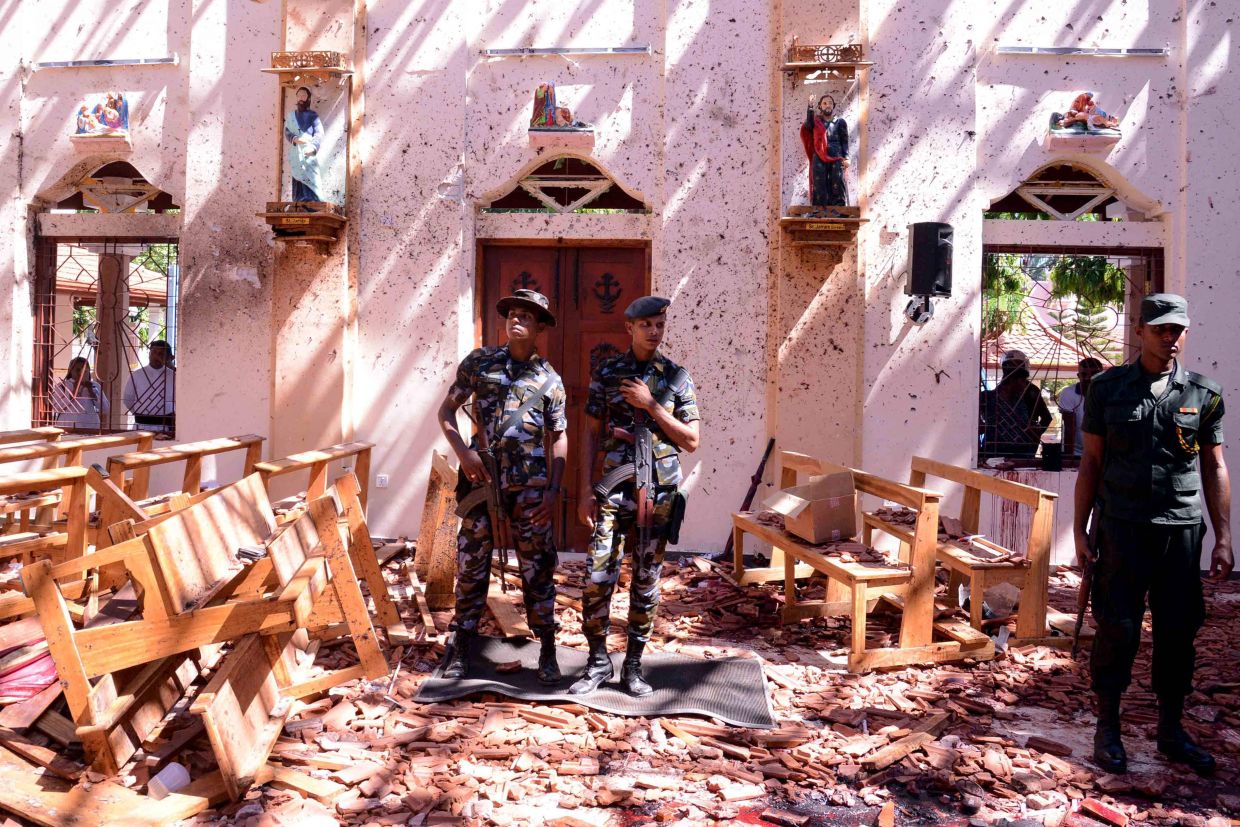
Suresh Sallay's arrest in February represents one of the most dramatic reversals in Sri Lanka's ongoing investigation into the devastating Easter bombings of April 21, 2019, an attack that claimed 279 lives and left more than 500 wounded. The retired major general, once positioned as a leading voice on counterterrorism, had lectured both the Pentagon and United Nations on preventing radicalisation and extremism through social media monitoring. Today, the government accuses him of being the very architect of the deadliest attack against civilians in Sri Lankan history, a charge he strenuously denies and for which he has not yet been formally charged with any offence.
The Easter bombings themselves were initially attributed to Islamist militants inspired by the Islamic State group, who detonated explosives at three luxury hotels and three churches across the island in a coordinated assault. The toll included 45 foreign nationals—tourists and visitors from Australia, Britain, China, Denmark, the Netherlands, Japan, and the United States—alongside many Sri Lankan civilians and workers. The simultaneous nature of the attacks and their apparent sophistication sparked immediate questions about how such an operation could have been orchestrated without detection by state security agencies, particularly given that Indian intelligence had issued specific warnings about potential threats beforehand.
Public Security Minister Ananda Wijepala's June parliamentary statement marked a watershed moment in the government's approach to the bombings. Wijepala accused Sallay of being the "mastermind" who had "conspired with and strategically directed Islamic extremists until they carried out the attacks." More damning still, Wijepala claimed that just three weeks before the bombing, Sallay met with Muslim men to obtain details about the target locations. These allegations shifted the narrative fundamentally: rather than a spontaneous extremist attack, investigators now alleged a deliberate plot involving state actors at the highest levels.
The emerging theory suggests a more sinister motivation underlying the bombings. According to investigators cited in court documents, the alleged conspiracy aimed to create an environment of chaos and fear that would position then-presidential candidate Gotabaya Rajapaksa as the strongman necessary to crush Islamist extremism and restore order. Rajapaksa's subsequent election victory in 2019 relied heavily on a security-focused campaign that exploited public anxiety following the Easter attacks. Britain's Channel 4 reported in 2023 that a whistleblower alleged the attack was deliberately permitted to unfold in order to facilitate Rajapaksa's rise to power—a claim that would suggest elements within the security apparatus allowed mass civilian casualties to serve political objectives.
What makes this theory plausible to critics is the historical context of state intelligence operations in Sri Lanka. The Rajapaksa administrations have themselves acknowledged that during the 1983-2009 civil war against Tamil rebels, the state actively funded jihadist groups to gather intelligence on separatist movements. However, officials have maintained that these militants subsequently betrayed their handlers and independently carried out the Easter bombings. The existence of documented links between the bombers and at least two state intelligence agencies, as exposed by government inquiries, raises legitimate questions about the nature of those relationships and whether supervision had genuinely been lost.
Sallay's own trajectory makes him an unexpected figure at the centre of such grave accusations. A career military officer of Muslim faith married to a Buddhist woman, with a Catholic mother who has appealed to the pope for his release, Sallay embodied the multicultural character of contemporary Sri Lanka. His professional credentials were impeccable: he had served in Sri Lankan diplomatic missions in France and Malaysia, studied at India's prestigious National Defence College and Madras University, and trained at Britain's University of Bradford. His appointment as head of the State Intelligence Service in 2019 made him the first military officer to hold that position, a sign of Rajapaksa's confidence in his leadership.
Yet Sallay's tenure at the intelligence service raised troubling questions about selective prosecution. In 2020, he orchestrated the arrest of Hejaaz Hizbullah, a Muslim human rights lawyer, accusing him of being the "mastermind" of the very Easter bombings that had occurred the previous year. Hizbullah languished in detention for 22 months before authorities released him without charge, unable to produce credible evidence to support their allegations. The irony of Sallay now facing identical accusations of masterminding the same attack suggests either profound investigative failure or a pattern of using terror laws to silence or eliminate inconvenient figures.
The timing of Sallay's arrest also warrants examination in the context of Sri Lankan politics. The Rajapaksa family's grip on power has since fractured significantly, with Gotabaya Rajapaksa fleeing the country in 2022 amid an economic crisis that sparked public outrage. In this political vacuum, investigating figures who served under the Rajapaksas and who possessed intimate knowledge of security operations could serve multiple purposes: holding accountable those involved in potential state crimes, or alternatively, consolidating power by removing potential rivals or whistleblowers who might reveal inconvenient truths about how the state functioned.
Sallay's international reputation as a counterterrorism expert gives his case particular significance for the region. A 2003 speech at the Pentagon titled "Suicide Terrorism and its Impact" and a 2023 address to United Nations headquarters where he warned that "social media and digital platforms in radicalisation, extremism, and terrorism" posed one of the greatest challenges to international security demonstrate his standing in global policy circles. The arrest of such a figure on terrorism charges risks damaging Sri Lanka's international credibility and raises uncomfortable questions about the reliability of the security apparatus for countries throughout Southeast Asia that depend on intelligence-sharing arrangements.
The religious demography of Sri Lanka adds another layer of complexity to this case. With approximately 70 percent of the population Buddhist, 12 percent Hindu, 10 percent Muslim, and 7 percent Christian, the Easter bombings struck at the heart of the Christian minority during one of their most sacred celebrations. Any suggestion that elements within the state deliberately permitted or facilitated such an attack to advance political interests would represent a profound betrayal of the social contract and minority protection. The willingness of authorities to weaponise terrorism accusations against figures like Hizbullah and now Sallay suggests a troubling pattern where anti-terrorism laws become instruments of political control rather than genuine security measures.
Sallay's case has become emblematic of larger questions about accountability in postwar Sri Lanka. His next court hearing was scheduled for July 10, with no formal charges yet filed despite months in custody. The absence of concrete charges, combined with his denial of wrongdoing and the shifting official narratives about the bombings themselves, creates an environment where both truth and justice remain elusive. For regional observers, particularly those in Malaysia and other Southeast Asian nations with significant Muslim populations and security concerns, the case demonstrates how security emergencies and terrorism investigations can become entangled with political ambitions, potentially compromising both institutional integrity and the rule of law that underpins democratic governance.

