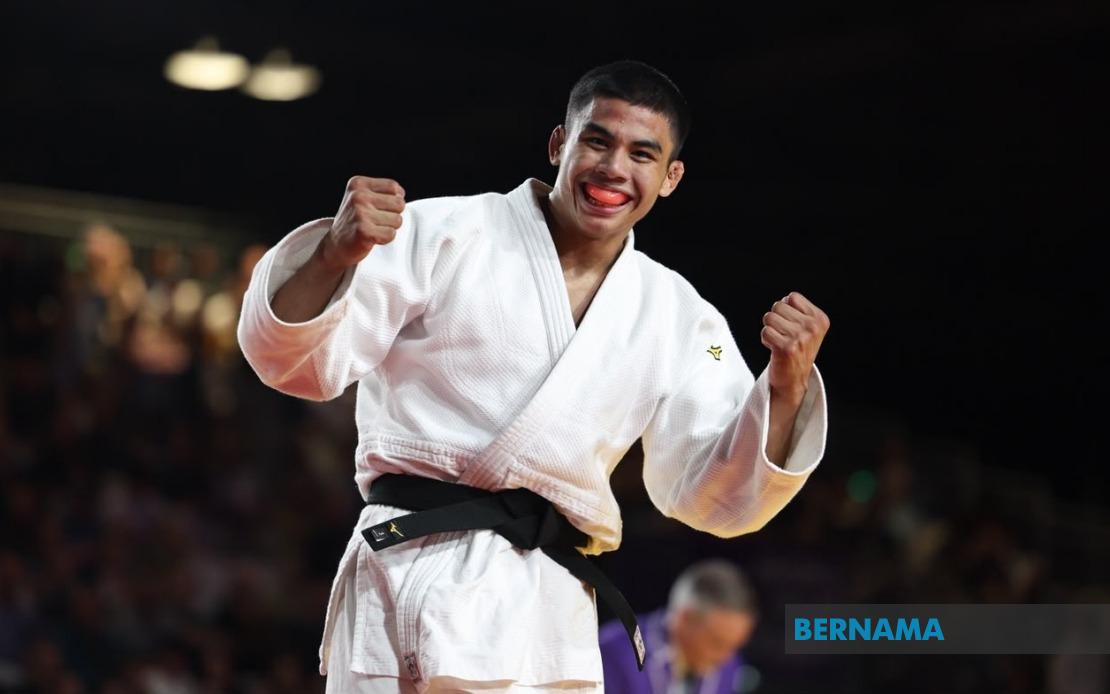
Amir Daniel Abdul Majeed has etched his name into Malaysian sporting history by capturing the men's under-81 kilogramme gold medal at the Glasgow 2026 Commonwealth Games, becoming the country's first judoka to achieve such a feat at the Games. The 21-year-old from Penang defeated South Africa's Timothy Meuwsen in a decisive final at the Scottish Event Campus, delivering Malaysia's eighth gold medal at the competition. His triumph represents not merely a personal victory but a watershed moment for judo in Malaysia, a sport that has struggled for prominence in a nation traditionally dominated by badminton and other disciplines.
The roots of Amir Daniel's success, however, trace back not to the mat but to a childhood bedroom where a simple parental promise reshaped his character. At age four, young Amir Daniel struggled with thumb-sucking, a common habit in early childhood that his mother, Yeoh Suatkhim, attempted to address through conventional means. Growing weary of conventional tactics, she made him an offer that would prove transformative: stop the habit, and she would purchase the storybook he had been requesting. The impact was immediate and profound. Within a single day, Amir Daniel abandoned the behaviour entirely, demonstrating a level of willpower and self-discipline unusual in a child so young. This early episode would foreshadow the relentless determination that would later define his athletic career.
Yeoh's recollection of that moment reveals her understanding of what truly motivates her son. Speaking to journalists after his Glasgow triumph, she emphasised that Amir Daniel's commitment to goals, once established, rarely wavers. "He has always had incredible determination. If he wants to do something, he will do it," she reflected, drawing a direct line between the four-year-old who quit thumb-sucking for a storybook and the young athlete who has now conquered the Commonwealth's judo stage. This consistency of character suggests that talent alone did not forge his achievement; rather, a psychological framework built on promise-keeping and personal accountability played an equally crucial role.
Amir Daniel's formal introduction to judo came at age five, shortly after the storybook incident, under the guidance of national coach Md Nashriq Md Nassir. That relationship has endured for sixteen years, with Md Nashriq continuing to oversee his training to this day. The continuity of coaching is significant in a Malaysian sports landscape where athlete-coach partnerships often prove fragile. Beyond technical instruction on the mat, Yeoh credits Md Nashriq with becoming a trusted family advisor, someone whose authority extended into matters of education and personal discipline. When important examinations approached, Yeoh would consult with the coach, who would then establish explicit commitments with Amir Daniel regarding academic performance. That willingness to honour pledges to an authority figure became another strand in the web of discipline that bound him.
The progression from a promising young judoka to a Commonwealth champion required navigating the competitive hierarchy at successive Games. At Birmingham 2022, Amir Daniel secured a bronze medal in the under-73 kilogramme category, a respectable result that kept him within Malaysia's medal count but left unfinished business. His graduation to the under-81 kilogramme division for Glasgow 2026 presented fresh competitive terrain, one that ultimately proved more fruitful. The shift upward in weight category is significant because it reflects growing physical maturity and increased strength, advantages that Amir Daniel has evidently harnessed to climb the podium's highest step. His trajectory illustrates how patience and long-term development, rather than early explosions of talent, often determine sustained success in combat sports.
For Malaysian sports enthusiasts, Amir Daniel's victory carries implications beyond personal achievement. Judo has remained a marginal pursuit in a country where badminton commands cultural primacy and football captures popular imagination. The absence of previous Commonwealth gold medallists in the sport meant that a generation of Malaysian judokas lacked a homegrown role model at that level of attainment. Amir Daniel's breakthrough potentially opens new pathways for junior athletes considering the sport, signalling that international success is neither impossible nor confined to traditional badminton strongholds. Youth sports development programmes may now find it easier to recruit and retain young judokas when they can point to a living example of Malaysian excellence.
Yeoh's philosophy regarding youth development extends beyond her son's individual trajectory. She has consistently believed that early exposure to sports and structured learning keeps children engaged in constructive pursuits while broadening their experiences. This approach was first tested with her eldest child, Nur Yasmeen, before Amir Daniel emerged as the family's flagship athlete. Her conviction that structured activity and mentorship during formative years shape character reflects a parenting model that Malaysian families increasingly embrace, particularly among middle-class households seeking to develop their children's potential beyond academic achievement alone.
The coach-athlete bond that has underpinned Amir Daniel's success deserves closer examination in the Malaysian context. Trust-based coaching relationships, where athletes genuinely honour commitments made to their coaches, remain less common than they might be in a society where hierarchical respect is culturally valued yet sometimes performative. Md Nashriq's success in maintaining this bond for sixteen years, and in expanding his influence to encompass matters of education and discipline, suggests a model of holistic athlete development that many other coaches might emulate. His willingness to negotiate "agreements" with Amir Daniel regarding academic performance demonstrates recognition that sustainable athletic excellence requires balance; burnout and academic failure have derailed many young athletes in Southeast Asia.
Looking forward, Yeoh has articulated ambitions that extend well beyond Glasgow. She and her son harbour aspirations of Olympic competition, the ultimate theatre for sporting achievement. While Commonwealth gold represents a genuine milestone, the Olympic stage demands a different calibre of opposition and a level of preparation that few Malaysian athletes have successfully navigated. Amir Daniel's youth—at twenty-one, he remains in his prime physical years for judo—provides temporal advantage, though he must sustain his current trajectory through the competitive cycle that culminates in the next Olympic Games. The challenge will be maintaining the discipline, commitment, and promise-keeping that have characterised his journey thus far, now amplified across the larger world stage.
Moreover, Amir Daniel has expressed determination to support fellow Malaysian judokas even as he pursues his own advancement. This commitment to collective elevation of the sport demonstrates maturity beyond the typical athlete's self-focused ambition. In a small nation's sporting ecosystem, where resources remain finite and international visibility limited, such mentorship becomes invaluable. Should Amir Daniel eventually secure Olympic qualification, the pathway he blazes and the knowledge he shares with teammates could catalyse broader development of Malaysian judo. The Commonwealth gold medal, then, functions not merely as personal validation but as a catalyst for institutional and cultural transformation within the sport.

