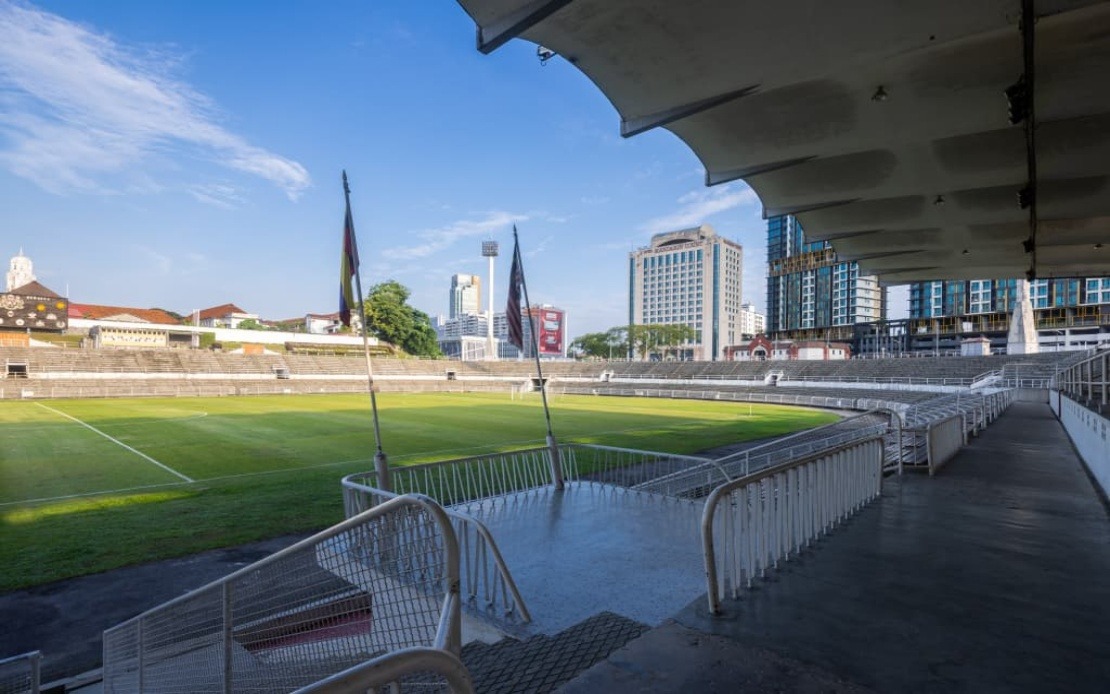
Nearly seven decades after Tunku Abdul Rahman's historic proclamation of Merdeka at Stadium Merdeka on August 31, 1957, Malaysia's independence spirit endures—though the venue for celebrating it has transformed dramatically. What began as a single momentous declaration at the stadium has evolved into celebrations spanning multiple iconic locations, with Putrajaya emerging as the contemporary focal point for national-level festivities. This geographic and symbolic shift tells a deeper story about how Malaysia navigates the tension between honouring its past and embracing its future.
The migration from Stadium Merdeka to venues including Dataran Merdeka and, increasingly, Putrajaya reflects far more than logistical convenience. It represents Malaysia's physical and conceptual journey from a nascent post-colonial nation to an established federation charting its own development course. Putrajaya itself, developed from the former settlement of Prang Besar and established as the Federal administrative centre in 1995, first hosted the national-level celebration in 2003 under the theme "Keranamu Malaysia." This year marks the tenth occasion Putrajaya has served as host, underscoring its elevation from occasional venue to primary celebration site. The Cabinet's decision in April 2025 to designate Putrajaya as the national-level celebration venue for three consecutive years through 2027 signals an intentional policy commitment to consolidate this symbolic association.
Yet the question arises: does relocating celebrations diminish the historical weight of Independence Day, or does it create fresh opportunities for meaning-making? According to Prof Dr Sarjit Singh Gill, Chairman of the National Unity and Progressive Society Cluster at the Malaysian Professors Council, the answer hinges on perspective. Rather than viewing Stadium Merdeka and Putrajaya as competing symbols, Gill proposes they function as complementary historical markers. Stadium Merdeka, he explains, resonates profoundly with older Malaysians—particularly those aged seventy and beyond—evoking personal memories and lived experience of the independence moment. Putrajaya, by contrast, represents something distinct: a modern administrative hub designed with the ambition of a "smart city in a garden," embodying Malaysia's contemporaneous aspirations and technological advancement.
This dual-venue approach serves a pedagogical purpose that Gill, a Professor of Anthropology and Sociology at Universiti Putra Malaysia, considers essential. By celebrating at both locations, Malaysian society creates opportunities for younger generations to understand not merely a fixed historical moment, but rather a continuous narrative linking past accomplishment to ongoing national development. The symbolism operates on multiple registers: Stadium Merdeka represents the decisive break from colonialism, while Putrajaya embodies the administrative capacity and institutional maturity Malaysia has constructed in independence's aftermath. Neither diminishes the other; instead, they form a coherent historical arc.
To sustain patriotic sentiment among what Gill terms the "younger, postmodern generation," however, deliberate cultural work remains necessary. He emphasises two non-negotiable elements that must persist in every National Day celebration. First, ceremonies must consistently recognise and honour the sacrifices and diplomatic achievements of independence-era leaders who secured sovereignty through negotiation and consensus-building rather than violent revolution—a distinction that has shaped Malaysia's political culture. Second, celebrations must actively reaffirm Malaysia's foundational commitment to racial and religious pluralism, celebrating what Gill describes as "unity in diversity," the constitutional principle underpinning the federation's social contract. Reflecting on his own participation in the 1990 "Berjaya" (Success) parade, Gill underscores that fostering genuine patriotism demands active youth engagement, not passive spectatorship.
Beyond symbolism, practical considerations reinforce Putrajaya's suitability as a contemporary celebration venue. According to the Event Management and Innovation Unit of the Management Services Division at the Ministry of Communications, logistical infrastructure and modern facilities constitute primary selection criteria. Putrajaya's accessibility via the Mass Rapid Transit network, water taxi services, and shuttle bus networks provides viable alternatives to private vehicle use, facilitating smoother crowd management and accommodation of large audiences. These transportation innovations represent not merely technical advantages but reflect Malaysia's broader infrastructure evolution since 1957, demonstrating tangible progress in national development that younger citizens can directly experience and appreciate.
The thematic architecture of upcoming celebrations further illustrates this continuity-with-progress approach. The 2026 National Day and Malaysia Day theme—"Malaysia MADANI: Kesejahteraan Dinikmati" (Malaysia MADANI: Well-being Enjoyed)—deliberately traces the arc from independence achievement to contemporary nation-building focused on citizen welfare. This linguistic and conceptual framework enables organisers to position independence not as a historical endpoint, but as a foundation upon which subsequent development efforts build. The theme thus bridges generational divides by suggesting that younger Malaysians participate in an ongoing independence project, not merely commemorate a concluded chapter.
Recognising that older celebrations risk appearing dated to digital-native audiences, organisers have incorporated creative and technological elements into the 2025 festivities. Performances including "Gema Inovasi MADANI" (Echoes of MADANI Innovation) and the musical fusion "Rentak MADANI, Paluan Tradisi" (MADANI Rhythms, Traditional Beats) blend contemporary production techniques with cultural continuity. A particularly innovative element involves a "Human Graphic" formation comprising 1,500 schoolchildren, transforming young bodies into living national symbolism while simultaneously centring youth agency in the celebration itself. Such programming attempts to render patriotism experientially engaging rather than merely ceremonial.
The transformation extends beyond spectacle to actual participation structures. Muhammad Nasrul Nasir, a thirty-year-old Administrative Assistant at the Federal Territories Department, exemplifies this evolution. Having attended the previous year's Putrajaya celebration as a family spectator, witnessing skydiving performances and reflecting on historical sacrifices, Nasrul has graduated to participating directly in this year's parade as an agency representative. His trajectory from audience member to participant mirrors the hoped-for engagement pattern among Malaysian youth: initial exposure to celebration atmospherics progresses toward active involvement in national rituals, building personal investment in patriotic symbolism through embodied action rather than passive observation.
Nasrul's recollection that last year's celebration "reminded me of the contributions of past heroes who sacrificed for the nation's independence" reveals how even modernised venues and contemporary programming can effectively transmit historical consciousness to younger generations. The Putrajaya setting, far from diluting independence's significance, appears to facilitate meaningful personal connections between individual participants and national historical narratives. When young Malaysians like Nasrul experience National Day celebrations in settings that combine cutting-edge facilities with deliberate historical referencing, they construct their own patriotic identities through participatory rather than purely commemorative channels.
Ultimately, Malaysia's evolution in National Day celebration venues reflects sophisticated cultural navigation. The nation preserves Stadium Merdeka's irreplaceable historical sanctity—the actual location where independence was proclaimed—while developing Putrajaya as a forward-looking venue that allows contemporary Malaysians to locate themselves within an unfolding national narrative rather than as distant observers of completed history. This dual-site strategy acknowledges that patriotism requires both ancestral memory and future orientation, both reverence for past struggle and investment in ongoing development. As Malaysia approaches its seventh decade of independence, the flexibility to celebrate across multiple symbolic landscapes may prove essential to maintaining intergenerational consensus about national purpose and collective identity.

