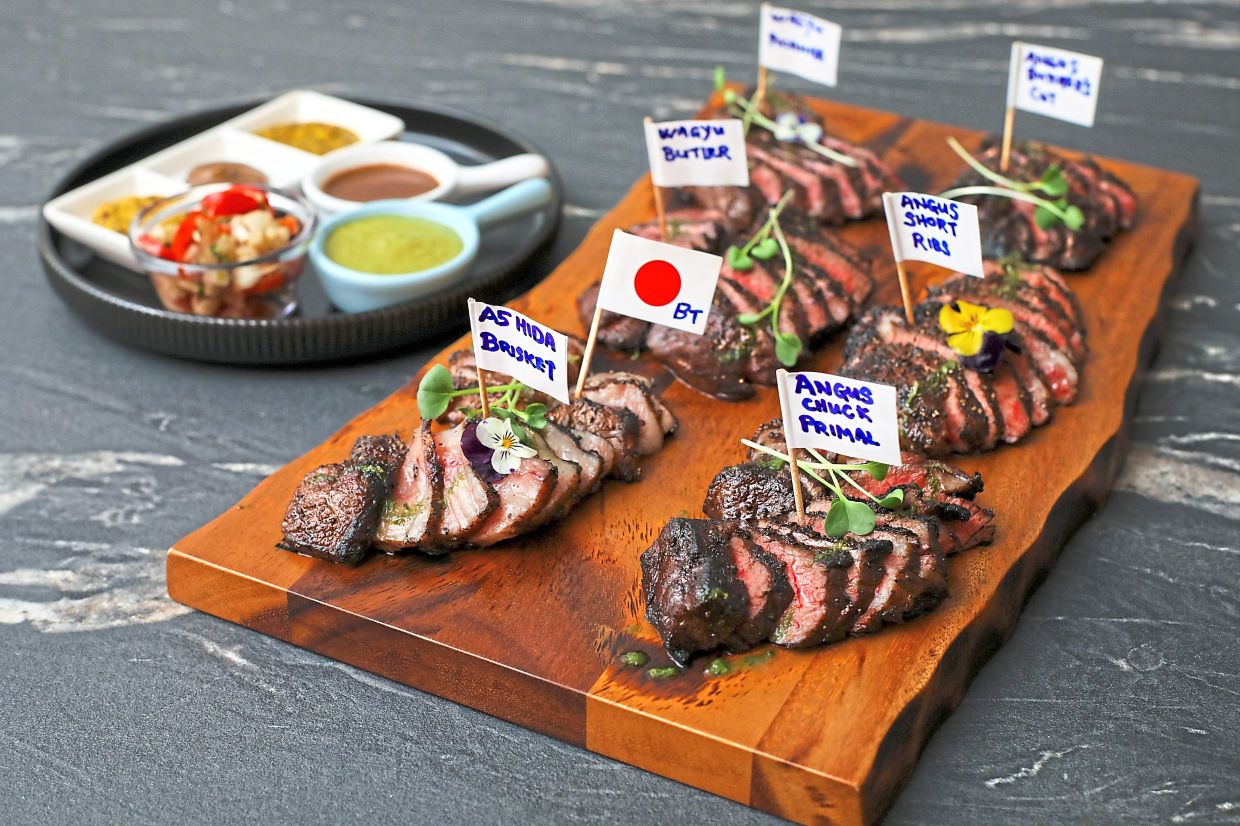
At Meat Feds in Petaling Jaya, chef Yenni Law meticulously works her knife through sinew and connective tissue, her concentration absolute. She is one of Malaysia's pioneering specialists in secondary beef cuts—portions long dismissed as worthy only of grinding into mince. Earlier this year, Law and co-founder Shelly Saw earned a Malaysia Book of Records citation for featuring the most secondary cuts on a single restaurant menu: twenty distinct varieties. Yet despite this accolade, they remain outliers in an industry where prime cuts have reigned supreme for decades.
The Malaysian beef market presents a paradox. Despite being Southeast Asia's largest beef consumer, local diners have fixated on a narrow trinity: striploin, tenderloin, and ribeye. These premium cuts represent merely eight to ten percent of a carcass's total yield, leaving eighty to ninety percent relegated to ground meat, burger patties, and sausages—their true potential obscured from consumers who never experience their distinct character. This systemic waste reflects both culinary convention and market structure. Prime cuts command premium prices precisely because scarcity drives desire, yet the abundance of secondary portions remains economically underexploited.
Over the past year, the Klang Valley's dining landscape has begun shifting in subtle but measurable ways. Mid-range and high-end establishments increasingly feature secondary cuts prominently on menus, signalling a genuine market repositioning rather than temporary novelty. This transformation did not occur spontaneously. Instead, it reflects a coordinated education campaign orchestrated by organisations like Meat & Livestock Australia and meat distributors such as Lucky Frozen Sdn Bhd. These entities have organised seminars, masterclasses, and tasting events that reframe secondary cuts not as inferior alternatives but as distinctive ingredients capable of anchoring sophisticated dishes. At such gatherings, cuts like flat iron, flank, hanging tender, and picanha receive the ceremonial presentation typically reserved for ribeye, fundamentally altering chef perceptions.
This strategy mirrors successful ingredient revolutions in other cuisines and markets. During the 1980s, Norway's Minister of Fisheries launched an aggressive campaign introducing salmon to Japan, where chefs initially dismissed the fish as unsuitable for traditional preparations. Within decades, salmon sushi transformed into Japan's most popular topping—a cultural and culinary inversion driven entirely through organised promotion and culinary education. The Malaysian secondary beef movement follows this same playbook: systematic exposure, expert demonstration, and repeated messaging designed to overcome ingrained bias. Law herself credits these professional development events with refining her technique and validating her approach. She attended recent Meat & Livestock Australia masterclasses specifically to optimise her fat-trimming speed and confirm her processing methods aligned with international standards.
Valeska V, regional manager for Meat & Livestock Australia in Southeast Asia, articulates the underlying logic clearly. Prime cuts succeed because they require minimal intervention and deliver inherent tenderness—an attractive proposition for both chefs seeking simplicity and consumers pursuing guaranteed satisfaction. Yet as culinary sophistication expands, adventurous diners increasingly accept complexity and difference. Market pressures amplify this receptiveness. When prime cut prices surge by approximately thirty percent due to global supply constraints while secondary cuts rise merely ten percent, economic logic compels experimentation. This combination of shifting consumer attitudes and price pressure creates genuine opportunity for portfolio diversification.
The financial advantages prove substantial for both restaurateurs and diners. Secondary cuts cost twenty to sixty percent less than their prime equivalents—savings potentially reaching hundreds of ringgit per serving. For establishment operators managing razor-thin margins amid inflation, these economics prove decisive. Desmond Chong, head chef at woodfire grill restaurant Ignis KL, now stocks three to four secondary cuts specifically because global oil crises and worldwide beef scarcity have made prime cut pricing untenable. His pragmatic choice reflects industry-wide necessity rather than adventurous preference. Similarly, James See from meat distributor Lucky Frozen Sdn Bhd argues that utilising the entire carcass increases resilience against beef inflation whilst addressing global supply constraints that show no sign of abating.
Yet financial incentives alone do not drive chef adoption. Secondary cuts genuinely deliver superior sensory complexity when treated with appropriate respect and technique. Law's restaurant presents large platters featuring butcher's cut, chuck primal, brisket, picanha, and short rib—each displaying distinct textural profiles and bovine intensity varying in bite, chew, tenderness, and malleability. These variations reward informed diners with broader gastronomic experience than prime cut monotony provides. At Ignis KL, Chong's charcoal-fired short ribs and flat iron steaks achieve silken mouthfeels and sumptuous character rivalling prime preparations whilst avoiding excessive opulence. The dishes succeed not through camouflage or compensation but through authentic flavour expression appropriate to each cut's intrinsic properties.
Despite these advantages, secondary cuts present significant operational challenges that have historically discouraged adoption. Processing requires mastery of fat and sinew removal—technical demands unfamiliar to chefs trained exclusively on prime materials. Law candidly acknowledges that differentiation between fat and sinew demands intensive practice; visual similarity deceives even experienced processors. These cuts contain considerably more connective tissue and variability than prime portions, necessitating individual attention rather than standardised handling. This steep learning curve deters casual exploration, explaining why secondary cuts remain concentrated among dedicated specialists rather than distributed across mainstream establishments.
The shift toward secondary beef utilisation carries broader implications for Malaysian food culture and Southeast Asian culinary development. It signals maturation beyond status-driven ingredient choices toward appreciation of technique, flavour complexity, and resource efficiency. As global beef supplies tighten and climate pressures intensify agricultural practices, maximising carcass utilisation becomes not merely economically sensible but environmentally necessary. Malaysian chefs pioneering secondary cuts—Law, Chong, and their peers—model sophisticated approaches to ingredient stewardship. They demonstrate that culinary excellence does not require exclusive focus on premium portions but rather profound understanding of materials and commitment to craft excellence.
The momentum building within the Klang Valley reflects deeper market realignment driven by education, economics, and evolving consumer sophistication. Organisations like Meat & Livestock Australia function as catalysts, removing informational barriers that previously prevented adoption. Price pressures from global supply disruptions provide urgent motivation. Most fundamentally, chefs and diners increasingly recognise that culinary value inheres not in scarcity markup but in preparation quality and sensory authenticity. As this understanding deepens, secondary cuts will likely transition from restaurant novelty to standard menu component—less dramatic than the salmon revolution but equally transformative for Malaysian beef culture.

