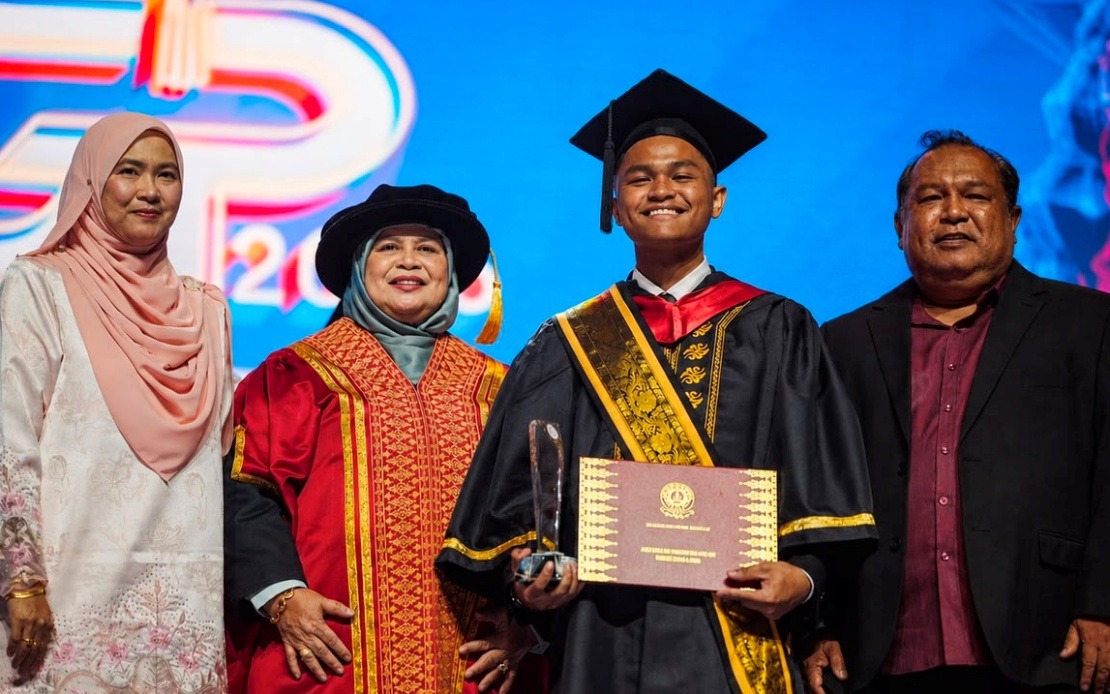
Muhammad Aaqif Dino Faezal's trajectory from a science junior college student in Melaka to an Imperial College London undergraduate exemplifies how targeted government support can unlock international opportunities for academically gifted Malaysian youth. The 19-year-old Selangor-born student was recognised as the 2026 MARA College Graduate Icon on August 20, marking his transition to a prestigious British institution where he will pursue a degree in Geology beginning this September.
The pathway that culminated in Aaqif's acceptance to Imperial College began at MARA Science Junior College (MRSM) Tun Ghafar Baba in Melaka, where he first distinguished himself academically. However, the transformative phase of his educational development occurred at Kolej MARA Banting (KMB), where he undertook the International Baccalaureate Diploma Programme (IBDP) from 2024 to May 2026 under MARA's Young Talent Development Programme (YTP). This sponsorship mechanism proved instrumental in converting academic potential into tangible international credentials.
For Aaqif, the financial dimension of pursuing overseas education cannot be overstated. He candidly acknowledged that without MARA's comprehensive support, the prohibitive costs associated with studying and living abroad would have rendered his aspirations unrealisable. The programme functioned not merely as a funding mechanism but as a gateway removing systemic barriers that talented students from middle-income families frequently encounter when contemplating tertiary education beyond Malaysia's borders. This resonates particularly within Southeast Asia, where talent often goes underdeveloped due to economic constraints rather than intellectual capacity.
His academic performance at KMB was exemplary, culminating in a score of 44 out of 45 points in the IBDP examination conducted last May. This exceptional result positioned him among the elite cohort of international baccalaureate graduates globally and vindicated MARA's selection process. Beyond raw examination performance, Aaqif demonstrated the multifaceted excellence that contemporary tertiary institutions increasingly value. He served as president of the Students' Representative Council (MPP), simultaneously nurturing leadership acumen and institutional familiarity that will ease his transition into Imperial College's competitive academic environment.
The breadth of Aaqif's engagement during his KMB tenure extended substantially beyond the classroom. His participation in co-curricular activities and community initiatives built a portfolio that transcends conventional academic metrics. This holistic development garnered institutional recognition through the KMB Best Graduate Award and the Co-curricular Icon Award, achievements that underscore how MARA institutions endeavour to cultivate individuals prepared for complex professional landscapes. His experience building consensus between student bodies and management demonstrates interpersonal sophistication that distinguishes graduates capable of navigating multicultural university settings.
Arfaseela Amir, the KMB director, characterised Aaqif's trajectory as embodying the institution's broader institutional mission to produce human capital combining intellectual rigour with exemplary character formation. She emphasised that his capacity to lead whilst fostering collaborative environments and facilitating effective communication between different stakeholder groups reflected KMB's commitment to developing well-rounded individuals rather than narrow academic specialists. This pedagogical philosophy aligns with contemporary global workforce demands, particularly in sectors requiring interdisciplinary thinking and stakeholder engagement.
Aaqif's intended focus on Geology at Imperial College carries specific significance for Malaysia's economic landscape. He has articulated an explicit ambition to leverage his acquired expertise and international experience to contribute meaningfully to Malaysia's oil, gas, and energy sectors. These industries represent critical pillars of Malaysia's economic structure, employing substantial numbers of professionals and generating substantial fiscal revenue. The potential contribution of internationally trained expertise to upgrading technical capabilities and research competencies within these sectors underscores why government investment in sponsored tertiary education constitutes strategic economic policy rather than purely philanthropic endeavour.
The recognition as MARA College Graduate Icon represented an emotional milestone for Aaqif, prompting introspection regarding the cumulative support system that enabled his advancement. He explicitly acknowledged the contributions of his family, educators, peers, and the KMB institution itself, demonstrating the maturity and gratitude characteristic of individuals who comprehend the privilege embedded within sponsored educational pathways. This perspective distinguishes graduates likely to reciprocate societal investment through future contributions to national development initiatives.
MARA's Young Talent Development Programme exemplifies how targeted intervention by government institutions can systematically identify and nurture exceptional individuals whose potential might otherwise remain latent. The selection criteria emphasising not merely examination results but sustained demonstration of leadership, character, and community contribution create mechanisms identifying individuals whose contributions will likely extend beyond their professional domains into broader spheres of social influence. Such criteria-setting reflects sophisticated understanding that national development ultimately depends upon cultivating individuals who combine technical competence with ethical grounding and social consciousness.
For Malaysian policymakers and educators, Aaqif's journey illuminates the multiplier effects generated by investing in comprehensive educational ecosystems combining rigorous academics with character development and leadership cultivation. His transition to Imperial College does not represent an educational terminus but rather a developmental phase within a longer trajectory envisioned to culminate in meaningful professional contributions to Malaysian society. The institutional success metrics should ultimately focus upon measuring how many such sponsored graduates subsequently deploy their capabilities to address national challenges and strengthen Malaysia's competitive positioning within increasingly knowledge-intensive global markets.
The broader implications extend throughout Southeast Asia, where similar patterns of talented youth facing resource constraints persist across multiple economies. Malaysia's MARA model, whilst imperfect and subject to ongoing refinement, demonstrates that systematic government investment combined with institutional excellence can create pathways enabling geographic and social mobility. As regional economies diversify and compete increasingly upon knowledge and technical innovation, the capacity to identify early-stage talent and provide comprehensive development support becomes strategically indispensable for maintaining competitive advantage and ensuring that economic growth translates into expanded opportunity distributions across socioeconomic strata.

