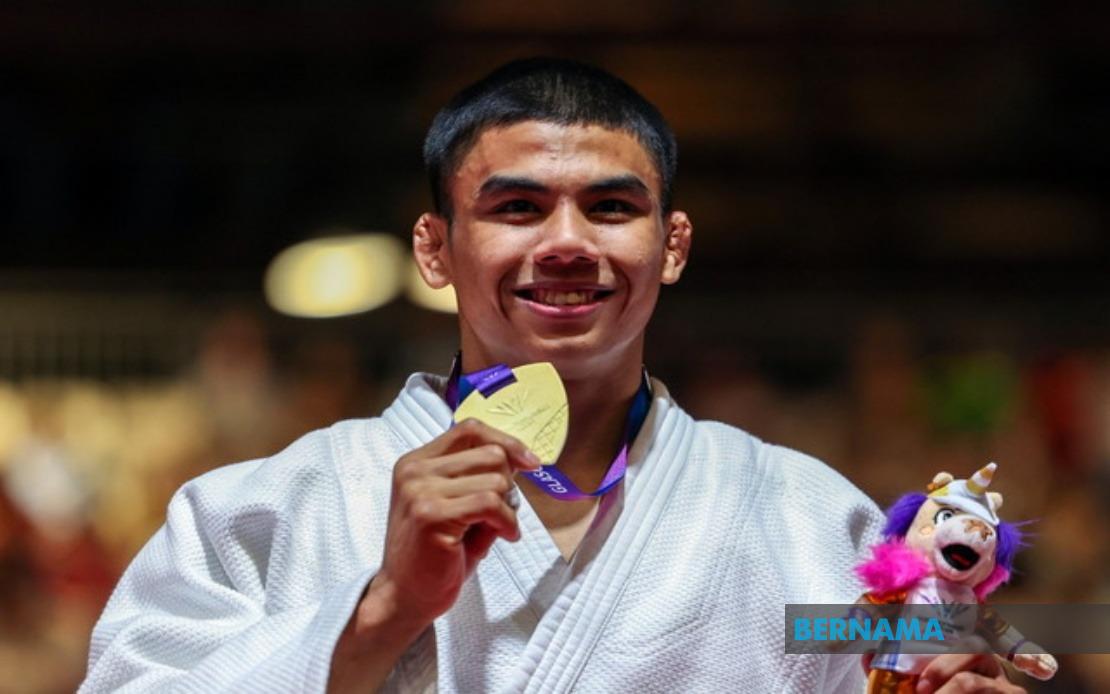
The shift from athletic competition to coaching has proven unexpectedly challenging for Commonwealth Games gold medallist Amir Daniel Abdul Majeed, who now manages an entire squad rather than just himself. At 21 years old, the national judo exponent has stepped into an assistant coaching role with the Penang judo team at SUKMA Selangor 2026, and the experience has revealed just how different the pressures of leading from the sideline can be. Speaking in Shah Alam following Penang's three-day campaign, Amir articulated a perspective that many successful athletes discover only after making the transition: coaching demands a fundamentally different psychological resilience than competing.
When Amir was competing on the mat, his focus remained narrowly concentrated on his own performance, his own technique, and his own match outcome. The stakes were personal and immediate. Now, however, he carries responsibility for thirteen athletes, each with their own strengths, weaknesses, and developmental trajectories. This expanded scope of accountability has introduced what Amir describes as a heavier burden, though not necessarily an unwelcome one. The nervousness he now experiences stems from a deeper source than competition anxiety—it emerges from having watched his charges develop from youth through to their current competitive levels and from the genuine investment in their success.
Penang's judo contingent delivered a respectable showing at SUKMA Selangor 2026, claiming three gold medals, one silver, and five bronze across their competitions. This haul placed them joint-top in the overall medal standings alongside Johor, demonstrating that despite Amir's self-described nervousness about his new role, his coaching contributions have made tangible difference. The performance validates that transition from athlete to mentor need not mean diminished competitive results, particularly when the coach brings recent competition experience and deep familiarity with the athletes themselves. Amir's advantage lies precisely in his understanding of these competitors—he trained alongside many of them and understands the judo landscape they navigate.
Yet Amir's current focus extends well beyond domestic competition. He is awaiting official confirmation regarding his participation in the Aichi-Nagoya 2026 Asian Games, with a crucial selection meeting scheduled for this week. This dual responsibility—coaching at SUKMA while pursuing his own place in Japan—encapsulates the complex position many elite athletes occupy when transitioning into coaching roles. Rather than retiring from competition, Amir continues as an active participant in his sport while simultaneously developing the next generation of judokas. This arrangement demands considerable time management and mental compartmentalization.
The Asian Games opportunity carries significant weight in Amir's long-term planning. Japan's judo ecosystem is famously rigorous and technically sophisticated, with competition standards substantially exceeding those typically encountered in Southeast Asia. For a Malaysian judoka with genuine Olympic aspirations, competing in such an environment offers invaluable exposure and the opportunity to measure himself against genuinely elite international opposition. Amir recognizes this clearly, understanding that the Asian Games can function as a crucial stepping stone within his trajectory toward larger Olympic objectives.
Southeast Asia's judo landscape continues developing, with Malaysia's SUKMA competitions serving as important talent identification and development platforms. Amir's decision to engage in coaching while maintaining his own competitive pathway demonstrates commitment to that broader ecosystem. By sharing knowledge with Penang's squad while continuing his own progression, he contributes to elevating standards across the region. This dual engagement is particularly valuable given Malaysia's need to develop consistent medallists at continental and international levels.
The psychological transition Amir describes—from managing only personal performance to managing team dynamics and individual athlete development—represents a common challenge in elite sport. Coaches often report that their early coaching experiences bring unexpected emotional intensity precisely because they cannot control outcomes in the way they could as competitors. A coach can provide optimal preparation, strategy, and encouragement, but ultimately cannot execute the technique or make the tactical decisions that occur in real competition. This loss of direct control frequently manifests as the elevated nervousness Amir references.
Looking toward the SEA Games Malaysia 2027, Amir's dual role becomes even more significant. A strong showing in Japan's Asian Games competition could position him competitively for the home SEA Games, while his coaching work helps develop athletes who might also represent Malaysia across 2027. This alignment of objectives—personal achievement, team development, and national medal targets—creates powerful motivation for excelling in both capacities. Malaysia's judo program benefits when senior athletes like Amir remain engaged in competitive pursuits while also mentoring emerging talent.
The selection meeting for the Asian Games contingent represents a critical juncture. Competition at that level demands not only technical proficiency but also the mental fortitude to manage international travel, training demands, and unfamiliar competitive environments. Amir's youth works both for and against him—his recent competitive experience and physical capabilities support selection, yet some administrators might prefer spreading selection opportunities across multiple Olympic cycles. The coming weeks will clarify whether Malaysia's judo federation prioritizes Amir's immediate selection or opts for a broader developmental approach.
Regardless of the Asian Games outcome, Amir's coaching role with Penang seems likely to continue, given his current age and the genuine value he brings to athlete development. His experience epitomizes a growing trend in Malaysian sport where senior athletes extend their involvement by transitioning into coaching roles while maintaining competitive participation. This model, common in countries with advanced judo programs, allows for knowledge transfer while maintaining competitive depth. For Malaysian judo specifically, having a Commonwealth Games medallist actively involved in developing the next generation addresses a significant capacity gap in the coaching infrastructure.

