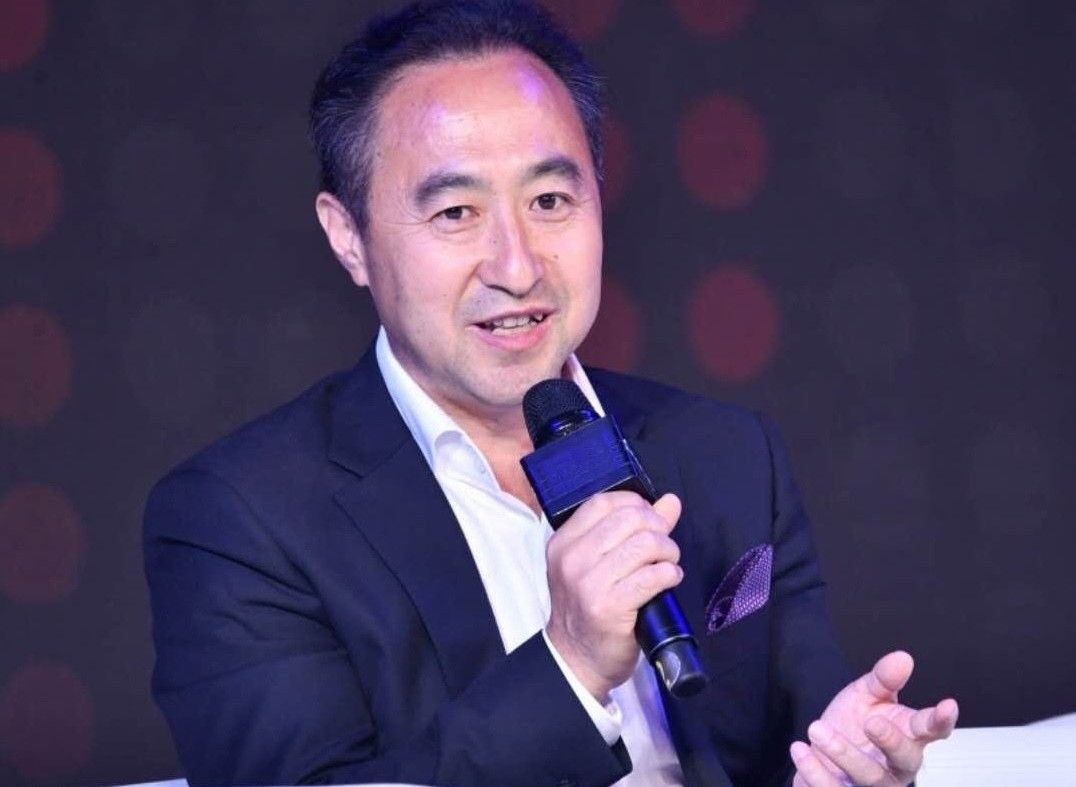
CJ Wang's ascent from schoolteacher to billionaire entrepreneur offers a compelling portrait of ambition, innovation, and strategic vision in China's consumer manufacturing sector. The founder and chairman of the global home appliance conglomerate built on the foundation of a single invention—an automatic soy milk maker—has accumulated a fortune estimated at US$10.4 billion, making him one of Asia's most influential yet relatively unknown business figures until his recent decision to step into the international spotlight.
Wang's journey began in Yantai, a coastal city in Shandong province, where he was born in 1969 and gained intimate familiarity with one of China's most cherished breakfast staples. His childhood involvement in the arduous process of making soy milk by hand, grinding beans using his uncle's traditional stone mill, would prove formative. The experience planted a seed that would eventually germinate into entrepreneurial action—a recognition that this labour-intensive tradition could be revolutionised through engineering. After completing his studies in electrical engineering at Beijing Jiaotong University, Wang followed the predictable path his family had laid out, stepping into a teaching career that initially seemed destined to define his professional trajectory.
Yet the constraints of academic life proved incompatible with Wang's larger ambitions. In 1994, at a moment when most professionals would have consolidated their stability, he made the decisive break from teaching to pursue his engineering passion. His conviction was rooted in practical observation: soy milk and fried dough sticks would remain cornerstones of Chinese breakfast culture, and the manual methods of production represented an inefficiency waiting to be addressed. That year, Wang designed and built the world's first electric machine capable of automatically producing soy milk, establishing Joyoung as a kitchen appliance brand. While the initial machine was far from flawless, it represented a fundamental technological leap that resonated with Chinese consumers exhausted by manual preparation methods.
The commercial success of Wang's innovation was remarkable by any measure. Within a decade, Joyoung had sold more than one million soy milk makers by 2004, demonstrating the breadth of market demand for his solution. The company subsequently diversified its portfolio, building a reputation for affordable, reliable appliances including blenders and rice cookers that appealed to middle-class Chinese households. By the early 2010s, Joyoung had established itself as a dominant force in the Chinese domestic market, particularly strong in kitchen appliance categories where quality and value aligned with consumer expectations.
However, Wang recognised that China's internal market, while vast, represented only one segment of a genuinely global opportunity. As the 2010s progressed, he began exploring strategies for international expansion beyond Joyoung's modest recognition in Western markets despite the company's 2010 listing on the Shenzhen Stock Exchange. Rather than attempting to build recognition from scratch in unfamiliar markets, Wang pursued an acquisition strategy. His target was SharkNinja, an established American appliance manufacturer already cultivating a dedicated following for its vacuum cleaners and kitchen blenders, particularly through innovative direct-to-consumer marketing channels.
Wang's acquisition of a controlling stake in SharkNinja through his private equity firm in 2017 demonstrated sophisticated understanding of brand value and market positioning. He recognised in SharkNinja not merely a product portfolio but a proven team, a respected brand identity in Western consumer consciousness, and leadership continuity—securing CEO Mark Barrocas' commitment to remain at the helm represented a crucial strategic decision that provided operational stability. Yet Wang also identified substantial gaps that his operational expertise could address: the product lineup remained relatively constrained, the company's marketing approach leaned heavily on traditional television infomercials without fully capitalising on emerging social media platforms, and manufacturing relied on a limited supplier base that constrained both flexibility and innovation capacity.
Under Wang's ownership through his holding company JS Global Lifestyle Co., which achieved a Hong Kong public listing in 2019, SharkNinja underwent systematic transformation. Wang applied the scaling principles he had mastered at Joyoung, expanding the product range substantially, restructuring the supply chain for greater resilience and innovation, and critically, modernising the sales and marketing strategy. The company embraced social media platforms with particular vigour, recognising that products designed for visual appeal and demonstrable functionality could achieve viral status on platforms like TikTok, reaching younger demographics that traditional infomercials could not penetrate effectively.
The revitalised SharkNinja emerged as a phenomenon in Western consumer markets, launching a succession of products that captured genuine cultural moments rather than simply filling functional gaps. The dual-brand architecture, separating Shark products (vacuums and beauty devices) from the Ninja kitchen appliance line, allowed for targeted positioning and distinct marketing narratives. Following a 2023 direct listing on the New York Stock Exchange, SharkNinja became fully distinct from its parent holding company, though Wang retained substantial ownership stakes in both entities. As of mid-2024, Wang controlled approximately 35 percent of SharkNinja and maintained a 52 percent stake in JS Global Lifestyle, positioning him at the apex of both enterprises.
Wang's financial returns have been extraordinary by any standard, though his personal profile has remained deliberately modest. In 2024, he earned remuneration totalling more than HK$520 million (US$66.3 million) as a Hong Kong-listed company director, making him the territory's second-highest-paid board member. Associates describe Wang as soft-spoken and private, with interests outside business including golf and premium Scotch whisky, yet he has demonstrated a willingness to engage with international media when strategic circumstances demand visibility.
Wang's recent decision to grant his first substantial interview to international media, speaking with Time magazine, reflected a calculated response to geopolitical realities. Amid escalating US-China trade tensions and heightened American scrutiny of Chinese investment flows, Wang recognised the necessity of establishing his own narrative rather than allowing speculation and suspicion to define external perceptions. His stated motivation—to "proactively tell my story to mitigate any speculation"—acknowledges the precarious position occupied by high-profile Chinese business leaders operating in Western markets, particularly those controlling significant American assets.
For Malaysian and Southeast Asian observers, Wang's trajectory illuminates several significant themes. First, it demonstrates how innovation grounded in local knowledge and traditional practices can scale globally when combined with rigorous engineering and market understanding. Second, it illustrates the strategic sophistication of contemporary Chinese entrepreneurs who recognise that Western brand recognition and market position cannot be rapidly constructed but rather must be acquired and evolved. Third, Wang's experience suggests that operational excellence and supply chain management remain foundational competitive advantages even as product virality and social media presence capture public attention. The Joyoung founder's rise from humble beginnings to commanding a multibillion-dollar global enterprise through disciplined execution, strategic patience, and willingness to learn from established Western businesses offers a distinctive model distinct from the venture-capital-driven pathways that have dominated recent entrepreneurial narratives.

