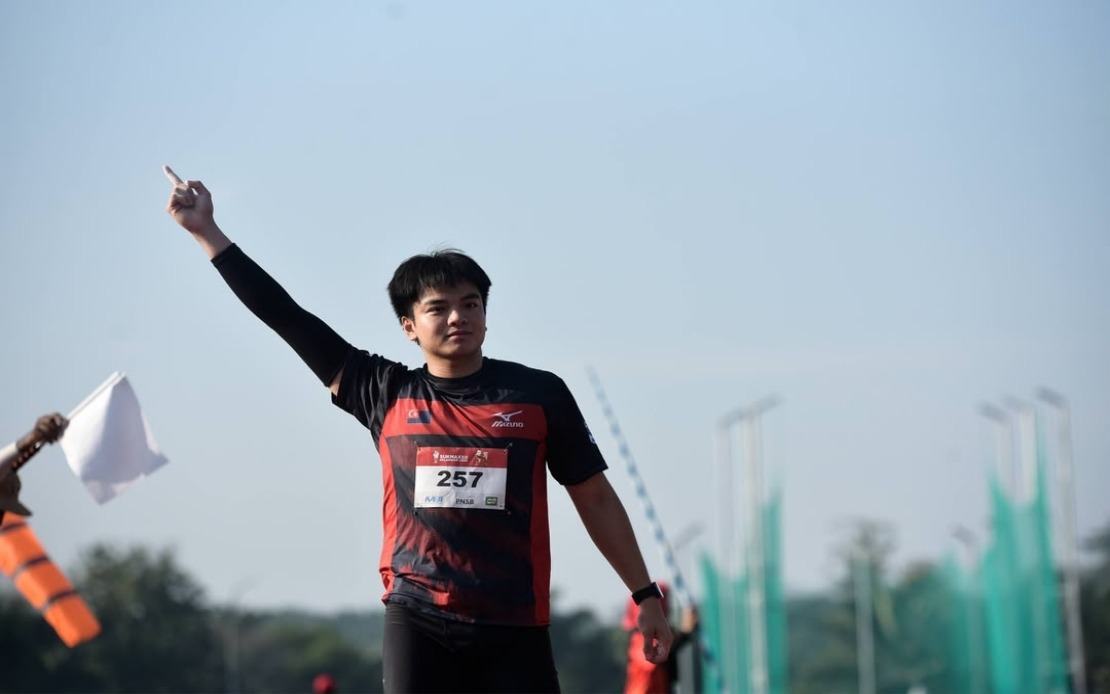
Johor's Chai Kai Le has authored an unlikely sporting story, transforming from a badminton-playing schoolboy into Malaysia's newest javelin record-holder at the Selangor 2026 Malaysia Games. The 18-year-old's explosive throw of 64.44 metres at the Universiti Putra Malaysia Sports Centre obliterated a Games record that had stood unchallenged for more than a quarter-century, surpassing the 62.33-metre benchmark established by Sarawak's Kho Mei Kuan during the 2000 Penang edition.
What makes Kai Le's achievement particularly striking is the seemingly chance encounter that redirected his entire athletic trajectory. His journey to the javelin circle began not with coaching ambitions or structured development programmes, but rather with a perceptive teacher who recognised potential in an unexpected place. While competing in badminton during his primary school years, this educator spotted something distinctive in the young athlete's arm mechanics—specifically the explosive power and timing displayed during shuttle releases. That single observation during Standard Six proved pivotal, nudging Kai Le towards javelin and fundamentally altering his sporting destiny.
The transition from racquet sport to field athletics could easily have remained a casual experiment, yet Kai Le possessed the curiosity and determination to pursue it seriously. Once he began formal javelin training, he immersed himself in the sport's culture by attending open competitions and studying established throwers in action. Observing accomplished senior athletes hurl javelins across impressive distances sparked something deeper within him—an aspiration that transcended casual participation. The young thrower harboured an ambition to one day join their ranks, to achieve the distances they commanded, and to prove himself among Malaysia's elite field athletes.
Beyond natural talent and opportunity, however, Kai Le's rise has been underwritten by profound familial sacrifice. His father, Chai Yin Huan, has consistently demonstrated unwavering commitment to his son's development, absorbing the considerable financial burden that accompanies elite athletics. Medical treatment for injuries, replacement equipment, recovery programmes, and countless other expenses have been met without hesitation. Importantly, this paternal support extends beyond mere financial transaction—Chai Yin Huan approached his son's athletic pursuits with realistic expectations, prioritising Kai Le's overall wellbeing and health above the pursuit of medals or accolades.
The financial foundation his father provided became particularly crucial during the past year, when Kai Le confronted a troublesome constellation of physical ailments. Training at Bukit Jalil Sports School as a pre-university student, the teenager battled persistent back problems alongside injuries to his right shoulder and elbow. Rather than view these setbacks as terminal obstacles, Kai Le adopted a remarkably resilient approach, continuing both training and competitive participation despite incomplete recovery. This perseverance was tested at the Indonesia Open earlier in 2024, where he not only competed but established a personal best of 65.65 metres while simultaneously setting a new national under-20 record.
The SUKMA record-breaking performance represents validation of Kai Le's refusal to be sidelined by injury, yet he views this achievement as merely a waypoint rather than a destination. Having already exceeded the 26-year-old Games standard, the young thrower has established a more ambitious target: reaching the 70-metre threshold during the coming year. This goal carries concrete significance beyond abstract ambition, as it represents the performance corridor necessary for qualifying to compete at the 2027 Southeast Asian Games. To facilitate this progression, Kai Le has committed to an intensive one-month training exchange in Japan scheduled for early 2025, reflecting the increasingly international approach to Malaysian track and field development.
Kai Le's trajectory illuminates broader questions about talent identification and development pathways in Malaysian sport. The fortuitous observation by a schoolteacher demonstrated how institutional actors within the education system can catalyse transformative opportunities when they recognise potential beyond conventional expectations. Yet his story also underscores the persistent challenge that family financial capacity often determines whether talented young athletes can actualise their potential. The expense of coaching, facilities, international competition, and injury management remains a significant barrier for many Malaysian youth athletes from less advantaged backgrounds.
The regional context adds another dimension to Kai Le's aspirations. Southeast Asian athletics has seen increasing competitiveness, with neighbouring countries investing substantially in field event development. Malaysia's historical strength in sprinting and middle-distance events contrasts with relatively modest performance in throwing disciplines at regional level. Kai Le's emergence as a javelin threat, backed by improving records and international exposure through competitions like the Indonesia Open, suggests potential for Malaysian athletics to develop new competitive advantages in previously underdeveloped event categories.
At just 18 years old, Kai Le carries the weight of expectation alongside his javelin, yet his mentality appears calibrated towards long-term development rather than short-term satisfaction. His philosophical approach—expressed in his conviction that determination itself catalyses achievement—reflects maturity beyond his years. The combination of parental support, competitive experience, persistent physical resilience, and now the psychological boost of a Games record positions him as a genuine prospect for Southeast Asian athletics. Whether he achieves the 70-metre target and subsequent SEA Games qualification will depend on managing his injury concerns while maintaining the training intensity required for elite performance.
Kai Le's story resonates particularly for Malaysian readers who appreciate narratives of grassroots sporting talent emerging through unlikely pathways. From badminton courts to javelin circles, from schoolteacher observations to national records, his journey demonstrates how sport can provide transformative opportunity when talent, opportunity, and support align. As he pursues the 2027 SEA Games qualification and contemplates longer-term horizons beyond Southeast Asia, Kai Le embodies the potential lurking within Malaysia's youth athletic population—potential that sometimes requires only a teacher's keen eye to unleash.

