A 15-year-old boy has been formally charged by French authorities over a fire that erupted in Merignac, a town adjacent to Bordeaux airport, which resulted in the deaths of two firefighters in July. The teenager was brought before a judge on Thursday and subsequently placed in a closed educational centre pending further proceedings, according to local broadcaster BFMTV.
The circumstances leading to the charges emerged after intensive police investigations into the blaze and the events surrounding it. The young suspect, along with his 22-year-old brother, were both taken into police custody as investigators sought to establish the exact sequence of events and responsibility for the fire that would ultimately prove fatal to emergency responders.
During the inquiry, the older brother was arrested on Wednesday but was subsequently released after the teenager admitted to initiating the fire. This development marked a significant turn in the investigation, with the younger sibling accepting responsibility for the incident that would have far-reaching consequences. The release of the 22-year-old followed his cooperation with authorities and the emergence of evidence pointing to his brother's involvement.
According to French daily Sud Ouest, the fire originated from a discarded cigarette butt belonging to the 15-year-old. The two brothers had stopped in the Merignac area and were smoking cigarettes when the incident unfolded. The older brother disposed of his cigarette in the parking lot in what appeared to be a responsible manner, whilst the teenager allegedly threw his cigarette onto nearby grass, inadvertently creating the conditions for the blaze to ignite and rapidly spread.
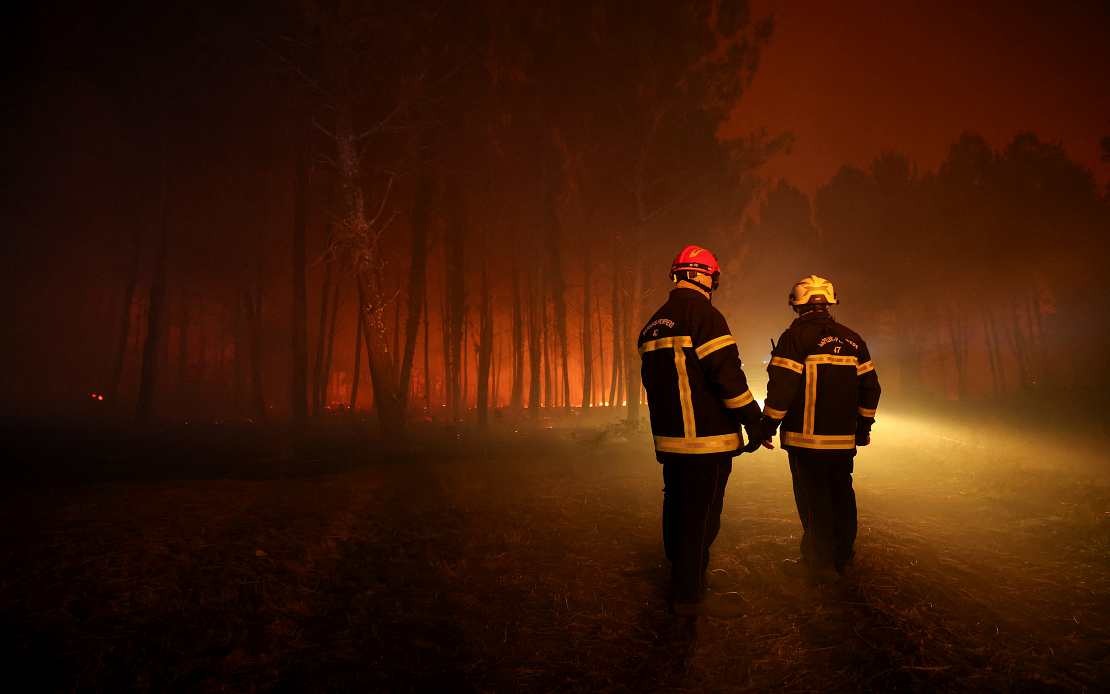
The fire that began from this seemingly negligent act escalated into a building fire of serious proportions. On July 21, two firefighters lost their lives whilst actively battling the flames to protect nearby structures and contain the emergency. Tragically, their emergency vehicle became engulfed and trapped by the advancing fire, preventing their escape and leading to their deaths. The incident underscored the inherent dangers faced by emergency responders confronting uncontrolled blazes.
Following the deaths, the Bordeaux prosecutor's office initiated a comprehensive investigation into the circumstances surrounding the tragedy. Authorities sought to determine not only the direct cause of the fire but also the broader context of how a discarded cigarette could spiral into such a catastrophic incident. The investigation examined factors including weather conditions, the flammability of vegetation in the area, and the sequence of events that prevented emergency personnel from withdrawing safely.
This case carries significant implications for fire safety and youth accountability in France. The incident illustrates how actions that may seem trivial or routine can have devastating consequences when undertaken without proper consideration. The formal charging of a minor reflects the severity with which French authorities treat negligence resulting in deaths, even when the chain of causation involves an initial seemingly small mistake.
For Malaysia and Southeast Asia, the incident serves as a sobering reminder of fire prevention importance in regions where weather conditions can create highly combustible environments. Many Southeast Asian countries experience dry seasons that elevate wildfire risks, and careless disposal of smoking materials remains a consistent threat in both urban and rural settings. The tragedy highlights the critical need for sustained public education campaigns addressing responsible cigarette disposal and awareness of fire hazards.
The case also raises questions about appropriate accountability for minors whose actions result in serious harm. French juvenile justice procedures balance rehabilitation with acknowledgment of responsibility, placing the teenager in a closed educational centre rather than conventional incarceration. This approach reflects broader European juvenile justice philosophy, contrasting with varying approaches across different nations and legal systems.
The deaths of the two firefighters underscore the occupational risks inherent in emergency service work. These individuals responded to a fire that rapidly became uncontrollable, sacrificing their lives in an attempt to manage a crisis created by negligence. Their deaths represent not merely a personal tragedy but a broader societal cost of inadequate fire prevention and safety awareness among the public.
As investigations continue and judicial proceedings advance, the case will likely influence discussions about fire prevention strategies in France and potentially across Europe. Educational institutions may use the incident as a teaching tool regarding consequences of dangerous behaviour, whilst public health authorities may intensify messaging about fire safety. The formal charging of the teenager signals that responsibility for deaths resulting from negligence extends even to minors, a message with implications for youth attitudes toward fire safety and public responsibility across jurisdictions.

