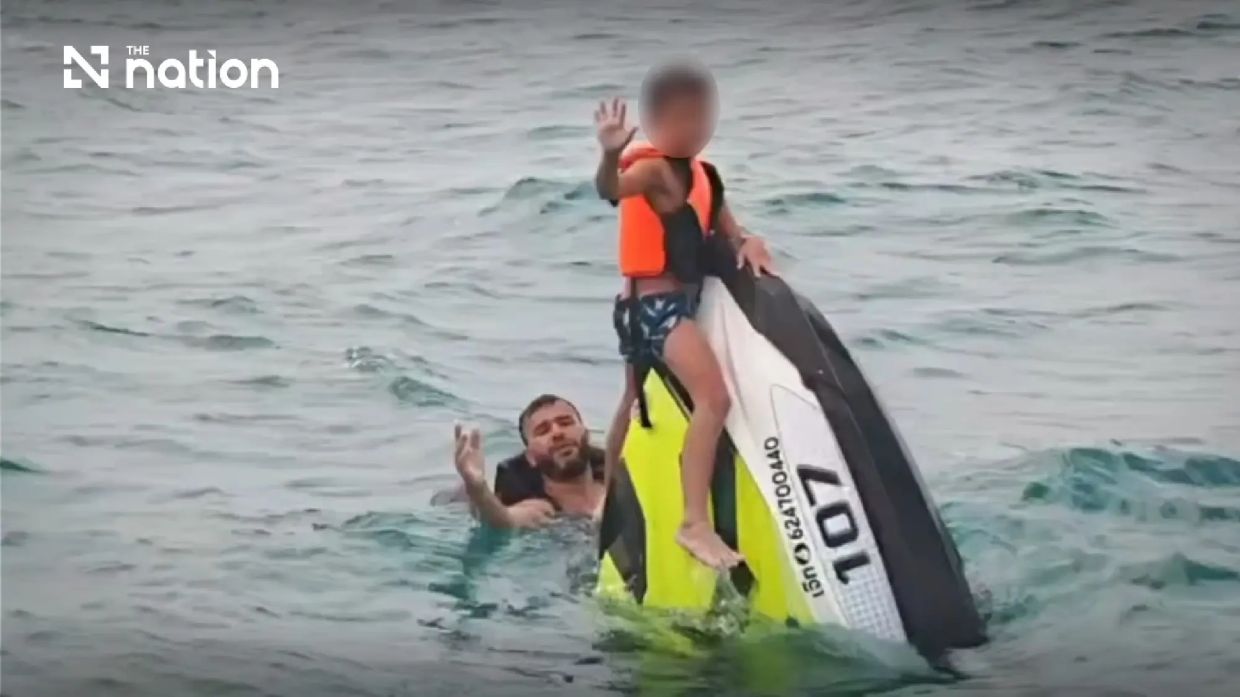
A French holidaymaker and his two young sons experienced an unnerving night at sea when their jet ski overturned near Koh Samui, a leading tourist destination in Thailand's southern Gulf region. The 50-year-old father, accompanied by children aged five and seven, remained in the water for just over 16 hours before being spotted and pulled to safety on Friday morning. Local authorities said the family was taken for medical evaluation after their ordeal, though all three were cleared and released from hospital the same day with no serious injuries reported.
The incident unfolded when the father rented a jet ski from a local operator on Koh Samui at approximately 5pm on Thursday. He had assured the rental company he possessed substantial experience handling such watercraft, according to statements made to investigators. The family was expected to return the vessel by a predetermined time, but when they failed to do so, alarm bells rang within the rental operation. The delay prompted the operator to contact emergency services and local authorities, initiating a search and rescue effort that would ultimately span the entire night.
The capsizing occurred remarkably quickly, with the jet ski becoming disabled just 15 minutes into the outing. When rescue teams eventually located the family at approximately 10am on Friday, they found the watercraft almost entirely submerged, with only its angular front section protruding above the water's surface. The father was treading water nearby whilst one of his sons sat precariously atop the partially-submerged machine. Both were equipped with life jackets, a factor that almost certainly proved crucial to their survival through the long hours of darkness and uncertainty.
Local government official Amorn Chomchoey provided details of the family's condition when discovered, noting they exhibited signs of significant physical strain. "We found them exhausted after swallowing a lot of seawater," he explained to media outlets. The children were particularly affected by the experience, appearing ashen-faced and drained from their extended exposure to the elements. Video footage released by the Koh Samui district office captured the moment of rescue, with one rescue worker audibly urging the frightened family to remain calm whilst assuring them of their safety. The rescuers distributed fresh water and carefully transferred the boy from the jet ski onto a rescue vessel.
Investigators examining the incident have identified a discrepancy regarding where the family actually operated the jet ski. Whilst the father maintains he was a seasoned operator, the rental company alleged that the family ventured beyond the designated zone stipulated in their contract. This detail carries significance, as operating outside approved areas on Thailand's tourist islands can expose users to stronger currents, deeper waters, and other hazards not present in the prescribed zones. The precise cause of the capsizing remains under examination, though the possibility of navigational error or unfamiliarity with local conditions persists as a likely contributing factor.
The incident brings into focus the safety protocols governing water sports activities on Thailand's premier island destinations. Koh Samui attracts millions of international visitors annually, drawing families with promises of serene beaches and comprehensive resort facilities. The island's reputation rests partly on calm, shallow waters that make it suitable for families with young children. However, jet ski rentals remain a popular if occasionally risky recreation option, and incidents involving capsized or stranded watercraft occur with sufficient regularity to warrant periodic reviews of safety measures and enforcement standards.
What distinguishes this particular incident is the extended duration of the family's ordeal. Spending more than 16 hours in open water, especially with children as young as five and seven years old, presents extraordinary physical and psychological challenges. The family's life jackets undoubtedly prevented what could have been a tragedy, underlining the critical importance of such equipment regardless of a operator's claimed experience level. The calm response of rescue personnel in managing the frightened family also contributed meaningfully to the positive outcome.
Remarkably, the family declined to abandon their Thai holiday following their traumatic experience. Local officials confirmed that the three remained in the country and continued with their planned recreational activities. This decision likely reflects both their resilience and the comprehensive medical clearance they received, though it also demonstrates their commitment to not allowing a single incident to overshadow their entire vacation experience.
The rescue highlights ongoing questions around adventure tourism safety in Southeast Asia's popular vacation zones. While jet ski operations on islands like Koh Samui are tightly regulated in theory, enforcement and compliance with safety protocols sometimes remain inconsistent. This case underscores the necessity for rental operators to rigorously verify user competency, ensure equipment maintenance, and reinforce geographical boundaries with renters. For visitors to Thailand's islands, it serves as a reminder that even experienced recreational users can encounter unexpected difficulties when operating in unfamiliar marine environments.

