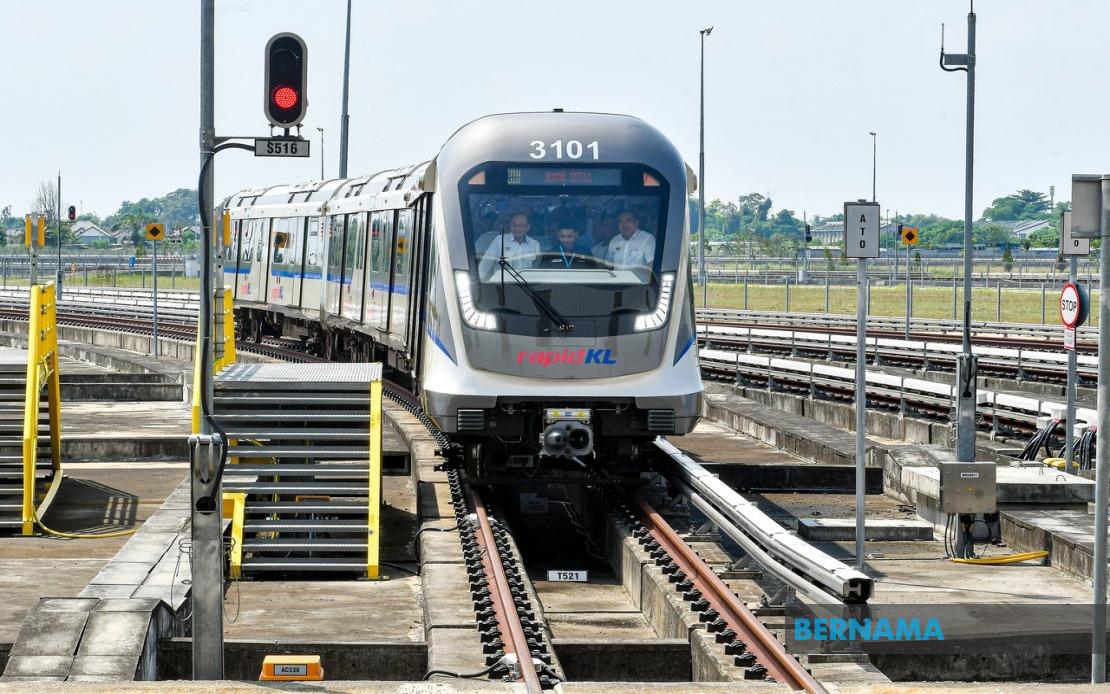
Prime Minister Datuk Seri Anwar Ibrahim has announced a month-long free-fare initiative for the Light Rail Transit 3 Shah Alam Line, commencing June 29 and extending through July 31. The scheme represents a significant policy move to encourage public transit adoption across Malaysia's Klang Valley region, one of the country's most congested urban corridors. The promotional period will apply not only to the LRT3 line itself but also to all feeder bus services operated by Prasarana Malaysia Berhad that connect with the new rail route, creating an integrated transport ecosystem for commuters at no cost during this trial window.
The announcement has generated considerable enthusiasm among students and working professionals who face mounting transport expenses in their daily commutes. For many in higher education, the financial relief represents a meaningful reduction in monthly budgeting pressures. Arissa Ahmad Khairul, a 22-year-old journalism student at Universiti Teknologi MARA, articulated the perspective of younger commuters who previously depended on e-hailing services or parental support to navigate between home and campus. She emphasised that the combination of free fares and modern train facilities creates a compelling alternative to expensive ride-sharing platforms, directly addressing a pain point for students managing tight budgets whilst balancing academic commitments.
The routing convenience of the LRT3 particularly benefits UiTM students navigating the geography between Klang Valley residential areas and the Shah Alam campus. For those travelling from Kepong through Bandar Utama, the new line promises meaningful time savings alongside the elimination of transport costs during the promotional period. Such efficiency gains become especially valuable when multiplied across the academic calendar, allowing students to redirect savings towards educational materials, meals, or living expenses. The psychological impact of knowing a reliable, comfortable, and cost-free transport option exists may itself encourage modal shift from private vehicles and ride-sharing to public transit even after the promotional period concludes.
Median professionals in the transport and communications sectors similarly view the free-fare month as a calculated opportunity to familiarise themselves with a new service before committing financially. Yamin Ahmad, a 25-year-old media professional, characterised the initiative as a proactive government measure that removes the barrier to trial adoption. Rather than requiring commuters to pay upfront whilst assessing whether the LRT3 suits their travel needs, the free period allows informed decision-making based on actual experience with train frequency, comfort, journey times, and station accessibility. This approach acknowledges that transport choice is deeply habitual and that reducing initial friction encourages behaviour change.
The underlying logic extends beyond immediate cost reduction to broader public policy objectives. By offering an extended free-trial window, authorities aim to demonstrate the competitive advantages of public transit against private vehicles and e-hailing services. Commuters are invited to experience firsthand the time savings from dedicated rail infrastructure avoiding road congestion, the cost efficiency of train fares relative to petrol and vehicle maintenance, and the reduced environmental footprint of mass transit. Such experiential learning often proves more persuasive than promotional messaging, potentially converting trial users into long-term passengers who become advocates within their social networks.
Universiti Teknologi MARA's institutional perspective, represented through the Students' Representative Council, underscores the demographic significance of the LRT3 for Malaysia's student population. Of UiTM's approximately 42,000 enrolled students, only about 13,500 reside in institutional residential colleges, leaving roughly 28,500 off-campus residents navigating independent commuting arrangements. The Shah Alam Line's establishment, coupled with the free-fare initiative, directly addresses transportation needs for off-campus students residing in neighbouring Kuala Lumpur and Subang Jaya areas. For this cohort, the introduction of a rapid, reliable rail alternative to congested roads and expensive ride-sharing services represents a substantive improvement in quality of life and academic accessibility.
The feeder bus integration distinguishes this initiative from narrowly focused transit projects. By extending free fares to Prasarana-operated buses connecting the LRT3 corridor, the government acknowledges that first-and-last-mile connectivity determines overall public transport utility. Students and commuters in residential areas without direct LRT3 station access remain dependent on bus networks to reach rail nodes. Seamless, free integration across buses and trains removes the psychological and financial friction that might otherwise discourage transit use. This systems-thinking approach reflects mature urban transport planning that recognises modal integration as essential to competitive advantages against private vehicles.
The timing of the initiative carries strategic significance within Malaysia's broader transport policy evolution. As the nation invests heavily in expanding rapid transit networks, demonstrating successful adoption of new lines becomes critical for justifying ongoing infrastructure spending and attracting political support for future expansion projects. A month of positive public experience with the LRT3, amplified through word-of-mouth recommendations from students to families and peers, generates grassroots advocacy for continued investment. The Shah Alam Line thus becomes a test case for whether well-designed promotional strategies can catalyse sustained modal shift in Malaysia's automotive-dependent culture.
Economic considerations underpinning the free-fare policy warrant examination. The financial cost of foregone fares during June and July represents an investment in usage data, operational familiarity, and brand perception that will inform long-term revenue strategy. Prasarana gains operational intelligence regarding peak travel times, passenger volume patterns, and service reliability under conditions of maximum demand. Such data proves invaluable for optimising scheduling, resource allocation, and service quality as the line transitions to commercial pricing. For the broader transport ecosystem, increased LRT3 ridership relieves pressure on congested roads, reduces air pollution, and enhances regional productivity through time savings—externalities that justify public subsidy from a societal perspective.
The initiative also reflects evolving political communication strategies that emphasise tangible, immediate benefits to citizens. Rather than abstract promises of future infrastructure improvements, the free-fare month delivers concrete relief from transport costs visible within weeks of the government's announcement. For Prime Minister Anwar Ibrahim's administration, the move demonstrates responsiveness to cost-of-living concerns that dominate public discourse in Malaysia. The symbolic gesture of subsidised transport for students specifically acknowledges demographic constituencies critical to political support, whilst framing the government as attentive to financial pressures facing younger Malaysians entering the workforce.
Sustainability questions linger regarding fare policy post-July. The transition from free to paid services requires careful communication and potentially competitive pricing relative to existing transport modes to maintain ridership gains achieved during the promotional period. Student advocacy groups, having experienced costless transit, may resist fare implementation or demand subsidised pricing structures for institutional users. Prasarana must balance revenue requirements against social equity objectives and mode-shift policy goals. The free month effectively raises public expectations and establishes a psychological benchmark—whether the subsequent commercial model preserves sufficient affordability and value perception to sustain the behavioural changes initiated by the promotion remains an open question for transport planners.

