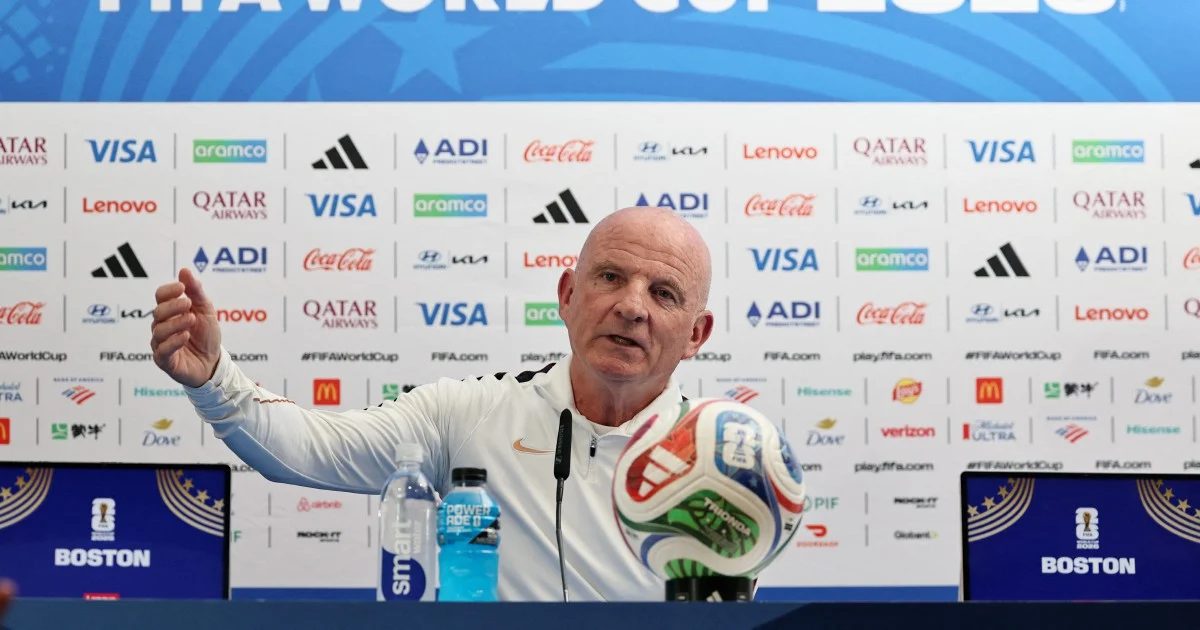
France faces a straightforward equation as they prepare to meet Norway on Friday: secure first place in World Cup Group I and remain comfortably positioned in the Northeastern United States through the quarter-finals, or risk being shuffled to distant venues across Texas and Florida. Assistant coach Guy Stephan articulated the pragmatic calculus driving the French team's ambition, speaking to reporters as the squad operates without manager Didier Deschamps, who returned to France to attend his mother's funeral.
The logistics of tournament scheduling weigh heavily on Stephan's mind. Should France finish second in their group, they would face significantly longer journeys between matches, travelling to Dallas, Miami, and Atlanta—cities that represent not merely greater distances but fundamentally different climatic conditions from their current Boston base. Conversely, winning the group allows the 2018 champions to remain anchored in the Northeast through the quarter-final stage, preserving energy and minimising the cumulative fatigue that attends frequent long-distance travel during an intense knockout competition.
Stephan explained the French perspective bluntly: "First place is best." This statement encapsulates more than sporting ambition. In tournament football, where matches arrive with compressed schedules and players face physical demands that compound across successive rounds, the difference between a stable home base and repeated cross-country travel can influence recovery protocols, sleep quality, and the psychological consistency necessary for championship performance. The temperature differential between the relatively moderate climate of Boston and the often sweltering conditions of late-summer Florida and Texas adds another layer to the strategic calculation.
France arrives at this crucial match having already guaranteed progression, having accumulated six points from their opening two matches—a rarity that typically generates momentum and confidence. Both France and Norway have qualified for the knockout stage following perfect records in their initial fixtures, suggesting two teams performing at high intensity. Yet France's superior goal difference means they can secure the group summit with merely a draw, presenting them with flexibility in their approach while Norway must chase a victory to overtake them.
The absence of key personnel underscores the challenges facing the French camp during this period. Central defender William Saliba is unavailable for selection, while striker Marcus Thuram contends with a calf complaint that threatens to limit his impact. These absences, particularly Saliba's enforced absence and Thuram's fitness concerns, inject uncertainty into a squad otherwise riding the confidence of their qualification achievements. Managing such personnel issues while simultaneously maintaining tactical sharpness without their head coach represents a significant organisational test.
Deschamps' temporary departure creates a leadership vacuum that Stephan has stepped into with measured professionalism. The assistant coach acknowledged the limited contact anticipated with his manager on match day itself, reflecting the gravity of the circumstances. However, Stephan emphasised the ongoing communication that sustains the coaching team's unity of purpose, noting that while telephone conversations with Deschamps have been frequent, Friday's funeral attendance would necessarily curtail such interaction. This speaks to the human dimensions of international football, where personal circumstances inevitably intersect with the demands of elite competition.
The strategic significance of topping the group resonates particularly for Southeast Asian viewers of the competition, as it illustrates how tournament structure directly shapes team preparation and physical management. Nations competing in major championships must navigate not merely the performances required on the pitch but the ancillary factors—travel, climate, ground preparation, recovery facilities—that accumulate to advantage or disadvantage as competitions progress toward their climax. France's emphasis on these logistics reflects the sophisticated approach contemporary elite football requires.
Norway presents a formidable challenge despite their group-stage status. Two consecutive victories establish them as a genuinely dangerous opponent, not merely a mathematical obstacle for France to overcome. The Scandinavian side's form suggests they will approach Boston with clear intent, understanding that only victory preserves their opportunity to top the group and secure whatever logistical advantages accrue from that position. This creates a compelling contest between two in-form sides, irrespective of France's superior goal difference and mathematical advantage.
From a regional perspective, this match exemplifies the global reach of World Cup competition and how tournament architecture distributes venues across North America. For Malaysian audiences following the competition, the Boston venue and subsequent potential travels to Dallas, Miami, and Atlanta represent the continent's geography projected onto international football. The logistical considerations troubling Stephan and his team mirror those facing all participating nations, making France's strategic clarity on this matter instructive for understanding how modern football operations function at the highest level.
The convergence of personal circumstance, tactical preparation, squad management, and tournament logistics creates a multifaceted context for Friday's match. Stephan's emphasis on finishing first articulates not a desperate ambition but a rational assessment of how optimal group positioning translates into concrete advantages as the competition advances. Whether France converts this logical imperative into a tangible result against a motivated Norwegian team will determine whether they enjoy the geographical continuity they seek or embark upon the logistically complex journey that second place would necessitate. The match therefore represents far more than a routine qualification fixture; it embodies the intricate intersection of sport, geography, and tournament structure that defines modern international football competition.

