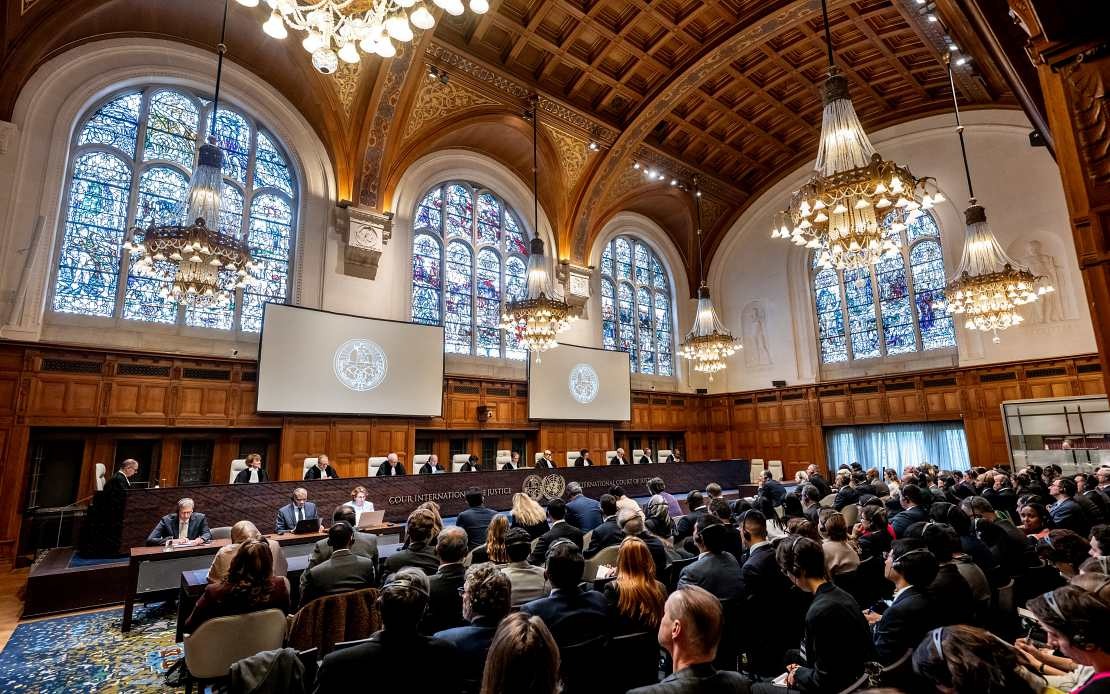
France has doubled down on its commitment to the International Criminal Court, directly challenging the United States' characterisation of the tribunal as a threat to national independence. Speaking through Foreign Ministry spokesman Pascal Confavreux on Thursday, Paris made clear that its position remains unchanged despite mounting pressure from Washington, which has launched a coordinated campaign to discredit and potentially undermine the court's operations.
The French position reflects a fundamental disagreement with the American stance on international justice mechanisms. Confavreux emphasised that the ICC, established in 2002 and headquartered in The Hague, focuses its prosecutorial mandate on individuals responsible for the gravest offences: genocide, war crimes, crimes against humanity, and the crime of aggression. This targeting of perpetrators rather than states themselves, he argued, renders the sovereignty concerns raised by the United States unfounded and disingenuous.
The timing of France's statement is significant, coming immediately after US Secretary of State Marco Rubio publicly criticised the court and signalled that Washington intends to pressure other nations to withdraw from the institution. The State Department has additionally launched what officials describe as an initiative designed to constrain what they view as overreaching ICC authority. This multifaceted approach suggests a coordinated strategy rather than isolated complaints, indicating serious intent to weaken the court's standing and effectiveness.
For Southeast Asian and Malaysian observers, the Franco-American dispute carries particular resonance. The region has witnessed numerous conflicts and alleged atrocities over recent decades, making functioning international accountability mechanisms potentially crucial for addressing historical grievances and preventing future abuses. The court's independence from any single nation's influence becomes increasingly valuable in contexts where regional powers might resist external scrutiny of their own conduct or that of allies.
France's explicit rejection of US claims reflects Europe's broader commitment to multilateral institutions and rules-based international order. The country views the ICC not as a sovereign threat but as an essential counterweight to impunity, particularly when domestic judicial systems prove unwilling or unable to prosecute serious crimes. This perspective places Paris at odds with Washington's more nationalistic approach, which prioritises American interests and immunity from external judicial oversight.
Crucially, the French statement also highlighted the alarming trend of attacks and intimidation targeting ICC personnel, investigators, and support staff. Confavreux characterised such threats as wholly unacceptable, suggesting concern that political pressure and rhetoric from powerful nations might embolden non-state actors to harass or endanger those working to advance international justice. This dimension adds a layer of security and institutional stability to the broader dispute.
The geopolitical context remains essential for understanding France's stance. As a permanent member of the UN Security Council and a major military power, France has invested significantly in international institutions and frameworks designed to govern state behaviour. The ICC represents one pillar of this architecture, and allowing it to be dismantled or neutered by American pressure would undermine broader European efforts to maintain a system of rules that constrains powerful nations from acting unilaterally.
Meanwhile, the United States' position stems from its historical reluctance to submit to international legal processes over which it lacks direct control. Washington has never ratified the Rome Statute establishing the ICC, maintaining a deliberate distance from the institution. This non-membership status allows the US considerable freedom of action but also means American policymakers feel vulnerable to potential investigations or prosecutions initiated by the court, particularly involving alleged American military or intelligence operations abroad.
For Malaysia and other regional states, the dispute underscores an important fault line in global governance. Nations that are court members must weigh their security interests and relationships with the United States against their commitment to international accountability. The pressure campaign announced by the State Department could create difficult diplomatic moments for countries seeking to maintain balanced relationships with both Washington and the international justice community.
France's reaffirmation of support serves multiple purposes beyond mere principle. It signals to other court members that at least one significant power remains committed to the institution's survival and integrity. Such positioning matters considerably, as smaller or less influential nations might otherwise feel compelled to abandon the court if they perceive it to be isolated or in terminal decline.
The dispute also reveals broader tensions within the Western alliance regarding international institutions and sovereignty. While the United States increasingly views such mechanisms as constraints on its freedom of action, France and much of continental Europe continue to see them as necessary frameworks for managing state behaviour in an interdependent world. This philosophical gulf suggests that the controversy surrounding the ICC will likely persist and potentially intensify.
For Malaysian policymakers and observers, the unfolding tension between France and the United States offers a preview of challenges that may arise if the ICC faces further institutional erosion. A weakened international court would potentially leave victims of mass atrocities with fewer avenues for justice and survivors with limited prospects for accountability. This outcome would disproportionately affect regions with limited domestic capacity to prosecute international crimes, making the current dispute far from abstract or distant.

