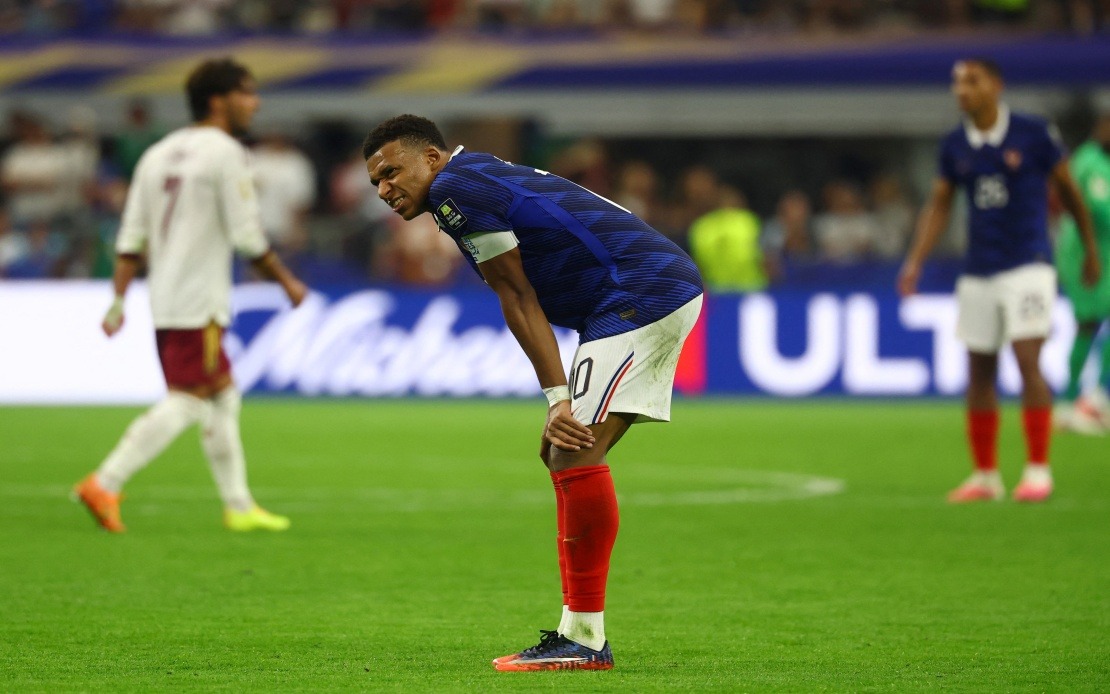
Widespread civil disorder gripped France's major urban centres on Tuesday evening as supporters reacted to the national football team's unexpected elimination from the World Cup. Police forces across Paris and Lyon moved to contain unrest that gathered momentum following Spain's commanding 2-0 victory in the semifinal match, resulting in over 160 arrests across both cities by Wednesday.
In the Paris region alone, law enforcement detained 141 individuals in connection with the post-match incidents, according to reports from the Paris Police Prefecture. The capital and its surrounding metropolitan area bore the brunt of the disruptions, with authorities documenting a pattern of organised and opportunistic clashes between young crowds and police lines. The majority of those detained faced charges related to the deployment of firework mortars, which witnesses and officials identified as being deliberately aimed at uniformed police officers and emergency service personnel attempting to manage the crowds.
The incident reflects the intense emotional investment French citizens maintain in their national football programme, particularly during major tournament competitions. Defeat in a World Cup semifinal carries profound symbolic weight for a nation with a storied football heritage, and the loss to Spain—a rival with its own footballing pedigree—evidently triggered heated reactions among sections of the viewing public. Despite the scale of arrests and the deployment of riot control equipment, authorities reported that no serious injuries materialised from the confrontations, suggesting that while tensions ran high, the security response prevented escalation to more dangerous levels.
Lyon, France's second-largest city, experienced parallel disturbances on a somewhat smaller scale. Several hundred spectators had gathered at the historic Place Bellecour, one of Europe's largest open squares, to watch the semifinal match together. When Spain's victory became apparent, the assembled crowd fragmented into smaller groups that began engaging in hostile behaviour toward law enforcement. Young men hurled various projectiles, including fireworks and other objects, toward police formations positioned in the plaza. French riot police, equipped with protective gear and trained in crowd management, intervened decisively to suppress the disorder.
The Lyon disturbances resulted in approximately twenty arrests, a notably lower figure than in Paris despite the city's substantial population and cultural significance. Local authorities in Lyon reported a similarly reassuring assessment of the incident's consequences, noting that neither significant injuries nor considerable property damage resulted from the clashes. This comparative restraint suggests either better crowd management or perhaps less volatile tensions in the second-largest metropolitan area, though official reports provide limited insight into why the scale differed between the two cities.
Demographic data released by authorities revealed that the detainees represented a predominantly youthful cohort, with birth years falling between 2002 and 2011. This indicates that the vast majority of those arrested were teenagers or young adults in their early twenties, fitting a pattern common in post-sporting-event disturbances where young males constitute the primary participants in street confrontations. The age profile raises questions about whether organisational elements existed or whether the unrest emerged more spontaneously from disappointed fans seeking outlet for frustration.
The incidents underscore the potential public order challenges that major sporting events, particularly those carrying national significance, can generate in contemporary urban environments. France has experienced similar episodes following major football tournaments and matches in recent decades, prompting authorities to maintain substantial security deployments during high-stakes competitions. The rapid deployment of riot police and the relatively swift containment of the disturbances suggest that law enforcement agencies had prepared contingency measures anticipating possible disorder.
For Malaysian and Southeast Asian observers, the French experience illuminates broader questions about sporting culture and civic behaviour in developed democracies. While football generates passionate responses across the region, public order incidents on this scale remain less common in Malaysia and neighbouring nations, partly reflecting different urban policing philosophies and cultural contexts. Nevertheless, local authorities regularly monitor major tournament matches where national teams compete, recognising that emotional investment in international sport can occasionally translate into street-level tensions.
The Spanish victory that precipitated the French unrest marked a significant upset in World Cup competition, with Spain's two-goal margin demonstrating clear superiority on the pitch. For France, the defeat represented an early and unexpected exit from the tournament, compounding disappointment among supporters who had harboured expectations of deeper progression. The contrast between Spain's celebration of advancement and France's anguish of elimination provided fertile ground for emotional reactions that some participants channeled into confrontational street behaviour.
French authorities' handling of the incidents, reflected in the arrest figures and injury assessments, suggests competent crowd management and appropriate force deployment calibrated to suppress disorder without generating additional volatility. The decision to prioritise arrests for firework-related offences indicates prosecutorial strategy aimed at deterring the use of dangerous projectiles against law enforcement in future sporting events. Moving forward, the incidents will likely inform security planning for remaining tournament matches and any subsequent competitions involving the French national team.

