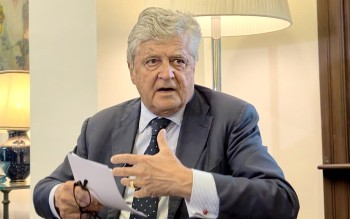
France has extended an offer to collaborate with Malaysia on developing civil nuclear energy capabilities, provided that Kuala Lumpur chooses to pursue this pathway as a component of its broader energy transition strategy. French Minister Delegate for Foreign Trade and Economic Attractiveness Nicolas Forissier made the commitment during his inaugural official visit to Malaysia, emphasising that France possesses world-class expertise and stands prepared to share technical knowledge and operational experience should the Malaysian government decide to move forward with nuclear power generation.
Forissier acknowledged, however, that the final decision rests squarely with Malaysia's authorities, who are currently in the midst of evaluating nuclear energy as a viable option through extensive national consultations and public discourse. The French official described these ongoing debates as entirely appropriate, given the technical complexity and long-term implications of nuclear power development. His comments reflect a pragmatic understanding that any such commitment requires broad political consensus and careful domestic consideration before implementation can proceed.
The appeal of nuclear energy for decarbonisation purposes formed the cornerstone of France's pitch. As the minister explained, nuclear power remains one of the most effective mechanisms for generating electricity without greenhouse gas emissions, making it an attractive prospect for nations seeking to reduce their carbon footprint while maintaining reliable energy supply. This argument carries particular weight in Southeast Asia, where many economies are grappling with the dual challenge of meeting rising electricity demands driven by industrialisation and urbanisation whilst simultaneously addressing climate change commitments.
France's credentials in this domain are formidable. Approximately 60 per cent of French electricity generation derives from nuclear sources, with the remainder coming from renewable resources including solar and wind installations. This diversified energy portfolio demonstrates how nuclear can function as a cornerstone technology within a broader clean energy ecosystem rather than as the sole decarbonisation tool. Forissier stressed France's readiness to transfer this accumulated expertise to Malaysian partners, positioning the relationship as a potential long-term strategic alliance rather than a transactional arrangement.
The minister underscored a critical reality about nuclear energy development: it demands sustained commitment spanning multiple generations. Nuclear facilities typically operate for fifty to eighty years, requiring patient capital investment, continuous regulatory oversight, and institutional knowledge preservation across decades. This emphasis on long-termism suggests that France is not merely offering immediate technical assistance but proposing a deeper partnership that would bind the two nations together through shared infrastructure and interdependent energy security interests.
Forissier's visit carries significance beyond the nuclear proposal alone. He arrived in Malaysia accompanied by a delegation representing more than twenty French companies, a clear signal of broad-based French corporate interest in deepening economic partnerships with Southeast Asia's third-largest economy. This commercial contingent reflects confidence within French business circles about Malaysia's economic trajectory and receptiveness to foreign direct investment in strategic sectors.
The timing of this engagement occurs within a context of visibly strengthened bilateral relations between France and Malaysia. Recent months have witnessed multiple high-level diplomatic exchanges that signal deepening cooperation across multiple domains. These interactions include ministerial conversations between foreign affairs officials of both nations, a visit by Malaysia's defence minister to a French aircraft carrier in March 2025 that underscored military-strategic dimensions of the relationship, and Prime Minister Datuk Seri Anwar Ibrahim's trip to France just days prior on July 3 and 4, 2025.
These escalating contacts suggest that both governments perceive mutual benefit in strengthening ties across political, economic, and strategic domains. For Malaysia, France represents a developed economy with advanced technological capabilities and a permanent seat at the United Nations Security Council—a valuable partnership for a middle-income country seeking to enhance its international standing. For France, Malaysia offers access to Southeast Asian markets and supply chains, plus the opportunity to position itself as a technology partner in a region where other major powers are increasingly active.
The nuclear energy discussion must be understood against this broader backdrop of expanding engagement. Unlike previous eras when such proposals might have been received with suspicion or caution, Malaysia now appears more receptive to exploring options that were previously considered taboo in domestic politics. This shift reflects both changing global attitudes toward nuclear power as a climate solution and Malaysia's own recognition that meeting future energy needs whilst decarbonising will require deploying diverse technologies rather than relying exclusively on renewables.
Malaysia's energy landscape presents particular challenges that make the French offer strategically relevant. The country currently depends substantially on natural gas for electricity generation, imported coal, and is expanding renewable capacity through the National Energy Transition Roadmap. However, intermittency challenges associated with solar and wind power, combined with projected electricity demand growth from industrial expansion and electrification of transport, create space within energy planning for baseload power sources like nuclear. France's offer thus addresses a genuine technical need rather than attempting to impose an inappropriate solution.
The evaluation process underway within Malaysian government circles appears thorough and deliberate. Rather than rushing toward a binary decision, authorities are conducting the national debate that Forissier acknowledged, considering technical feasibility, economic viability, regulatory requirements, and public acceptability. This measured approach, whilst sometimes frustrating for would-be partners, ultimately strengthens decision-making by ensuring that any commitment reflects genuine national consensus rather than technocratic imposition.
Moving forward, the French offer establishes a foundation for cooperation should Malaysia determine that nuclear energy merits inclusion in its energy strategy. The explicit statement that France stands ready creates a pathway for concrete negotiations whilst respecting Malaysian sovereignty over energy policy decisions. Whether Malaysia ultimately embraces nuclear development remains uncertain, but the French initiative ensures that advanced nuclear technology and expertise represent genuine options within the national conversation rather than theoretical abstractions.

