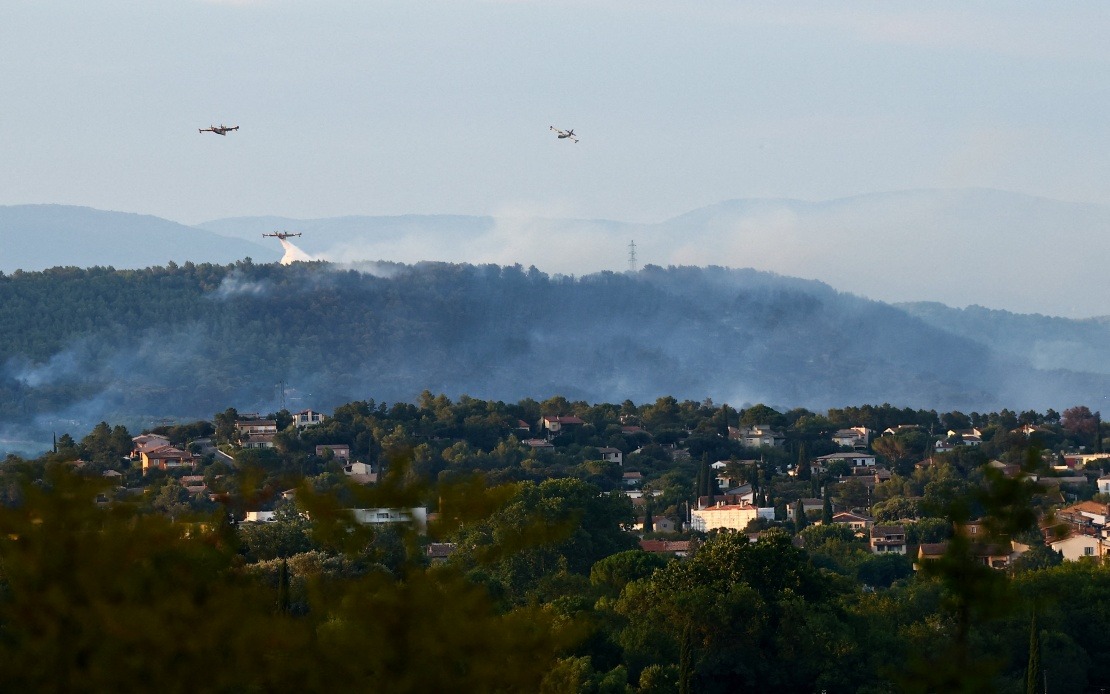
France is battling an escalating wildfire catastrophe that has consumed nearly 40,000 hectares of forests and vegetation in the first seven months of 2026, according to French Interior Minister Laurent Nunez. The scale of destruction represents a dramatic deterioration in the country's fire management challenges, with new blazes igniting daily across multiple regions. The situation underscores how climate-driven environmental crises are reshaping fire seasons across Europe, with implications for Mediterranean and temperate regions globally, including those with similar climatic patterns to parts of Southeast Asia.
The acreage destroyed far exceeds the previous year's totals, marking a troubling acceleration in France's wildfire trajectory. Nunez's disclosure came at a moment when the nation continues battling simultaneous blazes across numerous departments, straining firefighting resources and emergency response capabilities. This pattern reflects the reality that modern European fire seasons are no longer concentrated in autumn months but now emerge across extended periods, catching populations and infrastructure unprepared for prolonged intensity.
French President Emmanuel Macron characterized the summer wildfire situation in mid-July as the worst the nation has experienced since the conclusion of World War II, a stark historical reference that emphasises the unprecedented nature of the current crisis. Such statements from national leadership typically emerge only when disasters exceed all recent precedent and demand extraordinary governmental response. Macron's framing signals recognition that this represents not merely a challenging season but a structural shift in environmental conditions affecting the nation.
The meteorological conditions driving this emergency reached critical levels by late June, when France's national weather service issued heat warnings across 72 of the country's 96 departments simultaneously. This represented the highest number of departments under simultaneous weather alerts on record, demonstrating that the heatwave was neither localized nor transient but rather a widespread, systemic phenomenon affecting nearly three-quarters of the nation. The breadth of this warning coverage indicates forecasters anticipated dangerous conditions would persist across most French territory.
Temperatures soared toward 40 degrees Celsius nationwide, with certain areas experiencing even more extreme readings that pushed beyond typical summer heat into dangerous territory for human health and ecosystem stability. Such temperatures accelerate vegetation desiccation, reduce soil moisture retention, and create ideal conditions for rapid fire ignition and spread. The thermal extremity also strains cooling systems, increases electricity demand, and can compromise critical infrastructure that depends on water resources for cooling purposes.
The convergence of these climatic factors—prolonged heat, widespread drought conditions, and reduced vegetation moisture—creates an environment where fire behaviour becomes increasingly unpredictable and difficult to manage. Once ignited, blazes can spread with extraordinary speed, making containment efforts by firefighting personnel exponentially more challenging. The daily emergence of new fires indicates that conditions remain favourable for spontaneous ignition across numerous locations simultaneously.
For Malaysian observers, the French experience carries instructive value regarding climate resilience and disaster preparedness. While Malaysia's tropical climate and monsoon patterns differ fundamentally from European temperate conditions, rising global temperatures are extending dry seasons in Southeast Asian regions, creating novel fire risks in areas previously spared major wildfire episodes. Indonesia and parts of Thailand have experienced increasingly severe fire seasons in recent decades, driven partly by climate changes similar to those affecting Europe.
The French crisis also demonstrates how quickly environmental disasters can overwhelm national infrastructure and resources. Even wealthy, technologically advanced nations with sophisticated emergency response systems face immense challenges when fire seasons intensify beyond historical norms. This reality carries implications for developing nations in Southeast Asia that may possess fewer resources for managing escalating environmental threats, suggesting regional cooperation on disaster preparedness and response mechanisms becomes strategically important.
French authorities face difficult decisions about resource allocation, evacuation priorities, and long-term prevention strategies. The sheer acreage consumed suggests that defensive measures—protecting populated areas and critical infrastructure—may become the priority over attempting to suppress every fire. This represents a significant operational shift in fire management philosophy, one that may gradually influence European environmental policy toward adaptation rather than prevention.
The 2026 wildfire season will likely shape French environmental and climate policy discussions for years ahead. Questions will emerge regarding building codes in fire-prone regions, forest management practices, water infrastructure investment for firefighting, and whether the government accelerates renewable energy transitions to reduce greenhouse gas emissions driving broader climate change. These policy responses, if implemented, could establish precedents influencing other European nations facing similar escalating fire risks.
International climate research institutions are already examining whether this season represents the new normal or an exceptional outlier within a broader warming trend. Understanding this distinction carries enormous implications for governmental planning and resource allocation. If 2026 represents the beginning of a sustained shift toward more severe fire seasons, then France and other nations must fundamentally restructure their approach to land management, emergency response, and climate adaptation. The coming years will reveal whether this summer marks a transition point in European environmental governance.

