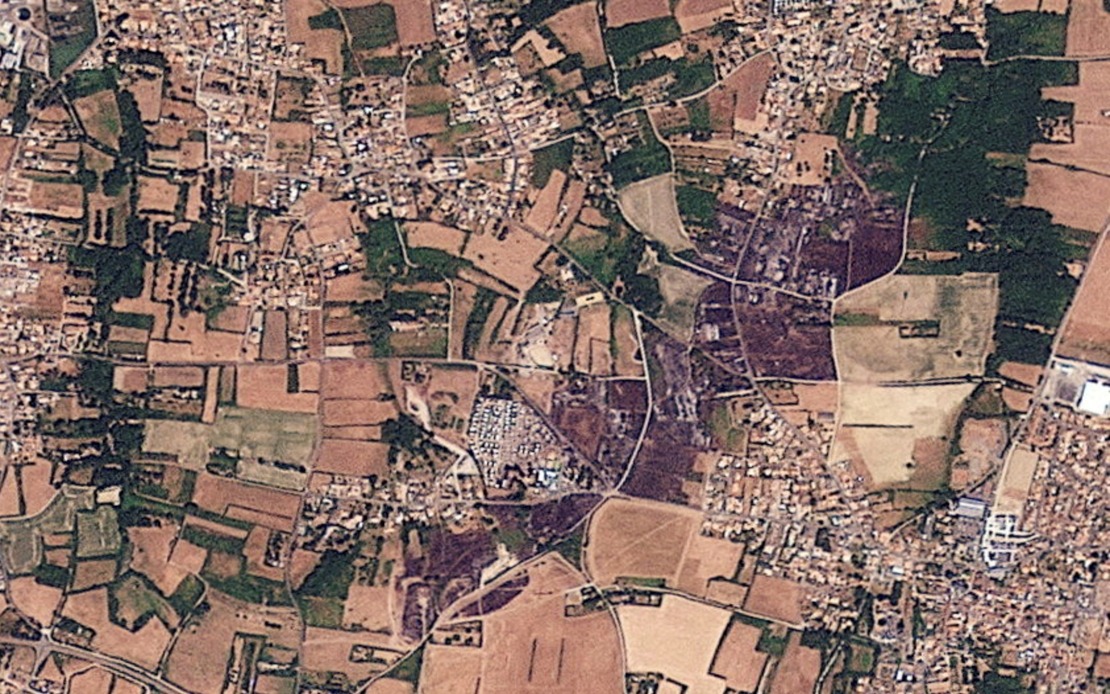
France faces an intensifying wildfire crisis as two separate blazes continue to ravage the Fontainebleau forest, collectively destroying approximately 1,920 hectares of vegetation and prompting authorities to launch a major response operation. The two fires, which began on separate occasions but have since merged into a continuous threat, remain partially uncontrolled despite the deployment of around 600 firefighters working continuously to contain the spread. The scale of the disaster underscores the vulnerability of France's forest ecosystems to both environmental factors and deliberate human misconduct during the summer months.
The first fire ignited on Sunday and has proven particularly destructive, scorching roughly 1,500 hectares before spreading further overnight. A second outbreak subsequently emerged in proximity to the initial blaze, consuming between 300 and 400 additional hectares of forestland. French law enforcement has responded swiftly to suspicions of arson, with two individuals arrested on suspicion of deliberately igniting the initial fire. This development reflects growing concerns across the country regarding intentional fire-setting during peak fire season, a phenomenon that authorities increasingly view as a serious criminal matter requiring rigorous prosecution.
Transport Minister Philippe Tabarot has publicly advocated for stringent judicial consequences for those convicted of arson-related offences. His statement calling for "very harsh sentences" reflects governmental frustration with deliberate fire-setting and signals a hardening stance on the matter. Notably, Tabarot distinguished between criminal arsonists and individuals with pyromania, suggesting that those suffering from the psychological condition warrant medical intervention alongside potential legal consequences. This nuanced approach acknowledges that not all fire-setting stems from criminal intent, though the distinction may offer little comfort to communities threatened by flames regardless of motivation.
The broader context reveals a troubling trend across French territory. Since the commencement of the official fire season, national authorities have arrested 59 individuals on suspicion of intentionally starting wildfires, indicating a systematic problem extending far beyond the Fontainebleau incident. These arrests span multiple regions and suggest that summer months expose France to both environmental and criminological challenges that demand coordinated responses from law enforcement and emergency services alike.
The impact of France's wildfire season extends beyond forest loss to critical infrastructure. A major railway corridor serving southern France remains partially disabled following the Trevillach wildfire, which erupted earlier in July within the Pyrenees-Orientales region. The blaze damaged essential railway infrastructure along the important Perpignan to Villefranche-Vernet-les-Bains line, a route that likely services tourism and regional commerce. National railway operator SNCF has announced that train services between Ille-sur-Tet and Villefranche-Vernet-les-Bains will remain suspended until at least July 20, disrupting travel plans and potentially affecting local economies dependent on seasonal connectivity.
Outbreaks have emerged across multiple departments, indicating that the wildfire phenomenon represents a nationwide challenge rather than isolated incidents. In Brittany's Côtes-d'Armor department, a heath fire near Cap Fréhel necessitated the evacuation of more than 100 residents on Monday, though the blaze consumed a comparatively modest 38 hectares. Simultaneously, the Lozère region reported 107 hectares destroyed, suggesting that while individual fires vary in scale, the cumulative damage across France reaches thousands of hectares during peak season.
For Malaysian and Southeast Asian observers, France's experience offers instructive lessons regarding wildfire management and the criminal dimensions of arson during vulnerable seasons. Malaysia itself faces comparable challenges during drought periods, particularly in Peninsular Malaysia and the fire-prone regions of Kalimantan across the maritime border. The European experience demonstrates that even developed nations with substantial firefighting resources struggle to contain widespread blazes, especially when human actors deliberately initiate fires. The question of prosecution and rehabilitation for fire-setters remains equally relevant in Southeast Asian contexts, where transboundary smoke haze frequently emanates from agricultural burning and intentional land clearance.
The deployment of 600 firefighters to the Fontainebleau situation, while substantial, illustrates the resource demands that large-scale wildfires impose on emergency services. France possesses one of Europe's most developed firefighting infrastructure networks, yet these forces remain stretched during peak fire season. This reality carries implications for regional governments throughout Southeast Asia, many of which command considerably smaller firefighting resources and lack the institutional capacity for rapid mobilisation across dispersed forest areas.
The distinction Tabarot articulated between punitive measures for arsonists and therapeutic intervention for those with pyromania reflects evolving legal frameworks in developed democracies. Southeast Asian legal systems may benefit from similar considerations, distinguishing between deliberate criminal fire-setting for land clearance purposes and pathological behaviour requiring medical attention. However, the practical implementation of such distinctions requires sophisticated judicial and psychiatric infrastructure that not all developing nations currently possess.
The Fontainebleau fires and concurrent outbreaks across France illuminate the intersection of environmental vulnerability, criminal behaviour, and infrastructure resilience. As European temperatures continue rising due to climate change, wildfire seasons will likely extend and intensify, creating conditions where opportunistic or pathological fire-setters find increasingly receptive fuel loads. The French government's hardening stance on prosecution reflects recognition that societal prevention measures must complement environmental management strategies. For policymakers throughout Southeast Asia, where forest coverage remains economically and ecologically vital, France's experience suggests that comprehensive wildfire response strategies must simultaneously address climate adaptation, criminal prevention, and victim protection—a complex coordination challenge that demands sustained political commitment and adequate funding.

