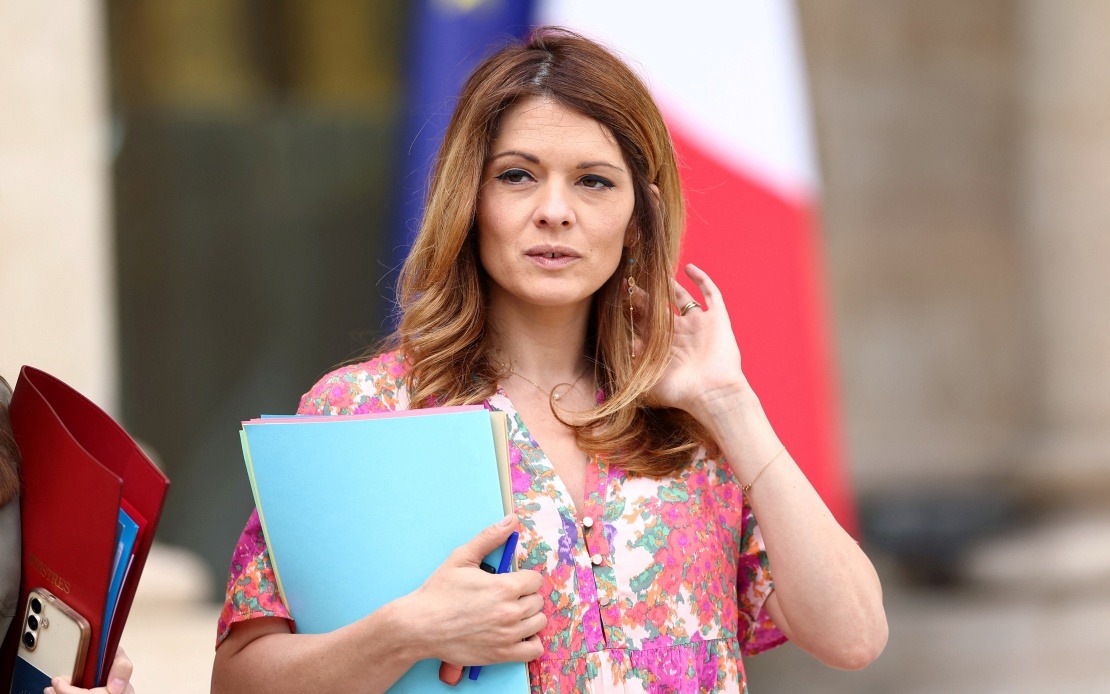
France's government has formally confirmed that the nation's next presidential election will take place on April 18 and May 2, 2027, establishing a timeline that has immediately become a flashpoint in domestic political debate. The announcement came during a Cabinet meeting on Wednesday, with government spokesperson Maud Bregeon presenting the dates as a procedurally sound decision derived from constitutional requirements and consultations with all major political parties across the French spectrum.
The scheduling arrangement divides the election into two phases, with the initial round on April 18 followed by a runoff ballot on May 2 should no single candidate secure an outright majority in the first vote. This structure mirrors France's traditional two-round presidential system, designed to ensure broad legitimacy by forcing candidates to build broader coalitions for the final round. However, the positioning of the second round just one day after International Workers' Day on May 1 has ignited considerable political controversy, with critics suggesting the government engineered a deliberately provocative calendar.
Opposition politicians have publicly questioned whether the election schedule reflects genuine administrative necessity or conceals strategic political calculation. Bruno Retailleau, a prominent opposition figure, described the timetable as "not neutral" and implied that the government had orchestrated dates to advantage its own electoral position or disadvantage competing candidates. His characterisation struck at the heart of French democratic concerns about the politicisation of institutional procedures that should remain above partisan manoeuvring.
The proximity to May 1, traditionally a day of labour movement demonstrations and political expression in France, generates practical complications alongside symbolic concerns. Election administration typically intensifies during the final campaign week before voting, and positioning the decisive second round immediately after a major public holiday creates logistical challenges and potential friction between electoral operations and protest activities. Some observers worry that heightened political tensions around May Day could contaminate the electoral atmosphere or create security complications.
Bregeon defended the government's position by insisting that no calendar perfectly satisfies all constituencies and that the chosen dates reflect necessary compromises among competing constraints. She emphasised that the government consulted extensively with political forces across the ideological spectrum and that constitutional mandates shaped the outcome rather than partisan preferences. The spokesperson stressed that French electoral rules apply uniformly to all candidates regardless of party affiliation, and that campaign regulations would be enforced consistently as the election season unfolds.
The government representative also attempted to normalise the May 1 timing by noting that France has extensive experience managing presidential elections around labour demonstrations and similar public events. Her remarks suggested that the juxtaposition of election activities with May Day celebrations presents no unprecedented challenge to democratic procedures, pointing to historical precedent as reassurance. This argument implicitly dismissed opposition concerns as overblown or motivated by electoral advantage-seeking rather than genuine democratic principle.
For Malaysian and Southeast Asian observers, France's election scheduling controversy illustrates broader patterns in how democracies manage the intersection of institutional procedures and political legitimacy. Many nations in the region have grappled with similar questions about whether electoral calendars reflect genuine administrative requirements or mask strategic political designs by incumbent governments. The French example demonstrates that such concerns arise even in established Western democracies, suggesting that questions about procedural neutrality remain perpetually contentious wherever democratic competition occurs.
The 2027 French election assumes particular significance as it will determine succession after Emmanuel Macron's second term concludes, with no opportunity for him to seek re-election under constitutional term limits. This succession question likely intensifies political sensitivity around scheduling decisions, as different candidates and parties perceive the calendar through the lens of how it might advantage or disadvantage their respective campaigns. The government's scheduling choice thus becomes a proxy for broader anxieties about continuity and change in French leadership.
French political parties must now navigate the campaign period under these fixed dates, with candidates beginning preparatory work years in advance to establish platforms and build grassroots support. The compressed final campaign period between May 1 and May 2 for the runoff ensures that the decisive moment arrives quickly after the initial round, potentially limiting time for candidate repositioning or negotiation between eliminated candidates and their supporters. This structure places a premium on frontloaded campaign preparation and media presence during the longer preliminary phase.
Bregeon's emphasis on consultation with political forces seeks to establish procedural legitimacy even amid substantive disagreement about whether the chosen dates serve democratic interests optimally. This rhetorical strategy acknowledges the reality that no election calendar can satisfy everyone while attempting to demonstrate that the process itself respected democratic norms and included all significant voices. Whether such procedural legitimacy suffices to overcome opposition claims of political bias will likely remain a contested question throughout the campaign period.
The French government's handling of this scheduling decision reflects the enduring tension between technical administrative requirements and political optics in democratic elections. The April-May 2027 dates will structure French political life over the coming years as candidates prepare, organise, and compete for the presidency. The controversy surrounding these dates, rather than fading away, will likely resurface throughout the campaign as opposition figures and observers scrutinise government actions for evidence of electoral manipulation or unfair advantage.

