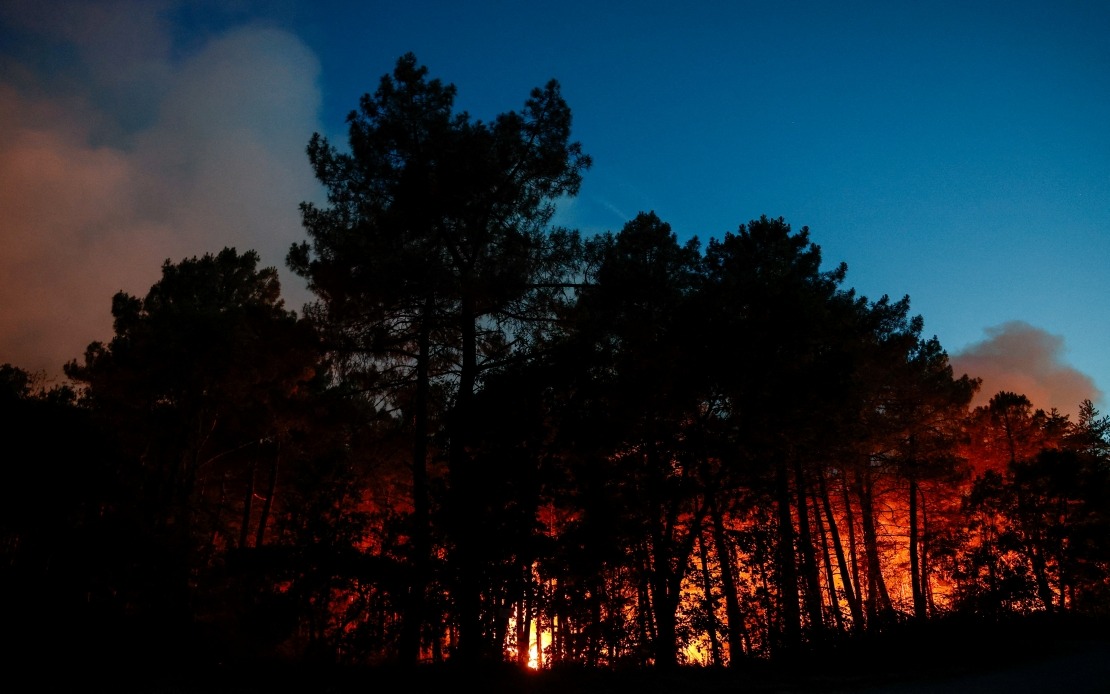
France is grappling with what authorities characterise as an exceptionally severe wildfire season, with Interior Minister Laurent Nunez reporting that 119,000 hectares of forest and vegetation have been consumed by flames since the start of the year. Speaking at a press briefing on Saturday, Nunez detailed the alarming scale of the crisis, noting that 14,320 separate fire outbreaks have been recorded during this period, a figure that underscores both the frequency and intensity of the phenomenon gripping the nation.
The situation reached a critical juncture on Friday alone, when authorities managed 25 major fires requiring substantial firefighting resources and coordination. This single day's toll illustrates how the wildfire problem has evolved from a seasonal concern into a sustained emergency demanding constant vigilance and rapid response capabilities. The cumulative impact of these fires represents not merely a seasonal nuisance but a fundamental challenge to France's landscape management and civil protection infrastructure.
Nunez emphasised that despite some regional improvements in humidity levels, the underlying conditions fuelling these blazes remain deeply problematic. Persistently elevated temperatures, combined with soil moisture deficits and vegetation that has become dangerously desiccated, continue to create ideal conditions for rapid fire spread. This combination of meteorological and environmental factors suggests that the wildfire threat will persist even as some weather patterns shift, pointing to the complex nature of wildfire management in an era of climate variability.
The geographic distribution of risk has become increasingly concentrated in France's most vulnerable regions. The Mediterranean coast, the Rhone Valley corridor, and portions of western France all face elevated wildfire danger. However, the Var department and southern Corsica have been designated at the highest alert level of "very severe," indicating that these areas face the most imminent and severe threat. This geographic specificity allows authorities to concentrate resources where they are most needed, though it also highlights the particular vulnerability of Mediterranean ecosystems to fire.
A particularly concerning development involves the Var department wildfire, which reignited on Friday after previous suppression efforts, consuming an additional 1,500 hectares of forest in a single day. This reactivation demonstrates the persistent challenge facing firefighting teams, where controlled fires can unexpectedly resume under changing wind and temperature conditions. The renewed outbreak necessitated immediate deployment of approximately 1,500 additional firefighters overnight to protect nearby communities and prevent further spread into populated areas.
The response effort demonstrates France's commitment to mobilising substantial civil protection resources across the nation. All aerial firefighting assets have been deployed in an active configuration, while 65 interdepartmental firefighter reinforcement columns remain mobilised to support regional authorities. These figures suggest that France had previously peaked at 72 reinforcement columns, indicating that authorities have strategically maintained high deployment levels while allowing some units temporary rest periods to prevent crew fatigue and maintain operational effectiveness.
Though some firefighting units have been temporarily stood down to permit crews essential recovery time, the operational posture remains one of high readiness. These units can be rapidly reactivated should weather conditions deteriorate or new major fire outbreaks emerge, preserving France's ability to surge response capacity when needed. This balance between sustained operations and crew welfare reflects professional understanding that firefighter burnout could compromise long-term response capabilities.
Beyond the immediate firefighting challenge, authorities have initiated criminal investigations into the origins of these fires. Nunez reported that security forces have made 328 arrests in connection with wildfire investigations, suggesting that some portion of the fires may have resulted from arson or negligence rather than purely natural causes. This investigative dimension adds a law enforcement component to what is fundamentally a public safety crisis, addressing both accidental and intentional fire-setting behaviour.
The minister's appeal to residents to follow local authority instructions and remain vigilant reflects recognition that public cooperation forms an essential element of wildfire management strategy. Individual actions—from proper disposal of combustible materials to reporting suspicious activity—can meaningfully reduce fire risk across vulnerable regions. Community engagement transforms wildfire management from purely a government responsibility into a shared societal challenge requiring collective responsibility.
For Southeast Asian observers, France's experience offers instructive lessons regarding climate adaptation and disaster preparedness. Malaysia and other tropical nations face distinct fire challenges, particularly peatland and forest fires that produce extensive transboundary smoke pollution. France's mobilisation of substantial resources, emphasis on rapid response coordination across administrative boundaries, and integration of aerial assets into suppression efforts represent strategic approaches that regional governments might adapt to local circumstances and capabilities.
The French situation also demonstrates how climate patterns increasingly stress traditional fire management approaches. Persistent heat, extended dry seasons, and vegetation desiccation create conditions that overwhelm standard suppression capacity, necessitating strategic allocation of limited resources to highest-risk areas. This triage approach, while necessary, implicitly accepts that not all threats can be simultaneously addressed, a reality that developing nations with more constrained resources must confront directly.
Looking forward, the continuation of elevated wildfire risk into the coming weeks remains probable given underlying meteorological and ecological conditions. France's sustained high alert status, combined with active investigation of fire origins, suggests a commitment to both immediate crisis management and longer-term prevention strategies. The scale of this year's wildfire season will likely influence French policy discussions regarding forest management, land use planning, and climate adaptation strategies in coming months.

