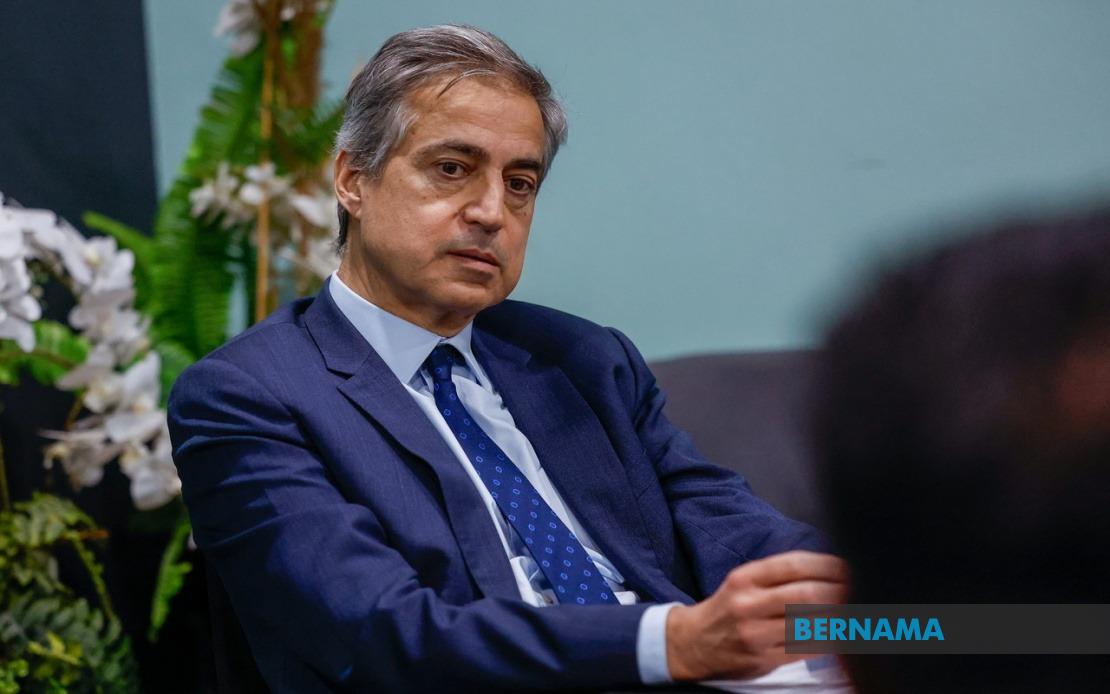
France and Malaysia are moving to fortify their relationship at a time when geopolitical divisions threaten to splinter the international order, according to French Ambassador to Malaysia Marc Abensour. Speaking at the French National Day reception in Kuala Lumpur on Tuesday evening, Abensour stressed that both nations recognise their responsibility to serve as stabilising forces in an era marked by mounting tensions and competing interests across multiple regions. The ambassador's remarks underscored a deliberate diplomatic strategy to position the France-Malaysia partnership as a model of constructive engagement at a moment when many traditional alliances face strain.
The foundation of this strengthened relationship rests on tangible economic momentum. Bilateral trade between the two countries expanded by 11 per cent over the past year, demonstrating the resilience of commercial ties despite global economic headwinds. Malaysia has emerged as a particularly attractive investment destination for French capital, ranking as the world's 10th-largest recipient of French foreign direct investment. This substantial capital commitment reflects confidence among French businesses in Malaysia's economic prospects and stable business environment, serving as a powerful indicator of long-term strategic intent beyond superficial diplomatic courtesy.
The French business presence in Malaysia extends deep into the local economy. Approximately 600 French companies now operate within the country, collectively generating direct employment for more than 30,000 Malaysians across multiple sectors. This figure underscores how bilateral economic ties translate into concrete benefits for Malaysian workers and their families, creating a constituency with vested interest in maintaining strong France-Malaysia relations. The employment generated by French enterprises contributes measurably to the domestic economy, supporting consumer spending and tax revenues while transferring technical expertise and management practices.
Beyond commerce, the partnership flourishes through educational and cultural channels that foster deeper mutual understanding. The French language remains a significant vector for people-to-people connection, with more than 3,700 Malaysians undertaking French-language certification annually. This linguistic engagement places Malaysia third in Asia for French-language candidates, trailing only India and China—a noteworthy achievement for a Southeast Asian nation and testament to France's enduring cultural influence in the region. Language learning frequently catalyses broader interest in French culture, history and values, creating networks of individuals with genuine affinity for both societies.
The reception itself, attended by approximately 800 guests including senior government officials, diplomats and ambassadors representing various nations, demonstrated the high-level political commitment to the bilateral relationship. Federal Territories Minister Hannah Yeoh's presence as guest of honour reflected Malaysia's official recognition of France's importance as a strategic partner. The broad attendance, spanning governmental, diplomatic and business circles, illustrated how the France-Malaysia relationship cuts across multiple dimensions of statecraft and society rather than remaining confined to narrow bureaucratic channels.
Cultural celebration provided the evening's backdrop, with French cuisine served alongside a distinctly Malaysian touch—a durian-tasting booth that symbolised genuine cross-cultural appreciation rather than performative multiculturalism. Such gestures carry diplomatic significance, signalling authentic respect for partner nations' cultural identity. The willingness of French diplomats to embrace Malaysian culinary traditions at an official celebration suggests comfort with cultural reciprocity, moving beyond the notion that engagement must flow in a single direction.
Abensour's framing of the partnership as bridge-building in a fragmented world reflects broader geopolitical anxieties about declining international cooperation. France, as a permanent UN Security Council member and leading European power, brings diplomatic weight and institutional access to partnerships in Southeast Asia. Malaysia, conversely, offers France strategic positioning within ASEAN and influence over the region's middle powers. This complementarity creates mutual benefit unavailable through unilateral action, explaining why both countries invest political capital in deepening ties.
The emphasis on educational and cultural exchange carries particular relevance for Malaysia, where exposure to diverse international perspectives strengthens critical thinking and global awareness among younger generations. French educational institutions maintain strong reputations worldwide, and increased Malaysian participation in French-language programmes potentially opens pathways to university education and professional opportunities in Europe. Such mobility strengthens people-to-people bonds that survive political fluctuations, creating durable foundations for long-term relationship stability.
For Malaysian policymakers, the France-Malaysia partnership offers practical benefits beyond symbolic gestures. Access to French technological expertise, particularly in aerospace, energy and renewable sectors, addresses genuine development needs. French environmental standards and sustainability practices carry relevance as Malaysia navigates climate transition challenges. Simultaneously, Malaysian natural resources and growing consumer market present attractive opportunities for French enterprises seeking diversified operations beyond traditional European and North American markets, creating legitimate basis for sustained economic engagement.
The timing of Abensour's remarks on bridge-building assumes significance given contemporary regional dynamics. ASEAN member states face pressure to choose between competing great powers and ideological blocs. France's positioning as a non-resident but engaged power offers alternative partnership models that do not demand exclusive alignment or necessitate choosing sides in emerging technological or strategic competitions. This flexibility appeals to Southeast Asian nations seeking to maintain strategic autonomy while accessing quality partnerships across multiple domains.
French National Day itself commemorates the Storming of the Bastille in 1789 and the revolutionary principles of liberty, equality and fraternity—values France officially champions in international relations. The annual celebration provides occasions for France to reaffirm its diplomatic philosophy and reinforce shared commitments with partner nations. For Malaysia, association with these principles, particularly through high-level official participation, signals alignment with international norms and rules-based order, considerations that carry weight in Malaysia's ongoing efforts to position itself as a responsible stakeholder in regional and global affairs.
The partnership's depth across multiple domains—commerce, education, culture, diplomacy—suggests resilience against shocks that might damage relationships resting on narrower foundations. Economic interdependence discourages conflict, while cultural understanding fosters empathy across potential misunderstandings. Educational ties create networks of individuals with positive associations with partner nations, fostering goodwill that persists through official channels. This multifaceted approach to international relations reflects sophisticated understanding that sustainable partnerships require reinforcement across numerous dimensions simultaneously rather than relying on formal agreements alone.

