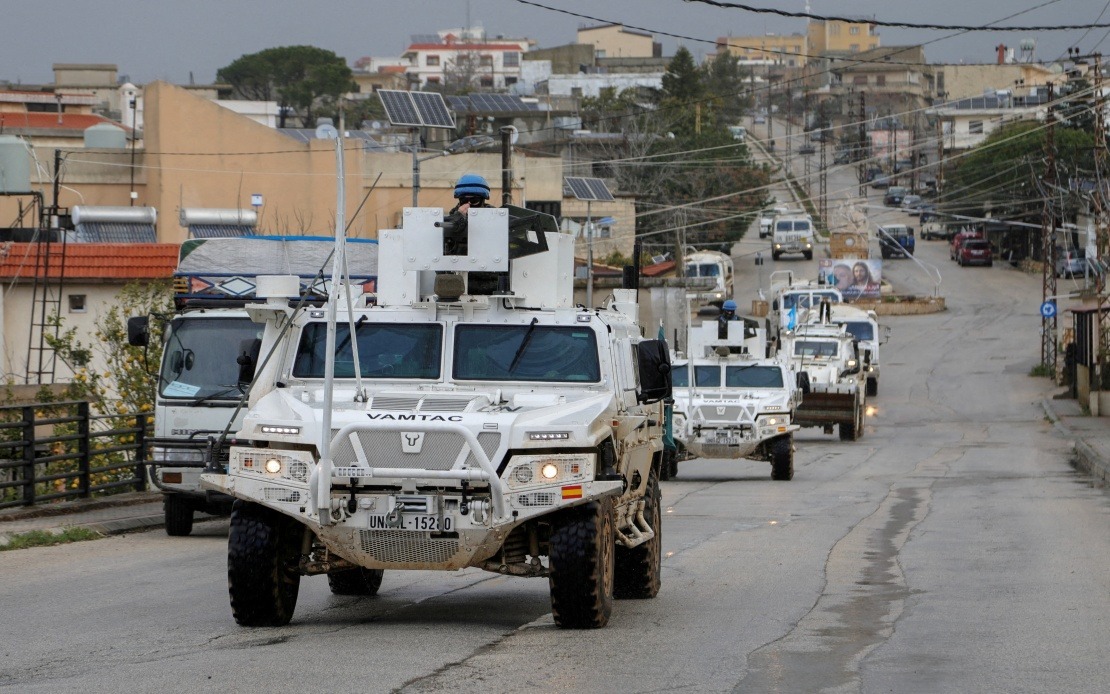
France and Italy have committed to forming a multinational coalition designed to support Lebanon's institutional capacity once the United Nations Interim Force in Lebanon concludes its three-decade presence at year-end, according to French President Emmanuel Macron. Speaking alongside Italian Prime Minister Giorgia Meloni during discussions in Antibes on the southern French coast, Macron outlined plans for sustained international engagement to shore up Lebanese state authority and military capabilities through a structured post-UNIFIL framework.
The French president characterized the initiative as essential for maintaining stability in the Eastern Mediterranean and preventing Lebanese territory from becoming a conduit for escalating regional conflict. By working in concert with EU institutions and the UN system, the partnership aims to create conditions in which Lebanon's government can exercise effective sovereignty over its own soil—a fundamental prerequisite for both national security and regional peace. Meloni reinforced this rationale, emphasizing that an organized international presence would prove vital to averting what she termed an "extremely dangerous" security void that could otherwise emerge once blue-helmet forces depart.
The timing of this initiative carries particular significance in light of Security Council Resolution 2790, which mandates UNIFIL's operational cessation on December 31. The organization will then have precisely one year from that date to complete its full withdrawal of personnel and material from Lebanese territory. This compressed timeline underscores why France and Italy have moved to architect an alternative framework well in advance—allowing sufficient diplomatic legwork to garner broader multilateral buy-in and establish operational protocols before the transition moment arrives.
UNIFIL's impending departure represents a watershed moment for Lebanon, which has weathered decades of sectarian tension, economic collapse, and proxy conflict. The UN force, deployed initially in 1978 and reconfigured under current parameters following 2006 hostilities, has served as a stabilizing presence along the Israeli border and throughout the country's southern reaches. However, its mandate limitations and resource constraints have meant Lebanese authorities themselves bear ultimate responsibility for maintaining order and implementing state functions. The exit of external peacekeepers therefore demands robust domestic capacity-building and sustained international mentorship to prevent security vacuums from being exploited by non-state actors or hostile powers.
The Franco-Italian coalition concept reflects broader European strategic recalibration regarding Middle Eastern stability. Both nations maintain significant historical ties to Lebanon and possess the military assets, diplomatic networks, and political will to mount a credible support operation. France in particular has long positioned itself as a guarantor of Lebanese independence and territorial integrity, while Italy brings substantial naval capabilities and Mediterranean presence. Their partnership signals that Western European powers intend to remain engaged stakeholders in Levantine affairs despite geopolitical complications elsewhere.
The proposed arrangement's explicit coordination with EU and UN machinery suggests the coalition will function within established international legal frameworks rather than as an ad hoc arrangement. This institutional grounding matters substantially for legitimacy—both in Lebanese domestic politics, where nationalist sentiment runs high, and within broader UN circles where unilateral military interventions face scrutiny. By anchoring the initiative within recognized multilateral structures, Paris and Rome enhance prospects for acceptance across ideological divides within Lebanon itself.
For Southeast Asian observers, the Lebanese situation illustrates how regional powers deploy coalitional diplomacy to manage security transitions and prevent geopolitical vacuums from destabilizing neighboring territories. Malaysia and other ASEAN nations have faced comparable challenges in maintaining stability as external powers adjust their presence or roles in critical regions. The Franco-Italian model of coordinated capacity-building, restraint from direct territorial control, and emphasis on host-nation sovereignty offers instructive lessons for thinking about how external actors can sustain constructive influence without reconstituting old-style interventionism.
The coalition's success will depend significantly on Lebanese political actors demonstrating genuine commitment to institutional reform and military professionalization. External support, however generously conceived, cannot substitute for domestic political will to combat corruption, reform security sectors, and build effective state institutions. Meloni and Macron's emphasis on "strengthening Lebanon's armed forces" thus carries implicit recognition that Lebanese military capability and cohesion remain the ultimate foundation upon which any durable stability must rest.
Regional complications surrounding Israeli-Lebanese border tensions, Syrian displacement flows, and Hezbollah's extensive presence within Lebanese society all pose challenges to any stabilization agenda. The coalition framework will necessarily require careful calibration to address legitimate security concerns while respecting Lebanese sovereignty and avoiding actions that inadvertently inflame sectarian or geopolitical tensions. Intelligence sharing, training protocols, and rules of engagement for any potential international personnel will require extensive negotiation between participating states and Lebanese authorities.
The December deadline creates urgency for drafting detailed operational plans, securing necessary funding commitments, and achieving diplomatic consensus among potential contributing nations. Beyond France and Italy, other European states may be invited to participate, and NATO's institutional machinery could potentially facilitate coordination. However, any suggestion of NATO expansion into Lebanon would prove controversial and politically fraught, suggesting bilateral and multilateral frameworks outside formal alliance structures may prove preferable.
Ultimately, the Franco-Italian coalition announcement signals that major European powers remain committed to preventing Lebanon from spiraling into humanitarian catastrophe or becoming a theater for proxy warfare. Whether this commitment translates into sustained resources, political capital, and diplomatic flexibility over the medium term will determine the coalition's effectiveness in stabilizing the country as UNIFIL departs and Lebanese institutions assume fuller responsibility for maintaining order and security.

