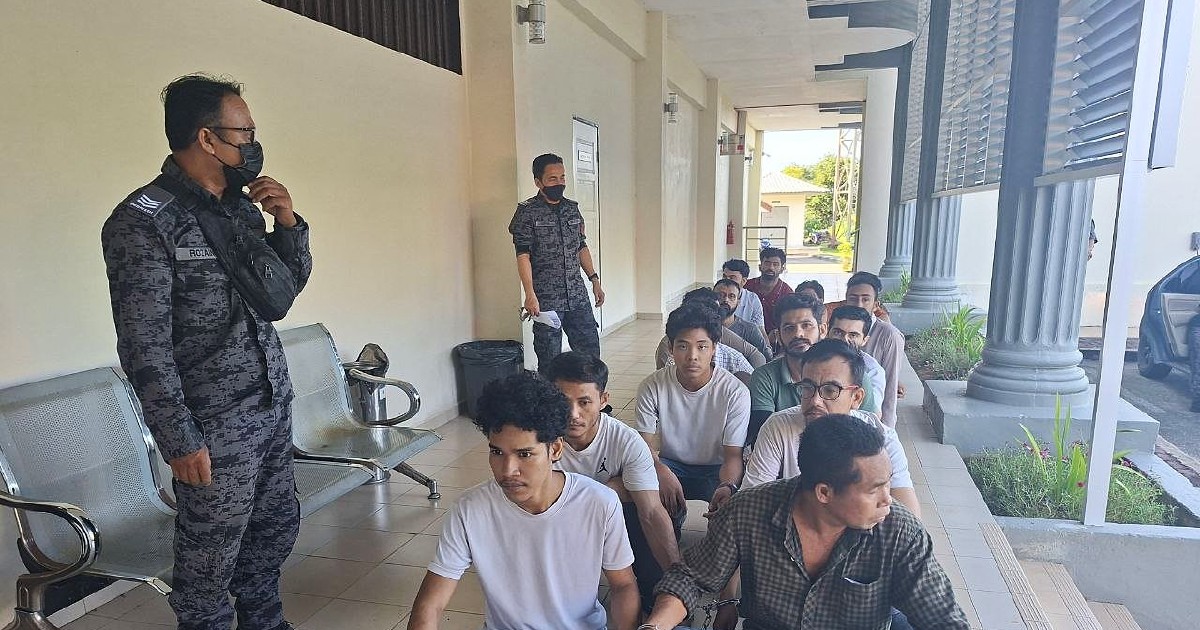
The Sessions Court in Pasir Mas, Kelantan, heard charges against fourteen foreign men today in connection with immigration violations spanning illegal entry, unauthorized residence beyond permitted periods, and improper use of travel documentation. The cases underscore Malaysia's continuing efforts to enforce border security and immigration regulations across its peninsular states, particularly in regions bordering Thailand where cross-border movement remains a persistent enforcement challenge.
The charges reflect the multi-layered nature of modern immigration violations, where offences often cluster together rather than occurring in isolation. Individuals who enter the country through unofficial channels frequently compound their legal exposure by remaining beyond authorized timeframes, while those overstaying may resort to document manipulation to obscure their status or extend their tenure. The Pasir Mas prosecutions demonstrate that Malaysian authorities are actively pursuing comprehensive cases that address these interconnected violations.
Kelantan's geographic position as a border state makes it a critical jurisdiction for immigration enforcement. The state shares a lengthy frontier with Thailand, creating both opportunities for legitimate cross-border commerce and challenges in preventing unauthorized entry. Pasir Mas, located in the northern part of the state, sits relatively close to this international boundary, making the district a focal point for immigration control operations. The concentration of charges in this location reflects resource allocation priorities by enforcement agencies tracking irregular movement patterns.
Illegal entry offences carry particular significance in Malaysia's immigration framework because they represent the initial point of contact with immigration law. Rather than merely documenting violations of residence conditions, these charges indicate that individuals circumvented official ports of entry, potentially evading immigration screening processes designed to protect public health, security, and labor market integrity. The decision to prosecute on this charge rather than allowing entry regularization suggests authorities viewed these cases as serious enough to warrant court intervention rather than administrative processing.
Overstaying represents perhaps the most commonly encountered immigration violation in Malaysia, with thousands of cases processed annually. However, the clustering of fourteen overstay charges in a single court session indicates a coordinated enforcement operation rather than routine individual violations. This suggests immigration authorities may have identified a specific pattern or group, possibly linked to particular employment sectors, irregular labor networks, or geographic migration routes. Understanding these enforcement patterns helps illustrate how immigration authorities identify and prioritize cases for prosecution.
The charge of misusing travel documents represents the most complex violation among those prosecuted. Document fraud can encompass presenting false or altered identification, using someone else's documents, or making false statements during immigration procedures. This category of offence carries heightened concern because it undermines the reliability of identity verification systems that form the foundation of border security. When individuals successfully misuse documents, they compromise the integrity of travel records that governments rely upon for tracking population movements and identifying security risks.
These prosecutions occur within Malaysia's broader immigration enforcement context, where the Immigration Department works alongside customs, police, and other agencies to maintain border integrity. The cases likely resulted from targeted operations, routine checkpoint inspections, or workplace raids rather than random apprehension. Understanding the operational context helps explain why these particular individuals faced charges while countless others may receive administrative action or voluntary deportation.
For foreign workers in Malaysia, these cases carry cautionary implications. While many foreign nationals properly navigate Malaysia's visa and work permit requirements, those operating outside legal frameworks face serious legal jeopardy. Penalties for immigration violations include substantial fines, imprisonment, and deportation with potential bans on future entry. The court proceedings in Pasir Mas serve as public reminder that immigration enforcement remains active even in smaller towns and border regions, not merely in major cities or airports.
The cases also reflect regional migration pressures affecting Southeast Asia more broadly. Malaysia remains a significant destination for migrant workers from neighboring countries, driven by wage differentials, employment opportunities, and established migration networks. However, not all migration into Malaysia follows legal channels. Some individuals attempt entry through irregular routes, while others transit illegally with intentions of proceeding to third countries. The Kelantan cases exemplify how enforcement agencies confront the practical challenges of managing migration flows while maintaining regulatory compliance.
From Malaysia's enforcement perspective, prosecuting immigration violations serves multiple objectives beyond addressing individual offenders. Court cases generate case law clarifying legal standards, public proceedings deter potential violators, successful convictions demonstrate agency effectiveness, and operational data informs future resource allocation. The Pasir Mas prosecutions contribute to these broader institutional functions while holding specific individuals accountable for violations of Malaysian immigration law.
Looking forward, these cases highlight the importance of strengthening collaboration between Malaysia's immigration enforcement agencies and neighboring countries, particularly Thailand, where many irregular entrants originate. Bilateral agreements facilitating information sharing, joint patrols, and coordinated enforcement can reduce unauthorized movement more effectively than unilateral efforts. For Malaysian employers relying on foreign labor, these prosecutions underscore compliance risks associated with hiring workers lacking proper documentation.

