The Jeram Padang state seat will become a focal point of political interest in the upcoming Negeri Sembilan elections, standing out as the sole battleground in the Jempol constituency to attract four competing candidates when nomination papers closed on Thursday morning in Jempol. The announcement from returning officer Amino Agos Suyub confirmed the unusually crowded field just as the nomination process concluded at the Jempol District and Land Office Hall, signalling a fragmented voter base that may reshape traditional political alignments in this particular district.
The contest brings together an ideologically diverse slate of contenders representing different political movements across Malaysia's spectrum. G. Manivannan carries the standard for Pakatan Harapan, the federal coalition government, while incumbent Datuk Mohd Zaidy Abdul Kadir defends his seat for Barisan Nasional, the long-established coalition that previously governed the nation. The race also features R. Sri Sanjeevan competing under the banner of Parti Pribumi Bersatu Malaysia, the splinter group that emerged from earlier political realignments, alongside Dayana Dal of Parti Orang Asli Malaysia, who represents a historically marginalised community seeking greater political voice.
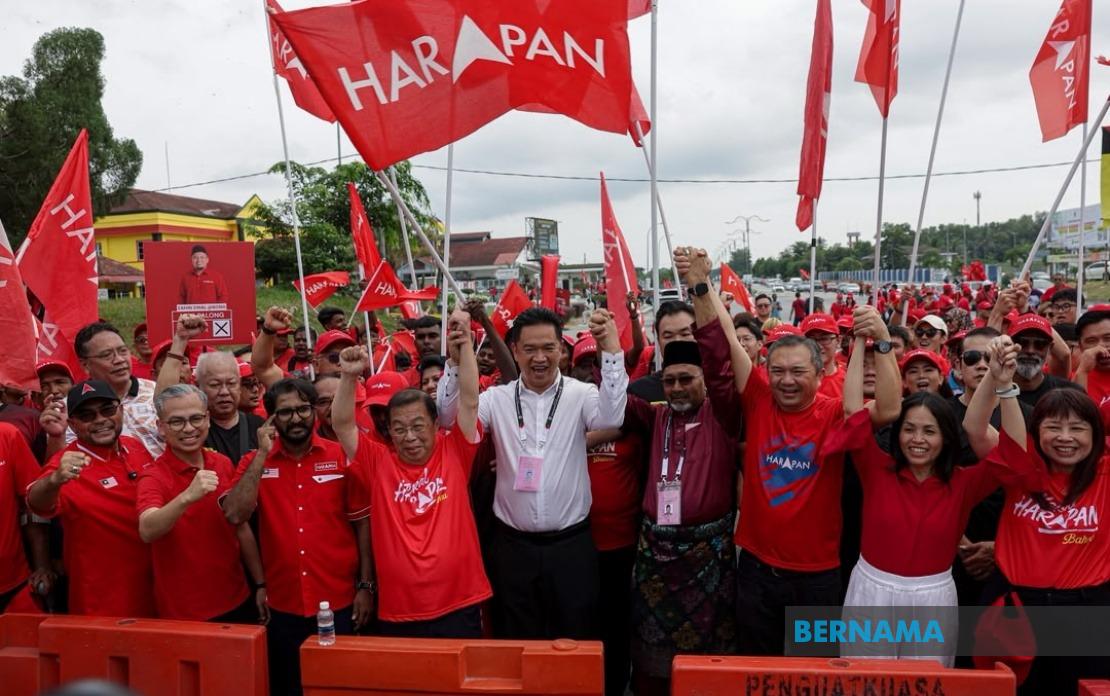
The sequence and timing of nomination filings on Thursday morning reflected the intensity surrounding this particular contest. Sri Sanjeevan and Dayana Dal arrived first, submitting their papers at 9.09 am and 9.12 am respectively, establishing an early presence before the incumbent and challenger arrived. Manivannan, accompanied by Pakatan Harapan Communications director Datuk Seri Fahmi Fadzil, filed at 9.17 am, underscoring the coalition's commitment to this seat, while Mohd Zaidy completed the quartet at 9.20 am, just minutes before the 10 am deadline. This clustering of submissions near the cutoff time suggests last-minute strategic positioning by multiple camps.
The emergence of a four-cornered contest in Jeram Padang contrasts sharply with the political configuration elsewhere in Jempol, where the other three state seats display more straightforward matchups. Serting and Palong both present three-cornered contests, indicating a more traditional triangular competition between major political forces. Yaacob Mahmood of Pakatan Harapan will contest Serting against the incumbent Mohd Fairuz Mohd Isa representing Perikatan Nasional, with Bersatu's Muhammad Noraffendy Mohd Salleh adding a third dimension to that race. In Palong, incumbent Datuk Mustapha Nagoor of Barisan Nasional faces both Pakatan Harapan's Muhammad Zahin Zinal Abidin and Bersatu's Rebin Birham.
Meanwhile, the Bahau state seat presents the clearest electoral picture, functioning as a straight two-way contest between incumbent Teo Kok Seong of the Democratic Action Party, which operates as part of Pakatan Harapan, and Chong Fui Ming of the Malaysian Chinese Association competing as the Barisan Nasional candidate. This binary format suggests stronger political consolidation among voters in that particular area, with less appetite for fractured voting patterns that characterise other constituencies within the district.
The proliferation of candidates across multiple parties in Jeram Padang raises important questions about voter behaviour and political fragmentation in Negeri Sembilan. The involvement of Parti Orang Asli Malaysia in particular signals an attempt to mobilise indigenous communities who have historically received limited political representation through mainstream parties. Dayana Dal's candidacy may prove transformative if Orang Asli voters in Jeram Padang respond to direct appeals from an ethnic-based political vehicle rather than voting along traditional party lines. The presence of Bersatu candidates across all four contested seats within Jempol reflects the party's ambition to establish a credible presence in state politics despite its relatively recent formation.
For the broader Malaysian political landscape, such multi-cornered contests reveal deepening competition in state-level elections as voters demonstrate increased willingness to consider candidates beyond the traditional two-coalition framework. This fragmentation may force all competing parties to build more targeted campaigns focused on specific demographic groups rather than broad-brush appeals. The August election will serve as a testing ground for whether Bersatu can establish itself as a meaningful third force in Malaysian state politics, or whether its candidates will merely split opposition votes and inadvertently advantage either Pakatan Harapan or Barisan Nasional depending on local dynamics.
Election authorities have scheduled early voting for July 28, providing voters with advance polling options before the main election day on August 1. This administrative accommodation reflects recognition that contemporary elections require flexibility in voting arrangements to maximise turnout and accommodate work schedules. The three-week campaign period from nomination close to election day provides candidates with substantial time to build their message and engage with constituents, allowing complex contests like Jeram Padang's four-way race adequate time for voter education and relationship-building with different segments of the electorate.
The Negeri Sembilan state election carries particular significance as a mid-term political barometer for national trends. Results will indicate whether Pakatan Harapan can sustain momentum in state politics, whether Barisan Nasional has recovered credibility with voters, and whether emerging players like Bersatu and community-focused parties can capture meaningful support. The Jeram Padang contest specifically will provide detailed data on electoral behaviour when voters confront multiple viable options, information that political strategists across the country will scrutinise closely for patterns applicable to their own campaigns.

