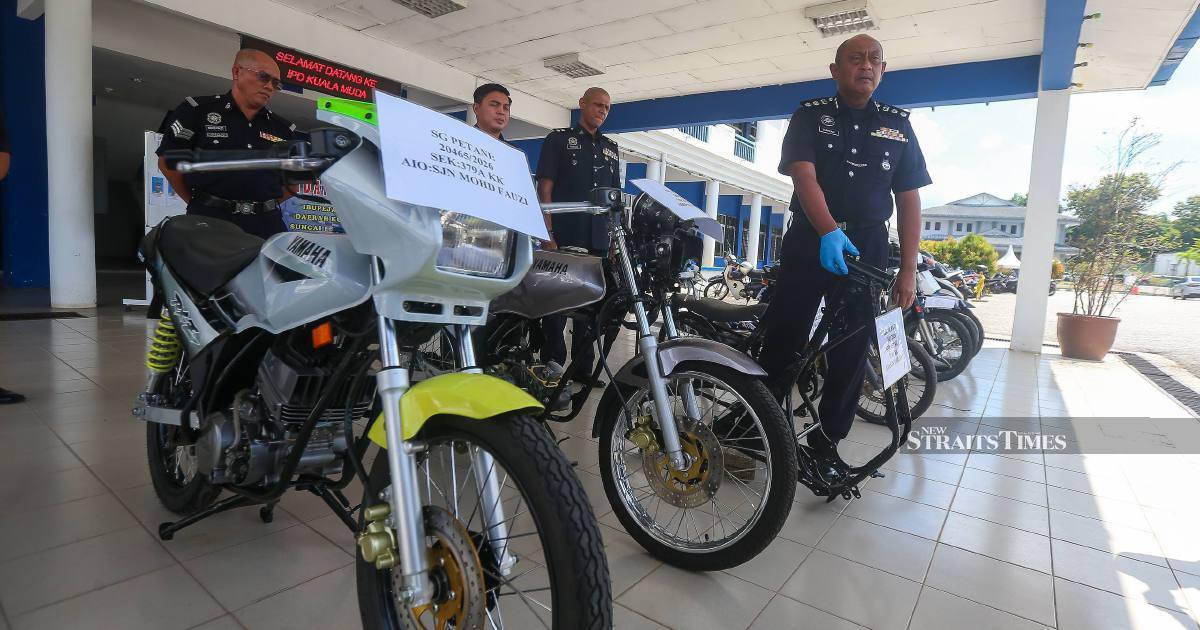
Authorities in Sungai Petani have detained four teenage boys in connection with a coordinated motorcycle theft operation that targeted commuters and travellers at a parking facility adjacent to Keretapi Tanah Melayu Bhd (KTMB) premises. The arrests on July 14 concluded a rapid police investigation into thefts that have plagued the transport hub area, underscoring rising concerns about vehicle security at public transportation facilities across northern Peninsular Malaysia.
Three of the four youths are brothers, suggesting a family-based involvement in the criminal enterprise. Authorities have not disclosed their ages, though all are described as teenagers. The inclusion of three siblings points to potential family dynamics and social influences that may have contributed to their involvement in organised petty crime. Such cases frequently expose gaps in youth supervision and community support systems in smaller towns, where economic pressures and limited recreational opportunities can push vulnerable young people toward criminal activity.
The KTMB parking area has emerged as a particular hotspot for vehicle-related crimes in recent years. Located near Sungai Petani's main railway station, the facility serves hundreds of commuters daily who rely on KTM services to travel between Ipoh, Kuala Lumpur, and northern towns. Motorcycles, being relatively easy to steal compared to cars and offering quick resale value through chop shops, remain prime targets for opportunistic thieves. The clustering of such incidents around public transport nodes reflects a wider pattern in Malaysia where criminals target captive audiences of distracted commuters rushing to catch trains or collect vehicles.
Sungai Petani, the capital of Kuah in Kedah, has witnessed increased property crime in recent years as rapid urbanisation has outpaced policing resources and community cohesion. The town's expansion has created pockets of transient populations with weak social ties, ideal conditions for organised petty theft. Transportation hubs particularly suffer because they attract thieves who know victims will be occupied boarding services or may not discover losses immediately, allowing criminals time to flee and offload stolen goods.
The rapid apprehension of these youths reflects improving coordination between Sungai Petani police and KTMB security personnel. Surveillance cameras installed around the parking facility likely played a crucial role in identifying suspects and linking them to multiple theft incidents. Modern security infrastructure has become essential at major transport facilities, though many regional stations in Malaysia still operate with outdated monitoring systems that limit investigative capacity.
Motorcycle theft remains endemic across Malaysia, with thieves operating in organised networks that dismantle stolen machines for parts or ship them to neighbouring countries including Thailand and Singapore. The involvement of teenagers suggests criminal organisations may be recruiting young offenders as foot soldiers, exploiting their lower criminal culpability and higher agility. Addressing this pipeline requires coordination between law enforcement, social welfare agencies, and community organisations to interrupt recruitment cycles and offer alternative pathways for at-risk youth.
The case raises questions about parental oversight and community surveillance mechanisms that traditionally functioned to deter youth crime in smaller towns. The fact that three brothers were involved together suggests insufficient family intervention or awareness of their activities. Schools, religious institutions, and neighbourhood associations in Sungai Petani may need to strengthen early-warning systems and rehabilitation programmes to identify troubled youths before they progress to organised crime.
Investigations continue as police work to establish how many separate theft incidents these four youths orchestrated and to identify any adult accomplices or fences who may have purchased stolen motorcycles. Preliminary charges could range from simple theft to organised crime offences depending on the pattern and sophistication of their operations. Police have not yet disclosed whether the suspects confessed or whether items were recovered.
The incident underscores broader challenges facing law enforcement in secondary towns where limited resources must cover expanding urban areas. While Sungai Petani has benefited from increased police presence in recent years, petty crime networks often adapt faster than reactive policing strategies can accommodate. Preventive approaches focusing on environmental design—improved lighting, reduced blind spots, and perimeter fencing at KTMB facilities—may prove more cost-effective than perpetual arrest-and-prosecution cycles.
For KTM commuters, the arrests provide some reassurance that security concerns are being taken seriously. However, travellers remain advised to exercise vigilance, remove valuables from vehicles, and report suspicious activity promptly. The railway operator may also consider implementing designated secure parking areas with attendants, following models used successfully at international transport hubs.
The detention of four teenagers—particularly three siblings—for organised motorcycle theft reflects systemic pressures within Malaysian towns adjusting to rapid economic and social change. Addressing such crime effectively requires sustained investment in youth programmes, family support services, and community policing approaches that go beyond arrest statistics alone.

