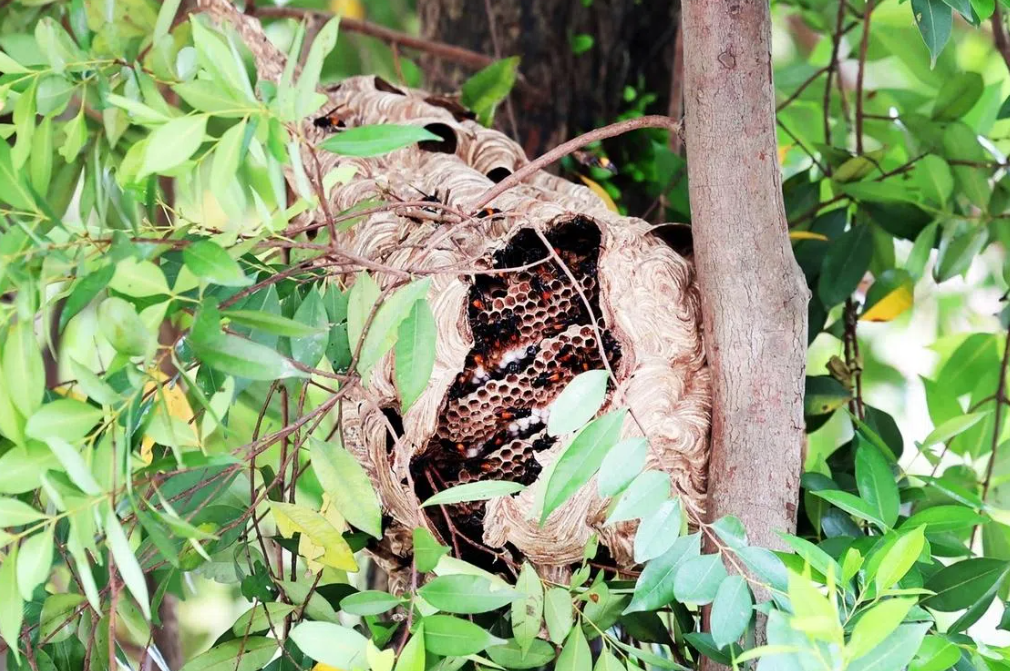
Four residents were hospitalised following a hornet attack near Redhill Market in Singapore on July 10 afternoon, prompting swift action from civil defence and municipal authorities to contain the hazard and treat the injured. The Singapore Civil Defence Force and Tanjong Pagar Town Council responded to emergency calls around 1pm after receiving reports of aggressive hornets in the Redhill Lane vicinity, where a significant nest had become established on a tree positioned along the footpath between Block 78 Redhill Lane and a Shell petrol station.
Eyewitness accounts paint a vivid picture of the chaotic scene that unfolded. Chen, who was at the market enjoying coffee when the incident occurred, recalled hearing someone raise an alarm about the insects before witnessing an elderly man being pursued and stung by the swarm. Another witness, Mei Zhen, discovered a woman in her 70s in visible distress at a nearby toilet facility, where the victim was attempting to manage the aftermath of multiple stings. The woman's ears had become severely inflamed and were bleeding, while she reported experiencing acute headaches and dizziness—telltale signs of a significant envenomation event that warranted immediate medical intervention.
Zhen's recollection of the attack suggests an unusually aggressive response from the insects. She described observing more than ten hornets simultaneously circling the victim's head, with some crawling directly through her hair while others scattered across the toilet floor and door. Such coordinated and sustained attacks indicate that the nest had been directly threatened or that the victims had inadvertently ventured too close to the colony, triggering the insects' defensive mechanisms. The sheer number of stings inflicted on at least one victim explains the severity of the reactions that necessitated hospital admission.
The biological danger posed by hornet venom extends significantly beyond the immediate pain of a sting. According to information from the National University Hospital, hornet venom contains multiple harmful compounds far more potent than those found in bee or smaller wasp stings. The venom cocktail includes histamine, which initiates allergic cascades within the body, and melittin, a protein that generates acute pain at the sting site. Additionally, enzymes such as phospholipase and hyaluronidase work synergistically to break down human tissue and cause systemic toxicity, creating conditions where multiple stings become genuinely life-threatening.
The escalation pathway from localised pain to critical illness underscores why authorities treated this incident with appropriate urgency. In severe cases involving multiple stings from large hornets, victims may experience profound drops in blood pressure, reduced blood flow to vital organs, or dangerous swelling of the airway that can obstruct breathing. Such complications can develop rapidly and without warning, particularly in individuals with underlying health conditions or those who are elderly—making the hospitalisation of four victims a proportionate response rather than an overabundance of caution.
Tanjong Pagar Town Council's response demonstrated effective crisis management protocols. Officers immediately established a perimeter around the affected area to prevent further civilian exposure, while simultaneously mobilising their contracted pest control specialists to safely extract and remove the nest. By all accounts, the nest removal was executed successfully, and the authorities confirmed that the public space had been rendered safe for resumed normal activities. This swift action prevented what could have escalated into a larger mass casualty incident.
Municipal guidance issued following the incident reflects lessons learned from previous hornet encounters across Singapore. Residents are instructed to remain composed upon encountering a hornet nest or aggressive insects, moving deliberately away from the location rather than running or making sudden movements that might provoke further attacks. Seeking immediate shelter inside a nearby building provides critical protection from airborne insects, while attempting to dislodge or disturb an active nest independently is strongly discouraged, as such actions invariably trigger coordinated defensive responses that multiply the risk of injury.
Proper emergency response procedures have been communicated clearly to the public. Anyone sustaining stings should evacuate the immediate vicinity promptly and contact emergency services on 995 if symptoms escalate or immediate medical assessment becomes necessary. This tiered approach ensures that minor incidents receive appropriate home care while severe reactions benefit from professional intervention, preventing both unnecessary hospital admissions and delayed treatment for genuinely critical cases.
Singapore's experience with hornet incidents has been growing in recent years, suggesting environmental or ecological shifts that may be expanding these insects' presence in urban areas. In 2024 alone, the city-state recorded multiple significant attacks, including a separate incident at Sungei Buloh that hospitalised five people and a tragic fatality in Sembawang Park Connector where a cyclist was killed during an attack while exercising. These escalating incidents indicate that hornet management and public awareness have become increasingly pressing public health concerns for Singapore's authorities.
For Malaysian readers, the Redhill Market incident carries particular relevance given Malaysia's tropical climate and urban density, both of which create conditions similarly conducive to hornet populations. The incident demonstrates the importance of rapid municipal response, clear public communication regarding hazard avoidance, and accessible emergency medical services—factors that regional authorities should evaluate within their own jurisdictions. The coordination between civil defence, town councils, and pest management contractors shown in Singapore's response offers a replicable model for handling such incidents effectively across Southeast Asia.
The National Parks Board in Singapore has been contacted for additional epidemiological and environmental context regarding hornet nesting patterns, information that may shed light on why these incidents appear to be increasing. Understanding whether hornet populations are expanding due to climate change, habitat availability, reduced predation, or other ecological factors could inform long-term prevention strategies. Such analysis becomes increasingly valuable as regional governments grapple with maintaining public safety in increasingly crowded urban-nature interfaces where human activity and wildlife habitat overlap inevitably.

