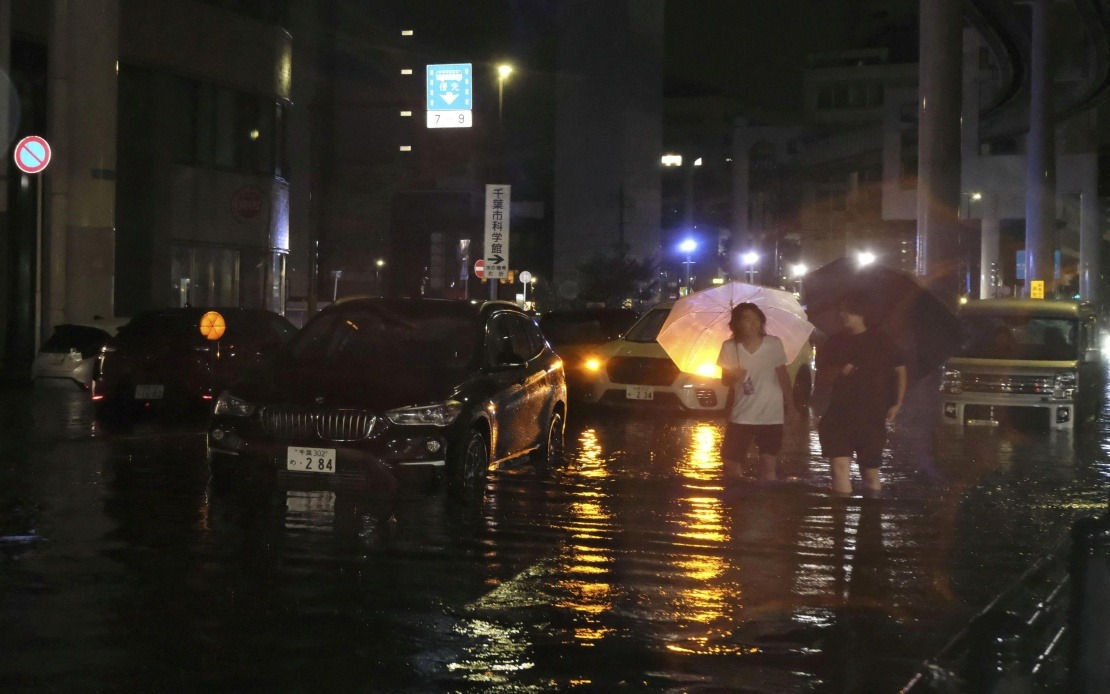
The eastern Japanese prefecture of Chiba descended into crisis Thursday and Friday as relentless heavy rain triggered Japan's highest-level weather warnings and claimed at least four lives. The Japan Meteorological Agency issued Level 5 alerts—the most severe classification—for downpours affecting more than one-third of municipalities across the prefecture adjacent to Tokyo, while another person lay unresponsive as rescue operations intensified. The catastrophic weather pattern demonstrated the vulnerability of densely populated urban areas to extreme precipitation events, a scenario increasingly relevant to Southeast Asia as climate patterns shift.
Meteorological conditions conspired to create unusually unstable atmospheric circumstances in the region. Warm, moisture-laden air masses flowing into eastern Japan collided with cold air positioned at higher altitudes, generating the torrential downpours that overwhelmed drainage infrastructure across Chiba. The combination represented a textbook meteorological scenario for severe convective rainfall, one that weather forecasters had successfully identified early enough to prompt emergency warnings. The Japan Meteorological Agency's early intervention underscored the critical importance of robust weather monitoring systems in mitigating disaster impacts, a lesson with direct applicability to Malaysia and other Southeast Asian nations prone to sudden extreme precipitation.
The immediate human toll extended far beyond the confirmed fatalities. The Fire and Disaster Management Agency mobilised evacuation protocols for over 400,000 residents across Chiba and neighbouring Ibaraki prefectures at the peak of the emergency, though by Friday morning the number under active evacuation orders had declined to approximately 126,000. This substantial shift reflected both the downgrading of weather warnings by authorities and the phased nature of disaster response, as residents gradually returned to their homes following the worst conditions. The scale of displacement highlighted how major weather events can disrupt the daily lives of hundreds of thousands of people within hours, transforming routine commutes and residential situations into survival scenarios.
Urban infrastructure bore the brunt of precipitation intensity that shattered typical seasonal norms. Within Chiba city's Chuo Ward, rainfall rates reached 115 millimetres per hour Thursday night—equivalent to the area's entire expected August precipitation under normal meteorological patterns. This compression of a month's typical rainfall into a single night illustrated the extreme nature of the weather system and its capacity to overwhelm drainage systems designed for historical precipitation patterns. Roads throughout the prefecture flooded extensively, transforming thoroughfares into temporary waterways. Water erupted from underground utility access points in Chiba city itself, sending plumes upward as the ground became saturated beyond absorption capacity. Residents waded through knee-deep floodwaters in urgent attempts to reach their homes, capturing images that circulated widely through local and national media outlets.
The cascading effects of flooding extended through transportation and commercial networks. Approximately 1,800 stranded commuters sought refuge in the Chiba prefectural government building, which had been hastily opened as an emergency shelter for those unable to complete their journeys home or reach secure accommodation. This single facility represented only a fraction of the broader evacuation infrastructure mobilised across the affected region. The Cabinet Office coordinated the establishment of over 200 evacuation centres distributed across Chiba, Ibaraki, Saitama, and Gunma prefectures, providing temporary accommodation for displaced residents and managing complex logistics of food, medical care, and information dissemination.
The Japan Meteorological Agency compounded rainfall warnings with Level 5 landslide advisories for multiple municipalities including Chiba and the adjacent Ichihara city, recognising that saturated soil conditions in hilly and mountainous areas created acute risks of ground failure. Landslides represent a particularly insidious secondary hazard following extreme rainfall, as destabilised slopes may collapse minutes, hours, or even days after precipitation ceases. The dual warnings reflected meteorological sophistication in identifying compound hazards, though both alert levels were downgraded Friday morning as weather patterns stabilised. The progression from highest-alert status to reduced warnings within hours exemplified the dramatic swings typical of severe weather systems that cross regions quickly.
Utility disruptions compounded the hardship facing affected communities. Power failures at one point disconnected approximately 45,000 households throughout Chiba Prefecture, according to figures released by Tokyo Electric Power Company Holdings Inc.'s operational subsidiary. Extended blackouts during and immediately after severe weather create dangerous conditions for vulnerable populations including elderly residents dependent on medical equipment, families with young children requiring refrigeration for food and medicines, and people navigating darkened environments during emergency response operations. The restoration of electrical service therefore represented a critical priority alongside water rescue operations and medical emergency response.
Chiba and Ichikawa, along with other municipalities, issued urgent public directives instructing residents to implement immediate safety measures as rainfall intensified. These instructions reflected established disaster response protocols emphasising rapid individual action—securing family members, moving to higher floors in buildings vulnerable to inundation, monitoring emergency broadcasts, and complying with evacuation instructions from authorities. The effectiveness of such communications depends substantially on public literacy regarding disaster risks and trusted channels for receiving authoritative guidance, factors that vary significantly across different demographic groups and communities.
The meteorological conditions that generated this disaster hold particular significance for Malaysia and broader Southeast Asia. While Japan's advanced early warning systems and established emergency protocols mitigated casualties relative to precipitation intensity, the underlying climatic phenomenon—collision of warm maritime air with cold upper-atmospheric layers—occurs across tropical and subtropical regions including Southeast Asia. Malaysian communities, particularly in low-lying urban areas and river valleys, face comparable risks during monsoon transitions and unusual weather patterns. The Chiba incident therefore serves as a sobering reminder of the infrastructure resilience, warning system sophistication, and coordinated emergency response capabilities that communities require to survive increasingly intense precipitation events anticipated under climate change scenarios.

